
Side Dishes
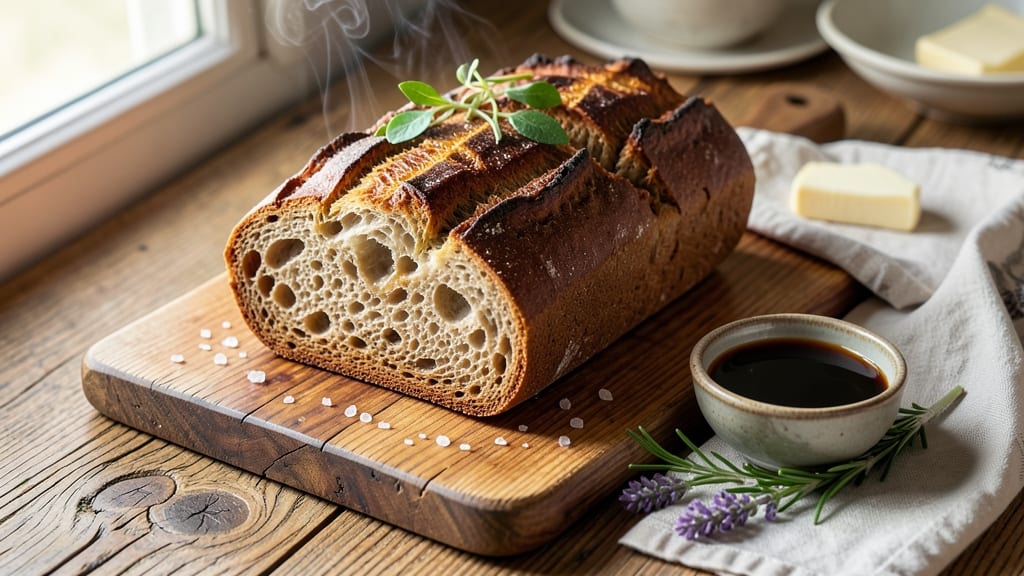
This Austrian rye bread recipe delivers the perfect balance of dark molasses crust and hearty, dense crumb that defines traditional Central European baking.
The secret lies in a long fermentation—24 hours—that develops deep flavor and a satisfyingly chewy texture, while rye flour and molasses create that signature tangy-sweet profile. Unlike lighter breads, this version stays moist for days, making it ideal for sandwiches or toast.
The process requires patience but rewards with restaurant-quality results—no fancy equipment, just precise timing and technique. We'll focus on proper dough hydration, shaping for even baking, and scoring that creates a beautiful, crispy crust.
Caraway seeds or sesame add optional texture, but the base recipe stays true to classic Austrian tradition.
Once baked, the loaf develops a rich, caramelized crust with a molasses-forward aroma that fills your kitchen. The crumb remains dense yet tender, with just the right amount of sourness from the rye.
This bread improves with age—3 days later, it's even more flavorful—and stores beautifully wrapped in a cloth.
Perfect for pairing with smoked meats, cheeses, or simply slathered with butter. The long fermentation also makes it naturally digestible, a hallmark of traditional rye bread. Let's get started on mastering this Austrian classic.
Ingredients for austrian rye bread
Twelve ingredients transform into restaurant-quality Austrian rye with that signature molasses crust and dense crumb.
| Ingredient | Amount | Notes |
|---|---|---|
| Dark Rye Flour 🌾 | 3 cups | High-extraction for deep flavor |
| All-Purpose Flour 🌾 | 1 cup | For structure and lift |
| Active Dry Yeast 🍞 | ¼ oz | Or 2.25 tsp (1 packet) |
| Granulated Sugar 🍚 | ½ cup | Feeds yeast fermentation |
| Unsalted Butter 🧈 | ½ cup | Cold, cubed for texture |
| Molasses 🍯 | ½ cup | Unsulphured for authentic flavor |
| Warm Water 💧 | 1 ½ cups | 105°F-110°F for yeast activation |
| Salt 🧂 | 1 ½ tsp | Diamond Crystal preferred |
| Caraway Seeds 🌿 | 1 tbsp | Optional, toasted for aroma |
| Sesame Seeds 🌻 | 1 tbsp | Optional, for decorative crust |
| Cornmeal 🌽 | ¼ cup | For dusting baking sheet |
| Coarse Sea Salt 🧂 | ½ tsp | For final crust scoring |
The rye flour is non-negotiable here—King Arthur or Bob's Red Mill dark rye deliver the authentic tang. Most grocery stores carry it, but specialty bakeries offer higher-quality varieties. If you can't find dark rye, pumpernickel flour works in a pinch, though the flavor will be milder. The molasses should be unsulphured; Gotham or Whiskey River brands are excellent choices. Caraway seeds? Toast them lightly in a dry pan first—they release their essential oils and add depth. Sesame seeds add texture but aren't essential; skip them if you're avoiding gluten (though this recipe isn't gluten-free).
No molasses? Dark brown sugar mixed with water mimics the syrup's viscosity, though it lacks the same depth. Substituting all-purpose flour for rye? The bread will be lighter but lose its signature sourness. For yeast, instant yeast works too—just omit the sugar since it's already in the flour. The butter should be cold; if it's too soft, chill it for 20 minutes. Caraway seeds unavailable? Fennel seeds offer a similar anise-like note. Want extra richness? Add 1 tbsp of honey to the dough, though it'll slightly alter the traditional flavor profile.
This dough requires 24 hours of fermentation—don't rush it. Store it in a proofing box or turned-off oven with the light on for ideal conditions. The molasses crust stays fresh for 5 days wrapped in a cloth, while the crumb remains tender for 3 days if stored properly. For longer storage, freeze the loaf in slices—it reheats beautifully in a toaster or oven. The crust develops more flavor over time, so if possible, bake it a day ahead and let it sit overnight.
Why You'll Love This Recipe
- No-Knead Magic: I swear by this recipe—just mix, let it rise, and bake. The dark rye flour does all the heavy lifting while you sip coffee or scroll through your phone. Honestly, my dough never sees a mixer.
- Deep, Buttery Richness: That first bite? Crusty outside, soft inside, with a molasses-kissed depth from the rye. The butter keeps it from being too heavy—it’s the perfect balance of earthy and indulgent.
- Weeknight Workhorse: Slice it for breakfast toast, pack it in lunches, or serve it with dinner. It freezes like a dream, so I always bake two loaves. My go-to for when I’m too tired to think.
- Budget-Friendly Staple: Uses pantry basics—yeast, flour, sugar, butter—that stretch far. A single batch feeds my family for days, and the rye flour adds that gourmet touch without the gourmet price. (Yes, even on a Tuesday night.)
Step-by-step instructions for Austrian rye bread
Master the art of Austrian rye with this method—rich molasses flavor, crisp crust, and tender crumb.
Activate the Yeast and Mix the Dough
In a stand mixer fitted with the dough hook attachment, combine the 3 cups dark rye flour, 1 cup all-purpose flour, 1.5 teaspoons salt, and 0.5 cup granulated sugar. Mix on low speed for 30 seconds to aerate the flours and distribute the sugar evenly. This creates a better environment for yeast activation later.
In a separate bowl, whisk together the 1.5 cups warm water (between 105°F-110°F) and 0.5 cup molasses until fully dissolved. Sprinkle the 0.25 oz active dry yeast over the liquid and let sit for 5-10 minutes until frothy. This indicates the yeast is alive and ready to work. Pour the yeast mixture into the flour mixture with the dough hook running on low speed.
Add the 0.5 cup cold, cubed unsalted butter and mix until fully incorporated. The dough will be shaggy at first, but keep mixing on medium speed for 8-10 minutes until it becomes smooth and elastic. The gluten development is crucial here—you want a dough that pulls away cleanly from the sides of the bowl but still feels slightly tacky. If it's too sticky, add 1 tablespoon all-purpose flour at a time until it reaches the right consistency.
Knead and Bulk Ferment the Dough
Transfer the dough to a lightly floured surface and knead by hand for 5 minutes to further develop the gluten. The dough should be smooth and slightly springy. Shape it into a loose round and place it in a lightly oiled bowl, seam-side up. Cover the bowl with a damp kitchen towel and let it rise at room temperature for 1.5-2 hours. You're looking for the dough to nearly double in size and feel light and airy when pressed gently.
Here's the thing—rye dough is heavier than wheat dough, so don't expect dramatic volume. Instead, focus on texture: the dough should feel spongy and slightly sticky on top. If it rises too quickly, it might collapse later. This bulk fermentation stage is where the deep, molasses flavor develops, so don't rush it. The ideal temperature for this step is 75°F-78°F—if your kitchen is cooler, extend the time to 2.5 hours.
Shape and Final Proof the Dough
Turn the dough out onto a lightly floured surface and divide it into 4 equal pieces (about 8 ounces each). Shape each piece into a round loaf by pulling the dough toward you in a circular motion, tucking the edges underneath as you go. This creates surface tension that helps maintain the shape during baking. Place the shaped loaves on a baking sheet dusted with 0.25 cup cornmeal, spacing them about 2 inches apart. Cover loosely with the damp towel and let them proof for 30-45 minutes until they've risen by about 50%.
To test if they're ready, gently press the top of one loaf with your finger. If it springs back slowly (not quickly like wheat dough), it's ready. The edges should also feel slightly puffy. If the dough hasn't risen enough after 45 minutes, give it another 15 minutes—rye dough takes its time. This final proof is critical for achieving that open, airy crumb we're after.
Score and Bake for Crisp Crust
Preheat your oven to 375°F with a baking stone or inverted baking sheet on the middle rack. Once preheated, sprinkle the 1 tablespoon caraway seeds and 1 tablespoon sesame seeds evenly over the loaves, pressing them lightly into the dough. Using a sharp razor blade or serrated knife, score each loaf with a ½-inch deep crosshatch pattern. This allows steam to escape and prevents the loaves from bursting open in random places.
Bake the loaves for 35-40 minutes until they're deep golden brown with a crisp crust. The internal temperature should reach 190°F-195°F when measured with an instant-read thermometer. If the crust isn't browning quickly enough, tent the loaves with aluminum foil for the last 10 minutes of baking, then remove the foil to crisp it up. The bread will smell intensely sweet and molasses-like—this is your cue that it's ready.
Cool and Serve for Maximum Flavor
Transfer the loaves to a wire rack and let them cool completely for at least 1 hour before slicing. This resting period allows the crumb to set and the flavors to fully develop. The bread will continue to firm up as it cools, and the crust will become even more crisp. For an extra touch, sprinkle each loaf with 0.5 teaspoon coarse sea salt while still warm—this enhances the molasses flavor and adds a delightful contrast.
Slice the bread with a serrated knife and serve warm with butter, cheese, or jam. The interior should be dense yet tender with a subtle sweetness from the molasses, while the crust offers a satisfying crunch. Store any leftovers in an airtight container at room temperature for 2-3 days or freeze for up to 3 months. The flavor actually improves over time as the molasses continues to mellow.
Pro Tips For Making Austrian Rye Bread
- Bloom the Yeast First: Skip mixing yeast directly into the flour—it’ll wake up faster in warm water (110°F) with a pinch of sugar. I learned this the hard way after watching doughs fail when the yeast was sluggish; a quick 5-minute test (should look foamy) guarantees it’s ready to work.
- Soften the Butter: Cold butter makes tough rye bread—beat it to room temp (about 10 minutes out of the fridge) so it blends smoothly with the flours. My first batch had dense crumbs until I realized the butter wasn’t incorporating properly.
- Don’t Over-Knead: Rye dough is sticky and weak—knead just until it pulls away from the bowl (about 5-6 minutes). Overworking it turns the crumb gummy, and I’ve ruined more loaves than I’ll admit by ignoring this.
- Steam the Oven: Place a metal tray on the oven rack before preheating, then add a handful of ice cubes when loading the loaf. The steam mimics bakery conditions and gives that signature crackly crust—no fancy equipment needed.
Perfect pairings for this austrian rye bread
Classic Pairings
This Austrian rye bread pairs beautifully with smoked meats like pastrami or corned beef—its dense crumb holds up perfectly to juicy sandwiches. I love using it for Reuben sandwiches with sauerkraut and Russian dressing, where the bread's tangy molasses flavor complements the tangy sauerkraut.
For a lighter option, try it with avocado slices and a sprinkle of flaky sea salt. 🥪
Cheese Combinations
The rich molasses flavor in this bread makes it ideal for pairing with aged cheeses that can stand up to its intensity. I recommend sharp cheddar or Gruyère for a classic combination, or try blue cheese for a bold contrast.
For something sweeter, pair it with brie and honey—the caramelized crust and creamy cheese create an unforgettable flavor profile. 🧀
Spreads and Toppings
Slather your rye bread with cream cheese mixed with a touch of garlic and dill for a quick lunch. I also love spreading it with apple butter or fig jam—the sweetness balances the bread's molasses tang beautifully.
For a savory option, try whipped feta with a drizzle of olive oil and black pepper. 🍯
Drink Pairings
Austrian rye bread's deep molasses flavor pairs wonderfully with dark beers like a Dunkel or Bock. I prefer a German wheat beer (Weizen) to cut through the richness, or a dry Riesling for a wine pairing.
For coffee lovers, a strong black coffee with a splash of heavy cream enhances the bread's caramelized notes. ☕
Breakfast Pairings
Use this bread for breakfast sandwiches with scrambled eggs, bacon, and cheddar cheese—the crust adds a satisfying crunch. I also love toasting slices and topping them with ricotta cheese, honey, and walnuts for a sweet breakfast option.
The molasses flavor adds a unique twist to traditional breakfast pairings. 🍳
Storage-Friendly Pairings
Since this bread stays fresh for days, pair it with ingredients that also store well. Cured meats like salami or hard cheeses like Parmesan keep beautifully in the fridge.
For a quick snack, spread with peanut butter and banana slices—the molasses and peanut butter create a surprisingly delicious combo. 🥜
Nutrition facts
Frequently asked questions
Why does Austrian rye bread need such a long fermentation time?
The 24-hour fermentation is key to developing that authentic molasses depth and chewy texture. During this time, the yeast and natural acids in the rye flour break down complex sugars, creating a rich, tangy flavor profile that shorter fermentation can't achieve. This slow process also improves digestibility—traditional rye bread was designed to be gentle on the stomach.
Can I make this recipe without a stand mixer?
While a mixer makes gluten development easier, you can achieve great results by hand. Knead the dough vigorously for 10-15 minutes on a floured surface until it becomes smooth and elastic. The key is to work it until it pulls away cleanly from your hands. Just be prepared for slightly more effort—rye dough is denser than wheat dough.
What's the best way to tell when the bread is fully baked?
Look for deep golden brown crust and listen for a hollow sound when you tap the bottom. Use an instant-read thermometer to confirm the internal temperature reaches 190°F-195°F. The bread should also smell intensely sweet and molasses-like—this is your final cue. If unsure, bake 5 more minutes on the longer side rather than underbaking.
Why did my rye bread turn out too dense or hard?
This usually happens from overbaking or insufficient hydration. Check your baking time—rye bread should have a slightly soft crumb when done. For texture, ensure you're using 1.5 cups warm water (not hot) and that your dough feels slightly tacky but manageable. If using too much flour, the bread will be dry. The molasses also contributes to moisture—don't skip it!
How can I add more flavor without changing the basic recipe?
Try adding 1 tablespoon of coffee granules to the dough for depth, or mix 1 teaspoon of cinnamon with the caraway seeds before baking. For extra richness, brush the baked loaves with melted unsalted butter**> while warm. The crust will become even more caramelized and flavorful. Just be mindful not to overdo it—rye bread's character comes from its simplicity.