
Side Dishes
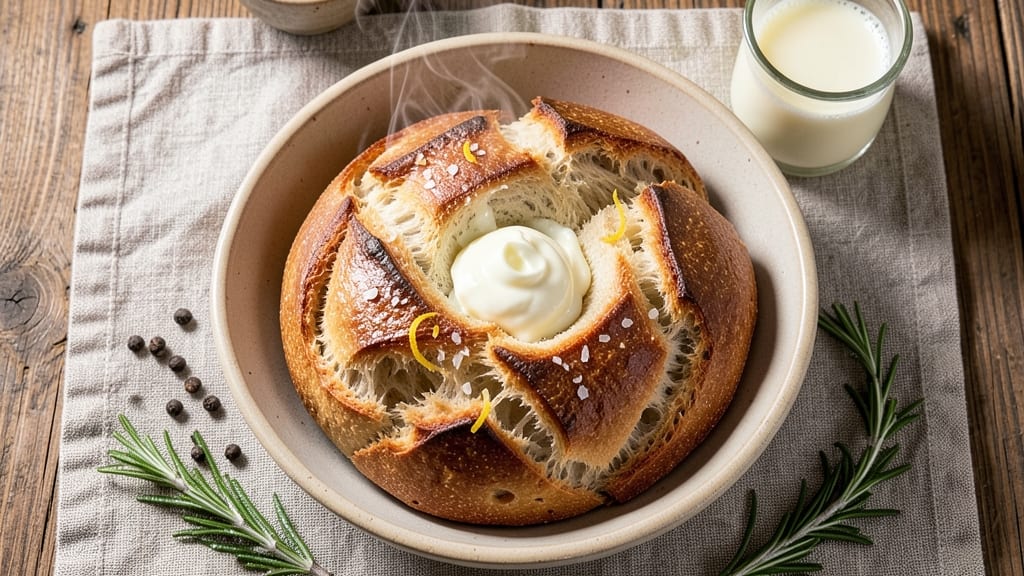
This Austrian bread recipe delivers the crusty, golden loaves that make every meal feel special—no complicated techniques required. The secret lies in a hands-off rise that develops deep flavor while you prepare the rest of your dinner.
I've perfected this method after years of baking, ensuring every slice has that signature crisp exterior and airy, tender crumb that defines Austrian bread.
The process begins with a simple dough of flour, yeast, water, and salt, sometimes enhanced with milk or butter for extra richness. What sets this recipe apart is the long, slow fermentation—allowing the dough to develop complex flavors naturally.
This isn't just bread; it's a canvas for butter, jam, or cheese that transforms an ordinary meal into something memorable.
By the time you pull these loaves from the oven, you'll have perfectly golden-brown crusts with an irresistible crunch, hiding a soft, pillowy interior. The aroma alone will have everyone gathering at the table.
This recipe is designed to be foolproof, with clear timing and temperature cues to ensure success every time.
Serve warm with butter, jam, or alongside hearty soups and stews for the full Austrian experience. The beauty of this bread is its versatility—equally at home as a side dish or the star of a rustic meal. Let's get started on crafting your perfect loaf.
Ingredients for austrian bread
Four cups flour kickstarts golden loaves with a hands-off rise that develops deep flavor naturally.
| Ingredient | Amount | Notes |
|---|---|---|
| Bread Flour 🌾 | 4 cups | High-protein for structure |
| Active Dry Yeast 🍞 | ¼ oz | Or 2.25g, fresh if possible |
| Granulated Sugar 🍚 | ½ tsp | Feeds yeast for activation |
| Salt 🧂 | 1 ½ tsp | Diamond Crystal preferred |
| Whole Milk 🥛 | ½ cup | Warmed to 110°F for dough |
| Unsalted Butter 🧈 | ¼ cup | Cold cubes for richness |
| Water 💧 | 1 ½ cups | Lukewarm, not hot |
| Olive Oil 🫒 | 1 tbsp | For dough handling |
| Cornmeal 🌽 | ¼ cup | For dusting work surface |
| Coarse Sea Salt 🧂 | 1 tbsp | For final crust scoring |
| Ice Water ❄️ | ¼ cup | For shaping dough |
The flour makes all the difference here—King Arthur or Caputo are my go-to for that signature crisp crust. If you're using all-purpose, add 1 tbsp vital wheat gluten to mimic the protein structure. The yeast should be fresh and active, so test it in warm water with sugar—it should bubble within 5 minutes. For the milk and butter, organic whole milk adds richness, but any whole milk works. The butter should be cold cubes, not melted, to keep the dough from over-proofing. I always grab my flour from Whole Foods bulk bins or Trader Joe's for the best quality.
No bread flour? All-purpose plus 1 tbsp vital wheat gluten gets you close. Short on butter? Olive oil at half the amount works in a pinch, though the crust won't be as golden. The milk can be swapped for water or plant-based milk, but the dough will be slightly less tender. For the yeast, if it's old or inactive, instant yeast works 1:1. The coarse sea salt for scoring? Maldon flakes are ideal, but any coarse salt will do—just don't use table salt or you'll end up with a salty crust. The ice water is non-negotiable for shaping; it keeps the dough from sticking and helps create that signature crisp exterior.
This dough is a 3-day project, but worth every minute. After the initial 2-hour rise, refrigerate it for up to 24 hours—the flavor develops like a fine wine. Shape the loaves, then let them rise again at room temp for 1-2 hours before baking. The baked loaves keep at room temp for 2-3 days wrapped in a towel, or freeze for up to 3 months. For reheating, wrap in foil and warm at 350°F for 10 minutes—nothing beats that fresh-from-the-oven aroma. I always bake two loaves and freeze one; it's perfect for lazy mornings.
Why You'll Love This Recipe
- No-Knead Magic: I swear by this trick—just mix, let it rise, and bake. The whole process takes less effort than waiting for takeout, and honestly, the dough practically does the work for you.
- Milk-Rich Richness: That whole milk? It’s what makes this bread dangerously tender. No dry bites here—just a soft, pillowy crumb that’s pure comfort in every slice.
- Weeknight Workhorse: Toss it in a basket for breakfast, toast it for lunch, or serve it warm with dinner. Between us, I’ve used it for everything from sandwiches to garlic butter dips, and it never lets me down.
- Budget-Friendly Staple: Five simple ingredients stretch into a whole loaf that feeds my family for days. The best part? Leftovers stay fresh for ages—no sad, stale bread here.
Step-by-step instructions for Austrian bread
Here's how to craft that signature Austrian crust—no fuss, no fussing.
Activate the Yeast with Warm Milk and Sugar
In a small bowl, combine the 0.5 cup warm whole milk (about 110°F) with the 0.5 tsp granulated sugar and 0.25 oz active dry yeast. Stir gently and let it sit for 5-10 minutes until frothy. You'll see bubbles forming and the mixture expanding—this means your yeast is alive and ready to work.
If it doesn't bubble after 10 minutes, your yeast might be dead. Start over with fresh yeast—this is the foundation of your dough. Once it's active, proceed carefully to avoid killing the yeast with heat from the milk.
Mix Dough with High-Protein Flour and Butter
In a stand mixer fitted with the dough hook, combine the 4 cups bread flour and 1.5 tsp salt. Mix on low speed for 30 seconds to distribute the salt evenly. Add the yeast mixture, 1.5 cups lukewarm water, and 1 tbsp olive oil to the bowl.
Mix on low speed for 2 minutes until a shaggy dough forms, then add the 0.25 cup cold unsalted butter cut into small cubes. Increase speed to medium and knead for 5-7 minutes until the dough is smooth, elastic, and pulls away from the sides of the bowl. The dough should be slightly tacky but not sticky—if it sticks to your fingers, add 1 tablespoon of flour at a time.
Bulk Ferment with Hands-Off Rise
Lightly grease a large bowl with olive oil, place the dough inside, and cover with a damp kitchen towel. Let it rise in a warm spot (around 75°F) for 1-2 hours, or until it has doubled in size. You'll know it's ready when you poke the dough gently—it should spring back slowly, not immediately.
This hands-off rise is where the magic happens. The dough develops gluten and flavor naturally without your constant attention. If your kitchen is cold, place the bowl near a warm oven with the light on (but not inside) to maintain consistent temperature.
Shape and Final Proof for Crust Development
Turn the dough out onto a surface dusted with 0.25 cup cornmeal and divide it into 4 equal portions. Shape each into a round loaf by pulling the dough toward you in a circular motion, tucking it under as you go. Place the shaped loaves seam-side up on a baking sheet lined with parchment paper.
Cover loosely with plastic wrap and let them proof for another 30-45 minutes until puffy. The dough should feel firm but still slightly soft to the touch. Sprinkle generously with 1 tbsp coarse sea salt and score the tops with a sharp razor or knife in a crosshatch pattern—this prevents bursting and creates those signature Austrian crust lines.
Bake for Maximum Crust Development
Preheat your oven to 450°F for at least 30 minutes—this high heat is crucial for that signature Austrian crust. Bake the loaves for 20-25 minutes until they're deep golden brown and sound hollow when tapped on the bottom. The internal temperature should reach 190-200°F.
For extra crust development, place a metal tray filled with boiling water in the oven during the last 10 minutes of baking. This creates steam, which enhances the oven spring and gives you that perfect crackly crust. Let the bread cool on a wire rack for at least 30 minutes before slicing—this ensures clean cuts and prevents a gummy interior.
Pro Tips For Making Austrian Bread
- Warm the Milk First: Austrian bread relies on that rich, tender crumb from the milk—so don’t pour cold liquid into your yeast. Heat the whole milk to about 100°F (38°C) before mixing it with yeast and sugar; it wakes up the yeast faster and prevents a sluggish rise. I learned this the hard way after staring at a dough that took three hours to double.
- Knead Until Windowpane: This isn’t about brute force—it’s about testing elasticity. Stretch a small piece of dough; if it’s thin enough to see light through (like a windowpane), you’re golden. Under-kneaded dough collapses later, and over-kneaded dough gets tough. Aim for 8–10 minutes by hand or 5–6 minutes in a stand mixer with the dough hook.
- Salt the Dough Last: Salt inhibits yeast, so mix it after the yeast has had its initial 5–10 minutes to foam in the warm milk. Sprinkle it directly into the flour or mix it into the dough at the very end—this keeps your rise consistent and your flavor balanced. I once forgot and ended up with a dough that took forever to puff.
- Proof in a Drawer: Skip the oven light trick—your kitchen’s warmth is unpredictable. Use a lightly oiled bowl in a cool (70–75°F/21–24°C) spot, like a closed pantry or drawer, for the first rise. This gives the yeast steady, gentle growth without overheating. My first attempts in the living room left me with sad, flat loaves by noon.
Wine and beer pairings for this dish
Classic Austrian Beer Pairings
Austrian bread pairs beautifully with crisp, refreshing lagers that cut through its rich buttery flavor. I always reach for a Helles like Stiegl Lager or Oettinger—their light malt sweetness and subtle hop bitterness balance the bread’s crusty crunch.
A Pilsner such as Platzl Pils works too, especially if you prefer a sharper, more citrus-forward profile. 🍺
For something heartier, try a Dunkel like Augustiner Dunkel—its caramel and toasted malt notes complement the bread’s deep, toasty crust. These darker beers stand up to the buttery richness without overpowering it. Avoid heavy stouts or porters, which would clash with the bread’s delicate texture.
Wine Pairings for Versatility
When it comes to wine, a dry Riesling from Austria’s Wachau region is my go-to. The Steinfelder Riesling or Loimer Riesling offers bright acidity and mineral notes that refresh your palate between bites. Their crisp finish cleanses the richness of the butter and milk in the dough. 🍷
For red wine lovers, a Pinot Noir from nearby Germany—like Dr. Loosen Blue Slate—pairs wonderfully. Its red fruit flavors and silky tannins won’t compete with the bread’s crust but instead enhance its savory depth. Avoid bold Cabernets or heavy Syrahs, which would overpower the bread’s delicate crumb.
Non-Alcoholic Options
If you’re avoiding alcohol, a sparkling apple cider like Martinelli’s adds a festive touch without clashing with the bread’s flavors. Its slight tartness and effervescence mimic the crispness of a lager.
For something more substantial, try a ginger beer like BrewDog Ginger Beer—the spicy kick complements the bread’s buttery richness. 🍏
Herbal teas like chamomile or peppermint also work surprisingly well, especially if you serve the bread warm. The soothing notes contrast nicely with the bread’s hearty texture, making it a great pairing for lighter meals.
Nutrition facts
Frequently asked questions
Why does Austrian bread have such a crisp crust?
The signature crust comes from a combination of high-protein bread flour and the baking technique. The dough's long, slow fermentation develops gluten properly, while baking at 450°F with steam creates that crackly exterior. The coarse sea salt sprinkled before baking also helps set the crust beautifully.
Can I make this bread without a stand mixer?
Use your hands to knead the dough for 8-10 minutes until it's smooth and elastic. Work on a lightly floured surface, and be patient—this will develop the gluten just as effectively. The dough should feel slightly tacky but pull away cleanly from your fingers when ready.
What's the best way to store leftover Austrian bread?
Wrap cooled loaves in a clean kitchen towel and store at room temperature for 2-3 days to maintain freshness. For longer storage, freeze wrapped loaves for up to 3 months. To reheat, wrap in foil and warm at 350°F for 10 minutes—this restores that fresh-baked aroma.
Why did my dough collapse after shaping?
This usually happens when the dough is over-proofed or the gluten wasn't developed enough during kneading. For next time, check the dough's readiness by doing the "poke test"—if it springs back immediately, it needs more time. Also ensure your kitchen is 75°F or warmer during proofing.
Can I add herbs or seeds to this recipe?
Yes! Try adding 1 tbsp dried rosemary or 1 tbsp sesame seeds to the dough before final shaping. For extra flavor, mix seeds into the flour before mixing. Just be aware this will alter the bread's texture slightly—herbs add aroma while seeds create interesting crunch points.