
Side Dishes
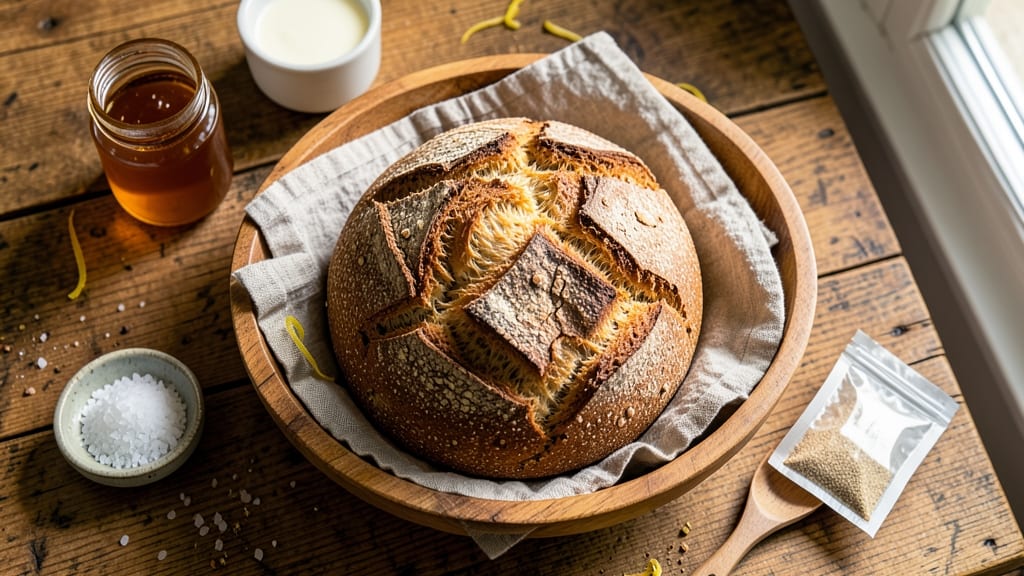
This artisan spelt bread recipe delivers restaurant-quality results with its open crumb structure and rich, nutty flavor profile. The key lies in a long fermentation process that develops depth while maintaining a tender yet slightly chewy texture—perfect for sandwiches or serving alongside soups.
I've refined this recipe over years of baking experiments, focusing on the balance between spelt's natural density and the airy openness that makes it irresistible.
What sets this bread apart is the combination of traditional techniques with simple ingredients: high-gluten spelt flour, natural yeast, and a precise water-to-flour ratio.
The Dutch oven method creates that coveted crispy crust while keeping the interior soft, while optional additions like whole grains or seeds add visual appeal and texture contrast. It's the kind of bread that transforms ordinary meals into special occasions.
With a total active time of just 20 minutes (plus 12-16 hours of fermentation), this recipe proves you don't need complicated processes to achieve professional results. The nutty flavor of spelt shines through while the open crumb structure creates pockets of airy goodness in every bite.
The aroma alone will have your kitchen smelling like a Parisian bakery.
Whether you're a seasoned baker or new to fermentation, this recipe delivers consistent results with clear instructions. The dough's natural stickiness makes shaping easier than traditional breads, while the long fermentation time allows for flexibility in your schedule.
Perfect for meal prep or gifting, this artisan spelt bread will become your new standard for homemade bread.
Ingredients for artisan spelt bread
Simple ingredients transform into restaurant-quality spelt bread with an open crumb and nutty aroma.
| Ingredient | Amount | Notes |
|---|---|---|
| High-Gluten Spelt Flour 🌾 | 4 cups | Freshly milled preferred for best flavor |
| Active Dry Yeast 🍞 | ¼ oz | Or 1 packet (2.25 tsp) |
| Warm Water 💧 | 1 ½ cups | 105-110°F for yeast activation |
| Honey 🍯 | 2 tbsp | Or maple syrup for vegan option |
| Sea Salt 🧂 | 1 ½ tsp | Diamond Crystal preferred |
| Whole Milk 🥛 | ¼ cup | Warmed to room temperature |
| Olive Oil 🫒 | 2 tbsp | Extra-virgin for richness |
| Optional Whole Grains 🌾 | ½ cup | Oats, flaxseeds, or sunflower seeds |
| Optional Seeds 🥜 | ¼ cup | Pumpkin, sesame, or flaxseeds |
The high-gluten spelt flour makes all the difference—look for brands like King Arthur or Bob's Red Mill in the baking aisle. Freshly milled flour has more flavor, but regular spelt flour works fine. For yeast, Saf-Instant is my go-to because it doesn't need activation, but traditional active dry yeast works too if you bloom it first. Honey adds subtle sweetness, but maple syrup is a great vegan alternative. The whole milk enhances the bread's tenderness, though you can substitute plant-based milk if needed. Diamond Crystal sea salt dissolves more easily than other brands, so I always recommend it for baking.
No honey? Agave nectar or brown sugar works in a pinch—just reduce by 10% due to moisture. Want to skip the milk? Unsweetened almond milk or oat milk keeps the dough from becoming too dry. The olive oil adds richness, but avocado oil or melted coconut oil are solid substitutes. For the optional grains/seeds, toasted oats or flaxseeds give the best texture. If you're short on time, skip them—the bread will still be delicious. The Dutch oven is non-negotiable for that perfect crust, but if you don't have one, a heavy oven-safe pot works too.
This dough ferments best at room temperature (70-75°F) for 12-16 hours, but it can go up to 24 hours for even more flavor. Store the dough in a covered bowl in a warm spot—your oven with the light on works great. Once baked, let the bread cool on a wire rack for at least 2 hours to prevent sogginess. It keeps well in an airtight bag at room temperature for 3-4 days or frozen for up to 3 months. The aroma alone makes it worth the wait—trust me, your kitchen will smell like a Parisian bakery.
Why You'll Love This Recipe
- Here’s what sold me: that caramelized honey crust with a whisper of sea salt? It’s the kind of flavor that makes you pause mid-slice. The spelt’s nutty depth pairs with the sweetness and salt so well, it’s like a little edible hug every time you tear off a piece.
- No-Knead Magic: Honestly, I’m not kidding when I say this bread comes together with zero fuss—just mix the high-gluten spelt flour, yeast, and warm water, let it rise overnight, and bake. That’s it. No standing at the counter, no overworked arms—just hands-off simplicity that actually works.
- Honey-Salt Crust Perfection: Here’s what sold me: that caramelized honey crust with a whisper of sea salt? It’s the kind of flavor that makes you pause mid-slice. The spelt’s nutty depth pairs with the sweetness and salt so well, it’s like a little edible hug every time you tear off a piece.
- Weeknight Meal Upgrade: Between us, this bread turns any plate into a showstopper—slather it with butter for breakfast, dip it in olive oil for dinner, or use it as a base for charcuterie. I’ve even thrown it in a bag for lunch; it stays fresh and adds instant texture to sandwiches or salads.
Step-by-step instructions for artisan spelt bread
This method delivers a rustic spelt loaf with an open crumb and nutty depth.
Activate the Yeast and Mix the Dough
In a large bowl, combine the 1.5 cups warm water (between 105-110°F) with the 2 tbsp honey and 0.25 oz active dry yeast. Let sit for 5-10 minutes until frothy—this confirms the yeast is active. If it doesn't bubble, your yeast may be dead or the water too hot.
In a separate bowl, whisk together the 4 cups high-gluten spelt flour, 1.5 tsp sea salt, 0.25 cup whole milk, and 2 tbsp olive oil. Pour the yeast mixture into the dry ingredients and stir with a wooden spoon until a shaggy dough forms. The dough will be sticky, which is normal for spelt.
Knead and Develop Gluten
Transfer the dough to a lightly floured surface and knead for 8-10 minutes until smooth and elastic. You'll know it's ready when it springs back slowly when poked. Spelt dough requires more time than wheat—don't rush this step. If the dough sticks excessively, wet your hands instead of adding more flour.
For added texture, fold in the 0.5 cup optional whole grains and 0.25 cup optional seeds during the last 2 minutes of kneading. This distributes them evenly throughout the dough. Place the dough in a lightly oiled bowl, cover with a damp towel, and let rise at room temperature for 1-2 hours or until doubled in size.
Shape and Cold Proof
Punch down the risen dough to release air, then divide it into two equal portions. Shape each into a round boule by pulling the edges toward the center and sealing the seam. Place the shaped loaves on a floured baking sheet, cover, and refrigerate for 12-24 hours. Cold fermentation enhances flavor and improves texture.
This long proofing time allows the spelt's natural enzymes to break down complex proteins, creating that signature open crumb. The dough will rise slowly in the fridge—don't worry if it doesn't double completely. When ready, preheat your oven to 450°F with a Dutch oven inside for 30 minutes to create steam.
Bake for Crispy Crust and Open Crumb
Carefully transfer the cold dough to the hot Dutch oven. Bake covered for 25 minutes, then remove the lid and bake 15-20 minutes more until the crust is deep golden brown. Tap the bottom—the sound should be hollow, indicating a fully baked loaf. Internal temperature should reach 205-210°F.
Let the bread cool on a wire rack for at least 1 hour before slicing. The crust will be crisp and the crumb will have an open, airy texture with visible pockets. For best flavor, serve within 2 days or freeze for longer storage.
Pro Tips For Making Artisan Spelt Bread
- STIR THE YEAST LONG ENOUGH: Spelt flour takes longer to hydrate than wheat—give that yeast and honey mixture a solid 10 minutes of stirring until it’s actually dissolved, not just floating. I learned this the hard way when my first batch had lazy bubbles and a dense crumb.
- WEIGH YOUR FLOUR LIKE A PRO: High-gluten spelt flour packs differently than all-purpose—don’t scoop it. Use a kitchen scale and spoon it lightly into the bowl, then level it off. My first loaves were always too dense until I stopped eyeballing the flour.
- DON’T SKIP THE COLD PROOF: After shaping, pop the dough in the fridge for 12–24 hours—yes, even if you’re eager. The slow rise develops deeper flavor and a better crumb. I know, I know, but trust the process (your future toast will thank you).
- USE A DOCKING TOOL, NOT YOUR FINGERS: Spelt dough is stickier than wheat—poke holes with a sharp knife or fork instead of your fingers. It’s faster, cleaner, and prevents tearing when you steam the loaf. (I used to fight with the dough; now I just dock and move on.)
Serving suggestions for leftovers
Perfect Sandwich Pairings
This spelt bread's open crumb and nutty flavor make it ideal for hearty sandwiches. Try it with roasted turkey and cranberry—the bread's slight sweetness complements the tartness beautifully.
For vegetarians, hummus, roasted red peppers, and arugula create a Mediterranean-inspired masterpiece. I also love using it for grilled cheese with sharp cheddar and caramelized onions. 🥪
Soup and Salad Accompaniment
Serve warm slices alongside creamy tomato basil soup or French onion soup—the bread's crust soaks up the broth perfectly. For salads, pair with goat cheese and honey or avocado and lime for a refreshing contrast.
The bread's nutty notes also complement warm lentil soup or roasted vegetable stews. A sprinkle of flaky sea salt before serving enhances the flavor.
Breakfast Serving Ideas
Toast thick slices and top with almond butter and banana slices for a satisfying breakfast. Or make French toast using the bread—its dense texture holds up beautifully. For a savory morning, try smoked salmon, cream cheese, and everything bagel seasoning.
The bread's open crumb structure makes it perfect for breakfast sandwiches with scrambled eggs and bacon. 🍳
Gift-Worthy Presentation
Wrap freshly baked loaves in burlap or kraft paper tied with twine for a rustic gift. Add a small jar of homemade jam or olive oil for an extra touch. The bread's aroma makes it irresistible as a hostess gift.
For special occasions, brush the crust with garlic-infused olive oil before serving. The nutty flavor pairs wonderfully with aged cheeses like Gouda or Brie.
Dinner Rolls Substitute
Cut the bread into thick slices and serve as dinner rolls with beef bourguignon or mushroom risotto. The crust holds up well to rich sauces. For a lighter option, use it as a base for bruschetta with diced tomatoes, basil, and balsamic glaze.
The bread's texture makes it perfect for stuffing with herbed goat cheese and roasting alongside mains. 🍽️
Dessert Twist
Drizzle warm slices with melted chocolate and sea salt for a simple dessert. Or make bread pudding using stale slices tossed with cinnamon and vanilla. The nutty flavor also pairs well with whipped cream and fresh berries.
For a savory-sweet option, top with ricotta, honey, and pistachios. The bread's versatility makes it a great addition to both sweet and savory meals.
Nutrition facts
Frequently asked questions
Why does spelt bread need such a long fermentation?
The extended 12-24 hour cold proof** develops spelt's complex flavors and creates that signature open crumb. Unlike wheat, spelt's natural enzymes break down proteins during fermentation, making the bread more digestible while building depth of flavor. This slow process also improves gluten structure for a lighter texture.
Can I make this recipe without a Dutch oven?
Yes! Use a heavy oven-safe pot with a lid or even a baking stone. For best results, place a metal bowl of boiling water on the lower rack to create steam during the first 25 minutes of baking. The crust won't be quite as crispy, but the interior will still develop that wonderful open crumb.
What makes spelt bread different from whole wheat bread?
Spelt has a lower gluten content than wheat, making it naturally lighter and easier to digest. It also contains more nutrients like magnesium and zinc. The flavor is distinctly nutty and slightly sweet, while whole wheat tends to be more hearty and earthy. Spelt's open crumb structure comes from its unique protein composition.
How do I know when the bread is fully baked?
Look for a deep golden brown crust and tap the bottom—the sound should be hollow like a drum. The internal temperature should reach 205-210°F. If you're unsure, let it bake 5 more minutes. Overbaking can dry out the crumb, but it's better to err on the side of fully baked than underdone.
Can I substitute regular spelt flour for high-gluten spelt?
You can try, but expect a denser result. High-gluten spelt develops better structure and that signature open crumb. If using regular spelt, add 1 tbsp vital wheat gluten per cup of flour to improve texture. The flavor will be slightly less pronounced, but still delicious—just not as light and airy.