
Side Dishes
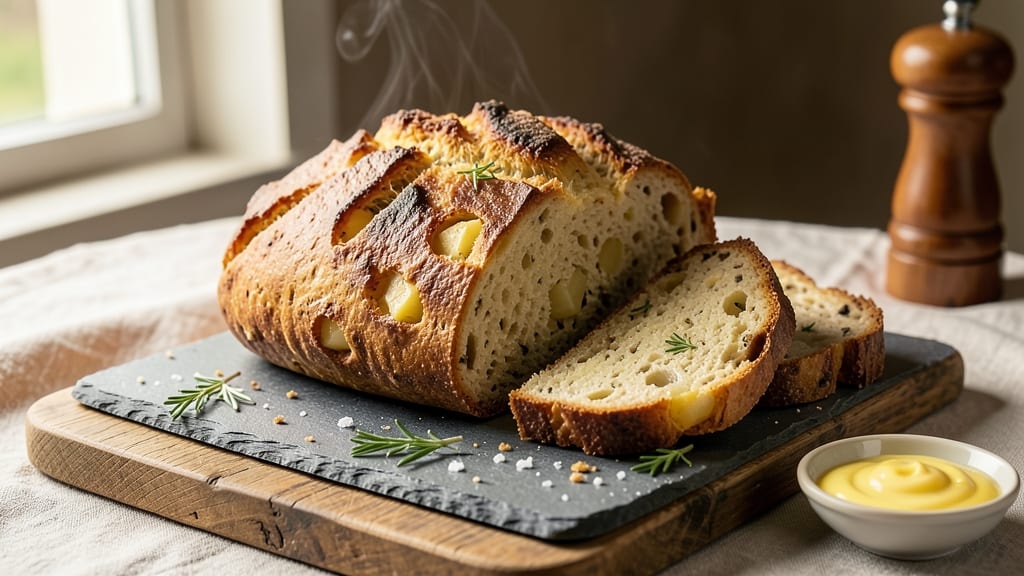
This artisan potato bread recipe transforms humble potatoes into a loaf with a golden, crisp crust and a tender, fluffy heart—perfect for elevating any meal.
The secret lies in boiling and grating the potatoes first, which creates a moist, flavorful dough that yields a bread with just the right balance of density and airiness.
I developed this recipe after years of experimenting with traditional European techniques, ensuring every slice delivers that satisfying contrast between crisp exterior and soft interior.
The process begins with a simple dough of flour, yeast, and water, but the potatoes—boiled, peeled, and finely grated—are what make this bread truly special. They add natural sweetness and moisture, while the butter or oil enriches the texture.
Whether you're using a Dutch oven for that classic hearth-baked crust or a home oven with a baking stone, this method guarantees professional results without requiring advanced skills. The kneading and resting stages are critical for developing gluten, which creates that signature fluffy crumb.
What you'll end up with is a loaf that's visually stunning with its golden-brown crust and tempting aroma, while the interior remains soft and slightly dense—a perfect companion for soups, butter, or jam. The potatoes contribute a subtle earthy flavor that pairs beautifully with savory dishes or sweet spreads.
This bread is designed to be both impressive and approachable, making it ideal for weeknight dinners or special occasions.
For those short on time, instant yeast can be used for faster rise times, though traditional active dry yeast yields the best flavor.
The key to success is patience—allowing the dough to rest fully and baking it until the internal temperature reaches 190°F. Once you master this recipe, you'll never buy store-bought potato bread again. Let's get started on creating your own artisan loaf!
Ingredients for artisan potato bread
Nine essential ingredients transform humble potatoes into a showstopping artisan loaf.
| Ingredient | Amount | Notes |
|---|---|---|
| Russet Potatoes 🥔 | 2 lbs | Boiled, peeled, finely grated |
| All-Purpose Flour 🌾 | 4 cups | High-protein for structure |
| Active Dry Yeast 🍞 | 2 ¼ tsp | Or 1 packet instant yeast |
| Granulated Sugar 🍚 | 1 tbsp | Feeds yeast for rise |
| Salt 🧂 | 1 ½ tsp | Diamond Crystal preferred |
| Unsalted Butter 🧈 | ½ cup | Cold, cubed for dough |
| Warm Water 💧 | 1 ½ cups | 110°F for yeast activation |
| Large Egg 🥚 | 1 whole | Room temperature for binding |
| Extra-Virgin Olive Oil 🫒 | 2 tbsp | For dough enrichment |
| Cornmeal 🌽 | ½ cup | For dusting baking surface |
| Coarse Sea Salt 🧂 | 1 tbsp | For crust enhancement |
The potatoes are the star—Russet for their fluffy texture when boiled and grated. King Soopers or Walmart usually have them at great prices, but if you can grab organic, the flavor is even sweeter. Boil them whole with skin on until tender, then peel and grate them while still warm. The grated potatoes should yield about 4 cups—pack them tightly into your measuring cup. For the flour, King Arthur or Gold Medal are my go-tos; their high protein content gives that perfect chewy bite. The yeast? Fleischmann's is reliable, but if you've got a sourdough starter, you can use that too—just reduce the amount by half.
No butter? Olive oil or coconut oil works in a pinch, though butter gives that unmatched richness. Running short on time? Instant yeast cuts rise time to 30 minutes, but traditional yeast gives that deeper flavor. The sugar can be swapped for honey or maple syrup if you prefer, though it'll add moisture. For the egg, aquafaba (chickpea brine) is a great vegan alternative—use 3 tbsp per egg. The olive oil matters here—California Avocado Ranch or Bertolli are my favorites for their fruity notes. If your dough feels too sticky, add 1-2 tbsp more flour, but don't overdo it or the crust will suffer.
This dough needs time to develop—at least 1 hour of resting before shaping. Store any unused grated potatoes in an airtight container in the fridge for up to 3 days, or freeze them for 3 months. The shaped loaf keeps wrapped at room temp for 2 days, or freeze it for up to 1 month. To reheat, wrap in foil and warm at 350°F for 10 minutes. The crust gets crispier the longer it sits—perfect for making ahead for guests!
Why You'll Love This Recipe
- No Peel Required: I swear by this shortcut—just toss those Russets in boiling water whole, then mash them straight into the dough. No peeling, no stress, and that starchy magic turns into a bread so tender it practically melts.
- Crispy-Creamy Magic: The secret’s in the potato-to-flour ratio. That first bite? Crust so golden it shatters, but inside—oh, it’s pillowy and buttery, like a hug from a bakery. (Yes, even my picky husband nods at this.)
- Dinner Party Star: Between us, this bread steals the show. Serve it warm with soup, tear it over grilled cheese, or slice it for charcuterie—it’s the one thing people ask for seconds on. (Pro tip: Brush with garlic butter before serving.)
- Budget Bakery Hack: Russets are cheap, flour’s a staple, and yeast stretches a dollar. One loaf feeds four, and leftovers toast into crispy perfection. My wallet and my lunchbox thank me weekly.
Step-by-step instructions for artisan potato bread
Here's how to create a loaf with a golden crust and tender, potato-infused center every time.
Prepare the Potato Purée for Maximum Flavor
Peel the 2 lbs Russet Potatoes and cut them into even chunks. Place them in a pot and cover with cold water by about 1 inch. Add 1.5 tsp Salt to the water and bring to a boil over medium-high heat. Once boiling, reduce to medium heat and simmer for 15-20 minutes until fork-tender.
Drain the potatoes thoroughly, then return them to the pot. Using a potato masher or ricer, crush them until completely smooth—no lumps should remain. This purée is the heart of your bread, so take your time. The texture should be silky and uniform, like thick pudding. Let it cool completely before using, about 10 minutes, to prevent killing the yeast later.
Activate the Yeast and Mix the Dough
In a large mixing bowl, combine the 1.5 cups Warm Water (around 110°F), 2.25 tsp Active Dry Yeast, and 1 tbsp Granulated Sugar. Let it sit for 5-10 minutes until frothy—this confirms your yeast is alive and active. If it doesn't bubble, start over with fresh yeast.
Add the cooled potato purée, 4 cups All-Purpose Flour, and 1.5 tsp Salt to the yeast mixture. Stir with a wooden spoon until a shaggy dough forms. Then, add the 1 whole Large Egg, 2 tbsp Extra-Virgin Olive Oil, and 0.5 cup Unsalted Butter (cut into small cubes). Mix until just combined—don't overwork the dough at this stage.
Knead the Dough for Structure and Flavor
Turn the dough onto a lightly floured surface and knead for 8-10 minutes until smooth and elastic. You'll know it's ready when it springs back slowly when poked. If the dough feels too sticky, add flour 1 tablespoon at a time; if too dry, add water 1 teaspoon at a time. The goal is a dough that's soft but not tacky.
Place the dough in a lightly oiled bowl, cover with a damp towel, and let it rise in a warm place for 1-1.5 hours, or until doubled in size. A good test is to poke the dough gently—if it leaves a slow-moving indent, it's ready. This first rise develops the gluten structure and allows the potato flavor to meld with the yeast.
Shape and Proof the Dough for Perfect Crust
Punch down the risen dough to release air, then turn it onto a surface dusted with 0.5 cup Cornmeal. Shape it into a round loaf by pulling the edges toward the center and tucking them under. Place it seam-side up on a parchment-lined baking sheet. Cover loosely with plastic wrap and let it proof for 30-45 minutes until puffy and nearly doubled again.
While the dough proofs, preheat your oven to 375°F. Sprinkle the loaf generously with 1 tbsp Coarse Sea Salt just before baking. This step is crucial—it creates that signature crusty exterior while keeping the interior moist. Bake for 30-35 minutes until the bread is deep golden brown and sounds hollow when tapped on the bottom.
Cool and Serve for Maximum Enjoyment
Remove the bread from the oven and let it cool on a wire rack for at least 15 minutes. This resting period allows the steam inside to redistribute, ensuring a tender crumb. Slice into thick pieces to reveal the fluffy, potato-infused interior and crisp golden crust. Serve warm with butter or your favorite jam for the ultimate artisanal experience.
Here's the thing—this bread tastes best the first day, but it keeps well for 2-3 days wrapped in a cloth bag. For extra crispiness, reheat slices in a 350°F oven for 5-7 minutes before serving. Enjoy every bite of that perfect marriage of potato and bread!
Pro Tips For Making Artisan Potato Bread
- BOIL POTATOES UNTIL TENDER: I learned this the hard way—Russets need to be fully cooked, not just soft. Cut them into even ½-inch chunks and boil until a fork slides in like butter (about 12-15 minutes). Undercooked potato bits make the dough gummy; overcooked ones turn it mushy. Test one piece—if it’s still slightly firm, give it 3 more minutes.
- MASH POTATOES HOT (NO WAITING): Skip the "let them cool" step—mash the potatoes straight from the pot while they’re piping hot. The residual heat breaks down the starch faster, and you’ll get a smoother dough without lumps. Just work fast and keep the bowl warm until you add the flour.
- WEIGH YOUR FLOUR (NOT SCOOP): That "1 cup" flour measure? It’s a lie. Spooning flour into a cup packs it too tightly, making your dough dry and dense. Weigh it instead—this recipe needs about 350-400g all-purpose flour for the right balance of chew and airiness. A cheap digital scale solves this forever.
- PROOF THE DOUGH TWICE: First rise (after mixing) should be warm and slow—about 1-2 hours until puffy but not doubled. Punch it down, then let it rest 10 minutes before shaping. The second rise (after shaping) is where the magic happens: cover it and let it rise in a warm spot until it springs back when poked (about 1.5-2 hours). Skipping the rest = a dense loaf.
Flavor customization for these flavors
Sweet Potato Twist
Swap the Russet potatoes for 2 lbs sweet potatoes—peeled, boiled, and mashed—to add natural sweetness and a vibrant orange hue. The flavor profile becomes more dessert-like, perfect for pairing with cinnamon butter or honey. Use 1 tsp cinnamon in the dough for extra warmth. 🍠
Herb-Infused Variations
Boost flavor by adding fresh herbs to the dough. Try 2 tbsp chopped rosemary or 1 tbsp thyme leaves for an earthy twist, or 1 tbsp garlic powder for a savory kick.
These herbs blend seamlessly with the potato flavor while adding complexity. I love using Penzeys brand dried herbs for consistency.
Cheesy Potato Bread
For a richer loaf, fold in 1 cup shredded sharp cheddar or Gruyère cheese during the final kneading stage. The cheese melts slightly during baking, creating pockets of gooey goodness. Use Kraft shredded cheddar for convenience or Whittard of Chelsea for premium flavor. 🧀
Seeded Crust Boost
Sprinkle 1 tbsp sesame seeds or poppy seeds on top of the loaf before baking for added texture and visual appeal. These seeds toast beautifully in the oven, adding a nutty crunch to every bite. I recommend Bob’s Red Mill seeds for their freshness.
Savory Garlic Version
Transform this into a savory loaf by adding 3 minced garlic cloves and 1 tsp onion powder to the dough. This version pairs perfectly with soups, stews, or as a side for roasted meats. The garlic infuses the potato flavor beautifully, creating a depth that’s hard to resist. 🧄
Nutrition facts
Frequently asked questions
Can I use instant yeast instead of active dry yeast?
Yes, you can substitute 1 packet (2.25 tsp) instant yeast for the active dry yeast. The biggest difference is timing—with instant yeast, your dough will rise 30-45 minutes faster since it activates immediately. Just be sure to dissolve it directly in the flour when mixing to avoid clumping. For best flavor, I still recommend traditional yeast if you have time.
Why did my potato bread turn out dense instead of fluffy?
Over-kneading or under-proofing are the most common culprits. The dough should be kneaded just until smooth (8-10 minutes) and allowed to rise until doubled in size. Also ensure your yeast is fresh (test it in warm water with sugar—it should bubble within 5-10 minutes). Cold potatoes can also inhibit yeast activity, so always cool them completely before mixing.
How do I store leftover potato bread?
Wrap the cooled loaf in a clean kitchen towel or beeswax wrap and store at room temperature for 2-3 days. For longer storage, freeze the bread (unwrapped) for up to 1 month. To reheat, wrap slices in foil and warm at 350°F for 5-7 minutes until crispy again. The crust actually improves with age!
Can I make this bread without a Dutch oven?
For a crispy crust without a Dutch oven, try these methods: Bake on a preheated baking stone or pizza steel for 350°F with a pan of boiling water below. Alternatively, use a cast-iron skillet (place it in the oven while preheating). For extra shine, brush the loaf with 1 tbsp melted butter before baking.
What's the best way to reheat potato bread?
For maximum crispiness, wrap slices in foil and reheat at 350°F for 5-7 minutes. For a quicker method, use the toaster oven set to 375°F for 3-4 minutes. Avoid microwaving—it makes the crust soggy. Pro tip: Spritz with water before reheating for extra browning. The potato flavor actually intensifies when reheated properly!