
Breakfast & Brunch
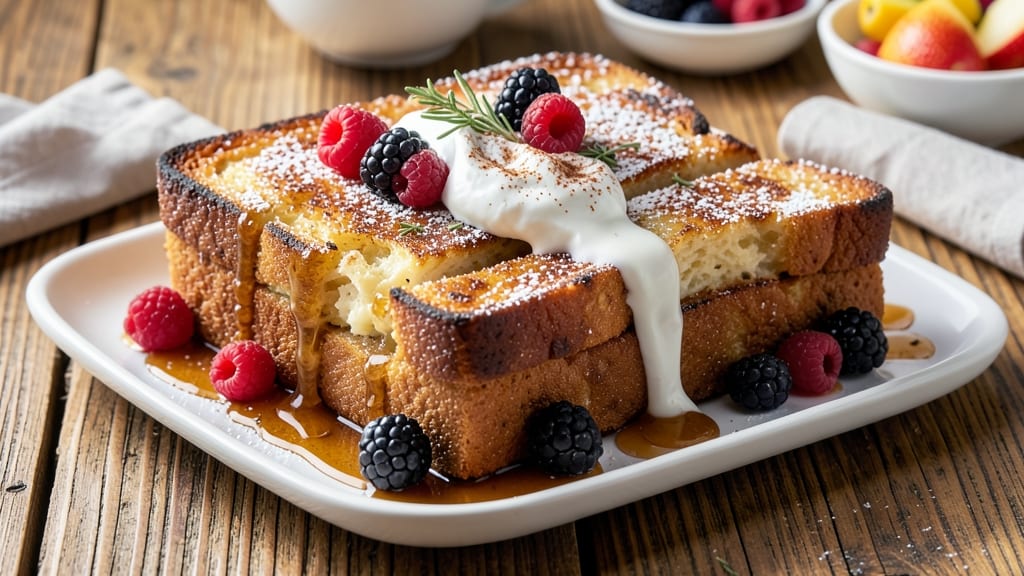
This artisan bread French toast recipe transforms stale loaves into a crispy-golden masterpiece with a vanilla custard core that's impossible to resist. 💛 The secret lies in soaking thick slices of sourdough or brioche in a lightly sweetened egg mixture—just long enough to absorb without turning soggy—then frying them to a perfect caramelized crust.
What makes this different is the balance: tender inside, shatteringly crisp outside, with every bite offering that satisfying contrast.
The process is simpler than it sounds, requiring just five key ingredients: eggs, milk, vanilla, a touch of cinnamon, and your choice of artisan bread. I recommend using a dense loaf like sourdough or brioche for maximum texture—these hold up beautifully during frying while developing that signature crust.
The custard mixture infuses the bread with subtle sweetness and warmth, creating a base that pairs perfectly with classic toppings like maple syrup, powdered sugar, or fresh berries.
What you'll end up with is French toast that looks as impressive as it tastes—golden edges that crackle with each bite, a custardy interior that's rich but not heavy, and a texture that's neither too crisp nor too soft.
The aroma of vanilla and caramelized bread will fill your kitchen, making it impossible to resist that first forkful. This isn't just breakfast; it's a showstopper that elevates any morning or brunch spread.
For an extra touch of sophistication, consider pairing with a drizzle of caramelized bananas or a sprinkle of flaky sea salt. Serve alongside a bold cup of coffee or a glass of sparkling wine for the full experience.
The beauty of this recipe is its versatility—it works as a weekend treat or a weeknight indulgence, always delivering that perfect balance of textures and flavors.
Ingredients for artisan bread french toast
Five key ingredients transform stale artisan bread into crispy-golden French toast perfection.
| Ingredient | Amount | Notes |
|---|---|---|
| Large Eggs 🥚 | 4 whole | Room temperature for even cooking |
| Whole Milk 🥛 | 1 ½ cups | Full-fat for creaminess |
| Pure Vanilla Extract 💛 | 1 tbsp | High-quality, real vanilla |
| Ground Cinnamon 🌿 | 1 tsp | Freshly ground preferred |
| Granulated Sugar 🍯 | 2 tbsp | Or maple syrup for variation |
| Unsalted Butter 🧈 | 4 tbsp | Melted for frying |
| Artisan Sourdough Bread 🍞 | 1 loaf | Stale or day-old preferred |
| Flaky Sea Salt 🧂 | ½ tsp | For finishing |
| Pure Maple Syrup 🍁 | ¼ cup | For serving |
| Fresh Berries 🍓 | 1 cup | Optional for garnish |
| Caramelized Bananas 🍌 | 1 cup | Optional for drizzling |
The bread is everything here—sourdough or brioche holds up best during frying, giving that signature crust while staying tender inside. Day-old or stale loaves work best since they absorb the custard without turning mushy. I grab mine from local bakeries (those crusty, dense loaves with character) or the bakery section at Whole Foods. If using brioche, slice it about 1/2-inch thick for even cooking. The butter matters too—European-style unsalted like Plugrá or President melts beautifully without overpowering.
No vanilla extract? Vanilla bean paste works in a pinch, or a scraped vanilla bean pod. Swapping milk for half-and-half adds richness, but keep it full-fat—low-fat versions won't crisp up right. Running short on sugar? Honey or agave at the same amount keeps things sweet. For the custard, whisk the eggs and milk together until completely smooth—no lumps, or you'll end up with rubbery toast. The cinnamon is non-negotiable though—it's what gives that warm, comforting flavor. If you're feeling fancy, add a pinch of nutmeg too.
The custard mixture keeps for 3 days in the fridge—just whisk before using. Bread slices can be prepped ahead and refrigerated for 12 hours before frying (cover tightly). For make-ahead French toast, fry the slices, then reheat in a 350°F oven for 5-10 minutes to restore crispiness. The syrup and berries stay fresh for 5 days in the fridge, while caramelized bananas are best used within 3 days—they soften fast. Portion the syrup into small jars for easy serving.
Why You'll Love This Recipe
- No Stale Bread Waste: I swear by this trick—tossing in yesterday’s artisan loaf (that crusty bit included) turns it into something golden and irresistible. No sad, dried-out bread ends up in the trash bin.
- Cinnamon-Sugar Magic: That first bite? The warm, buttery crunch paired with the vanilla and cinnamon is like dessert sneaking into breakfast. Honestly, I’ve caught myself eating it straight from the pan.
- Weeknight Crowd-Pleaser: Brunch with friends? Sunday family breakfast? This feeds six in under 40 minutes, and everyone—even the picky eaters—asks for seconds. (Yes, even on a Tuesday night.)
- Budget Breakfast Boost: Whole milk and eggs stretch farther than you’d think, and a single loaf of artisan bread becomes something special without breaking the bank. Leftovers? Reheat in the toaster—still crispy, still crave-worthy.
Step-by-step instructions for artisan bread French toast
Here's how to make restaurant-quality French toast with that perfect crispy crust and custardy center.
🍳 Step 1: Make the Vanilla Custard Batter
In a shallow bowl, whisk together the 4 whole Large Eggs and 1.5 cups Whole Milk until fully combined. Add the 1 tbsp Pure Vanilla Extract, 1 tsp Ground Cinnamon, and 2 tbsp Granulated Sugar, whisking until smooth. The mixture should be pale yellow and completely homogeneous.
Here's the thing—room temperature eggs and milk blend better, so if they're cold, let them sit out for 10 minutes first. This ensures your custard will be silky rather than lumpy. I like to give it a quick taste at this stage to adjust sweetness, though it'll mellow as it cooks.
👨🍳 Step 2: Prepare the Bread for Soaking
Cut the 1 loaf Artisan Sourdough Bread into ½-inch thick slices—you should get about 8-10 slices depending on the loaf size. Arrange them on a plate and let them sit uncovered for 5 minutes to dry out slightly. This prevents soggy toast and helps create that perfect crispy crust.
I press down gently on each slice with my fingers during this time—this prevents air pockets that could keep the custard from fully penetrating. If your bread is very fresh, you might want to toast it lightly first to remove excess moisture, but stale bread works even better for maximum crispiness.
🔥 Step 3: Fry to Perfect Golden Crispiness
Melt 2 tbsp Unsalted Butter in a large skillet over medium heat until it foams but doesn't brown. Add the bread slices and let them cook undisturbed for 2-3 minutes per side until golden brown and crispy. Don't crowd the pan—work in batches if needed to maintain even cooking.
Here's where it gets fun—when you flip, press down gently with a spatula. This ensures even contact with the pan and helps create that beautiful grid pattern on the crust. The custard inside should be just set but still slightly wobbly when you cut into it—this is the perfect texture we're after.
🥘 Step 4: Assemble and Serve Warm
Transfer the crispy French toast to a serving platter and immediately drizzle with 0.25 cup Pure Maple Syrup. Sprinkle generously with 0.5 tsp Flaky Sea Salt while still warm—this enhances all the flavors and balances the sweetness. For extra flair, add 1 cup Fresh Berries and 1 cup Caramelized Bananas on the side.
Serve immediately with an extra drizzle of maple syrup on the side. The contrast between the crispy exterior and custardy center is what makes this version special. Each bite should deliver that perfect crunch followed by a warm, vanilla-infused custard—trust me, it's worth the effort!
Pro Tips For Making Artisan Bread French Toast
- Whisk Eggs Like a Pro: Beat the eggs and milk vigorously for a full 30 seconds—you’re not just mixing, you’re emulsifying. I used to skip this, and my French toast turned out dense instead of light. A hand mixer makes it easier, but elbow grease works too.
- Soak Bread in Warm Milk: Heat the milk to 110°F (just warm to the touch) before dipping. Cold milk makes the bread gummy, while warm milk ensures even saturation. Trust me, your slices will absorb the custard perfectly—no soggy centers here.
- Skip the Overcrowded Pan: Cook two slices at a time in a nonstick or well-seasoned cast-iron skillet. I learned this after watching my first batch turn into a sad, uneven mess. Give each slice space to crisp without steaming.
- Toast Until Golden, Not Burnt: Medium-low heat is your friend—too hot, and the outside burns before the inside cooks through. Flip once for a perfect caramelized crust, then let it sit for 20 seconds. Patience here means no rubbery bites.
Serving suggestions for artisan bread french toast
Brunch Pairings
Start your morning right with a bold cup of cold brew coffee—its smooth, rich flavor complements the caramelized crust beautifully. For something lighter, try sparkling rosé wine (chilled) to balance the sweetness with crisp acidity.
I love pairing mine with a freshly squeezed orange juice to cut through the richness while adding a citrusy brightness. 🍷
Topping Variations
Swap classic maple syrup for honeycomb drizzle—tear fresh honeycomb over warm toast for a floral, textured finish. For a savory twist, top with crumbled feta and roasted cherry tomatoes for a brunch-worthy contrast.
I also adore dark chocolate shavings sprinkled over berries for a decadent touch that feels like dessert.
Presentation Tips
Arrange French toast slices on a slate board for rustic elegance, or stack them on a ceramic platter with syrup poured artfully around the edges. Use edible flowers (like violets) or microgreens for a pop of color.
For height, layer slices on a wooden board with berries tucked between them—it makes plating feel effortless yet impressive. ✨
Make-Ahead Serving
Fry the French toast ahead and reheat in a 350°F oven for 5-10 minutes to restore crispiness. Store toppings separately in airtight containers: syrup in a small jar, berries in a sealed container, and caramelized bananas on parchment-lined foil. Assemble just before serving to keep everything fresh and vibrant. 💫
Kid-Friendly Twists
Let kids customize their own slices with sprinkles, mini marshmallows, or crushed cereal for a fun, interactive brunch. Serve with yogurt parfaits or fruit skewers on the side—it turns breakfast into a playful experience.
I’ve even seen toddlers giggle over the "crunchy crack" of the toast when they take their first bite. 🍓
Coffee & Tea Pairings
A lavender latte adds floral notes that harmonize with the vanilla custard, while earl grey tea brings citrusy depth. For a bold contrast, try espresso with a dash of cinnamon—the warmth mirrors the spice in the toast.
If you prefer herbal, chamomile tea soothes the palate without overpowering the dish. ☕
Nutrition facts
Frequently asked questions
What's the best bread for artisan French toast?
Dense, crusty loaves like sourdough or brioche work best—they hold up during frying while developing that signature crispy crust. Avoid soft breads like brioche that's too fresh, as they'll turn soggy. For extra texture, try a challah or ciabatta with a thick crust.
Can I make this ahead of time?
Fry the toast in advance, then reheat in a 350°F oven for 5-10 minutes to restore crispiness. Store toppings separately—syrup in a jar, berries in a sealed container, and caramelized bananas on parchment. Assemble just before serving to keep everything fresh and vibrant.
Why did my French toast turn out soggy?
Soggy toast usually means the bread soaked too long in the custard mixture. Let slices sit uncovered for 5 minutes before soaking to dry out slightly, and don't exceed 30 seconds per side in the egg wash. Also, ensure your pan isn't overcrowded—this keeps heat even and prevents steam buildup.
How can I make it less sweet?
Reduce the sugar to 1 tbsp instead of 2 tbsp in the custard mixture, or omit it entirely for a savory version. For balance, add a pinch of flaky sea salt to the custard itself. Pair with tart toppings like lemon curd or sour cream to cut sweetness further.
Can I use dairy-free milk?
Yes, but expect slightly less richness. Use unsweetened almond or oat milk in a 1:1 ratio, and add 1 tsp xanthan gum to help bind the custard. For crispiness, melt coconut oil instead of butter. The texture will be lighter, but still delicious when paired with bold flavors like berry compote.