
Side Dishes
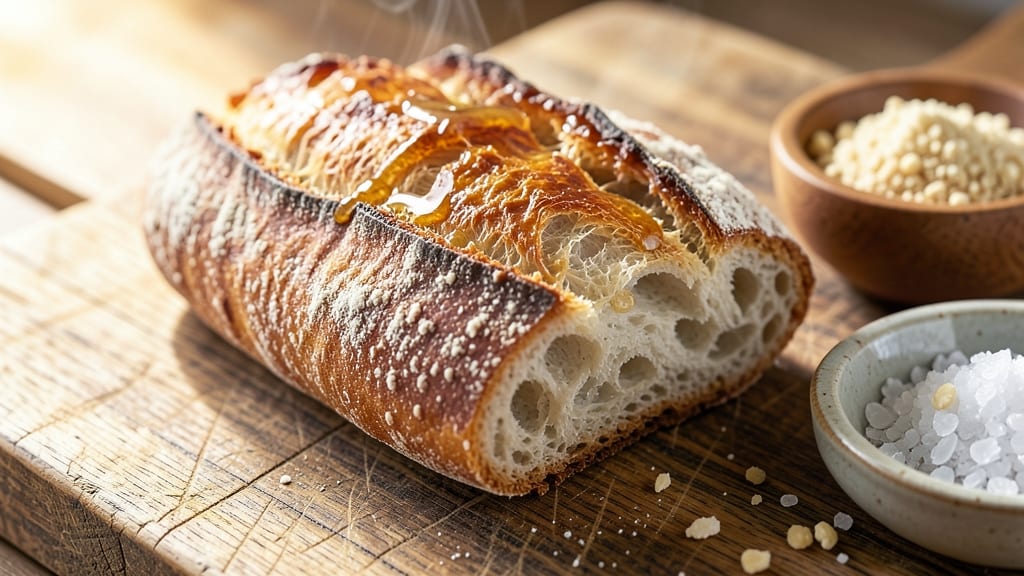
This artisan baguette bread recipe delivers the perfect balance of crispy golden crust and airy, pillowy softness inside—just like your favorite Parisian bakery. 💛 The secret lies in precise dough formulation, proper kneading, and controlled proofing, all of which transform simple ingredients into a masterpiece that rivals professional results.
I've refined this technique over countless batches, and every element—from hydration levels to oven steam—plays a crucial role in achieving that signature French texture.
What sets this recipe apart is its focus on authenticity without complexity. With just five core ingredients—high-quality flour, water, yeast, salt, and a touch of honey—you'll create dough that develops incredible structure and flavor during fermentation.
The shaping technique is the key to that iconic baguette silhouette, while the baking process with steam ensures a crisp exterior that shatters when you break it open. This isn't just bread; it's a textural experience that transforms any meal.
The result is a baguette with a crackling crust that gives way to an open, airy crumb—each bite offering that perfect contrast between crisp and soft. The aroma alone will transport you to a Parisian café, while the flavor remains pure and unadulterated by unnecessary additives.
What makes this recipe particularly rewarding is how it elevates simple ingredients through proper technique, proving that great breadmaking isn't about complicated ingredients but about mastering the fundamentals.
Whether you're serving it with olive oil and balsamic, using it for sandwiches, or simply enjoying it fresh from the oven, this baguette will become your new standard. The method is designed to be repeatable, so once you nail the technique, you'll consistently produce bakery-quality results at home.
Let's get started on creating your perfect baguette—every detail matters when you're aiming for that authentic French crunch.
Ingredients for artisan baguette bread
Five core ingredients transform into bakery-quality baguettes with perfect French texture contrast.
| Ingredient | Amount | Notes |
|---|---|---|
| Bread Flour 🌾 | 3 ½ cups | High-protein for structure (13% or higher) |
| Water 💧 | 2 ½ cups | Room temperature, 70-75°F |
| Active Dry Yeast 🍞 | ¼ oz | Or 2.25 tsp (test freshness in warm water) |
| Sea Salt 🧂 | 1 ½ tsp | Diamond Crystal preferred (no anti-caking agents) |
| Honey 🍯 | 1 tbsp | Light variety for subtle sweetness |
| Cornmeal 🌽 | ½ cup | For dusting work surface (white preferred) |
| Ice Cubes ❄️ | 1 cup | For ice water bath (optional for shaping) |
The flour is non-negotiable—King Arthur or Caputo are my go-tos for that signature open crumb. Bread flour with 13%+ protein gives the structure you need, while all-purpose won't cut it. Yeast freshness matters: toss a pinch in warm water—if it bubbles in 5 minutes, it's good. Honey isn't just sweetness; it feeds the yeast and adds that subtle caramel note. Trader Joe's has great affordable options for all these except flour—skip the bulk bins there for bread flour. Store flour in the freezer to preserve freshness, and keep yeast in the fridge until use.
No honey? Maple syrup at half the amount works, though flavor differs slightly. Running low on bread flour? All-purpose plus 1 tbsp vital wheat gluten per cup mimics the protein content. The ice bath is optional but helps tighten the dough for that classic baguette shape—just plunge the shaped dough for 30 seconds. For shaping, use a bench scraper (not your hands) to create the signature seams. Cornmeal is key for dusting—white cornmeal gives a cleaner look than yellow, and it toasts beautifully during baking.
Dough keeps 24 hours in the fridge before shaping—pull it out 2 hours before baking to come to room temp. For best results, bake immediately after shaping. Store cooled baguettes wrapped in a clean kitchen towel in a paper bag at room temp for 2 days to maintain crispness. Freeze shaped (unbaked) baguettes for up to 3 months—bake straight from frozen with 5 extra minutes. The crust stays crisp for 3 days if stored properly, but the crumb softens—best enjoyed fresh.
Why You'll Love This Recipe
- Here’s what sold me: this bread stays fresh for days, and if you slice it and freeze it, you’ve got perfect toast or garlic bread on demand. No sad, dried-out ends—just crispy, flavor-packed slices whenever you need them. (Yes, even on a Tuesday night.)
- Five-Ingredient Magic: I swear by this list—bread flour, yeast, water, salt, and honey. That’s it. No fancy add-ins, no stress. The honey? Just a spoonful to feed the yeast and add a whisper of sweetness that disappears into something ridiculously savory.
- Crust That Cracks: Honestly, the moment you hear that satisfying snap when you tear into it? That’s the sound of success. The sea salt on the crust isn’t just for looks—it’s what turns this from good bread to dangerously good bread, with that golden, shatterable exterior and pillowy inside.
- Weeknight Hero: Between us, I’ve used this for everything: toast with butter and jam, dipped in olive oil for a snack, even as a base for grilled cheese when I’m lazy. It’s the one loaf that does it all—no need for a separate dinner roll or sandwich bread.
Step-by-step instructions for artisan baguette bread
Here's the method that delivers that perfect baguette—crispy crust, airy crumb, and that unmistakable French bakery aroma.
👨🍳 Step 1: Activate the Yeast with Honey and Water
In a large bowl, combine the 2.5 cups water (at 70-75°F) with the 1 tbsp honey and 0.25 oz active dry yeast. Let this sit for 5-10 minutes until it becomes foamy and bubbles vigorously. This confirms your yeast is alive and ready to work its magic.
I always test my yeast first by dissolving a pinch in warm water with a teaspoon of sugar—if it bubbles within 5 minutes, it's fresh. The honey here not only feeds the yeast but also adds subtle sweetness that enhances the dough's flavor without overpowering it.
🍳 Step 2: Mix and Knead the Dough
Add the 3.5 cups bread flour and 1.5 tsp sea salt to the yeast mixture. Using a wooden spoon or dough whisk, stir until a shaggy mass forms. Then, turn it out onto a lightly floured surface and knead for 10 minutes until smooth and elastic.
The dough should spring back when poked and feel slightly tacky but not sticky. I press down gently on the dough during kneading—this develops gluten and gives that signature baguette texture. If it feels too dry, add 1 tsp water at a time until it reaches the right consistency.
⏰ Step 3: Bulk Ferment for Maximum Flavor
Place the dough in a lightly oiled bowl, cover with a damp towel, and let it rise at 70°F for 1.5-2 hours until it has nearly doubled in size. You'll see bubbles forming on the surface and the dough will feel light and airy when pressed gently.
This long fermentation is where the magic happens—it develops complex flavors and a light, open crumb. I like to do this in my warm oven with the light on, which creates the perfect environment. Punch down the dough once during this time to reset the gluten structure for even better texture.
🥘 Step 4: Shape and Rest the Dough
Turn the dough out onto a surface dusted with 0.5 cup cornmeal and divide it into 6 equal pieces (about 6 oz each). Roll each piece into a 12-inch log, tapering slightly at the ends to mimic a traditional baguette shape.
Place the shaped baguettes on a parchment-lined baking sheet, cover with a towel, and let them rest for 30 minutes. This final rest allows the gluten to relax, which prevents the baguettes from shrinking during baking. I like to use a bowl of 1 cup ice cubes to chill the water for dipping—this creates steam during baking for that perfect oven spring.
🔥 Step 5: Bake for Crusty Perfection
Preheat your oven to 475°F with a baking stone or inverted baking sheet inside. Once hot, place the baguettes on the stone and immediately pour 1 cup ice water into a heatproof bowl in the oven. Close the door and bake for 20-25 minutes until deep golden brown.
Watch closely after 15 minutes—the baguettes should be golden brown with a crisp crust. The steam from the ice water creates that signature baguette oven spring. Let them cool on a wire rack for 10 minutes before serving to prevent a gummy interior.
Pro Tips For Making Artisan Baguette Bread
- STRETCH THE DOUGH: I learned this the hard way—skipping the 20-minute stretch-and-fold during bulk fermentation weakens gluten. Fold the dough from one side to the opposite edge (not the center) three times, 5 minutes apart, to build strength without overworking it.
- USE COLD WATER: I was skeptical until I tried it: mixing bread flour with cold water (around 60°F) creates a slower fermentation that develops deeper flavor. The dough will feel sticky, but resist the urge to add extra flour—it’s supposed to be tacky.
- STEAM THE OVEN: No, a Dutch oven isn’t mandatory. If you’re baking straight on a rack, place a metal tray on the lower oven rack 10 minutes before baking, then pour 1 cup of boiling water into it. The steam mimics a Dutch oven’s crust-boosting effect—just don’t open the door.
- SALT THE FINAL DOUGH: Adding sea salt to the dough before the first rise is fine, but for a cleaner flavor, dissolve it in the water before mixing. This ensures even distribution and prevents pockets of saltiness. (Yes, even if you’re impatient like me.)
Perfect pairings for artisan baguette bread
Classic French Spreads
Drizzle your warm baguettes with extra-virgin olive oil from Provence—look for Bertolli or Colavita for that fruity, peppery flavor. Add a sprinkle of fleur de sel for that signature French touch.
I love pairing it with whipped garlic butter (mix ½ cup softened butter with 2 minced garlic cloves and 1 tsp lemon zest) for dipping. The contrast between the crisp crust and creamy garlic butter is pure magic. 🥖
Cheese and Charcuterie
Create a simple yet elegant board with Comté cheese (nutty and firm) and Brie (creamy and mild). Add sliced salami and cornichons for a classic French bistro vibe. I like to serve the baguettes with fig jam on the side—spread it on warm slices for a sweet-savory balance.
The baguette's crispness cuts through the rich cheeses beautifully.
Herb Butter Variations
Infuse your butter with fresh herbs for endless possibilities. Try chives and lemon zest for a bright, citrusy twist or rosemary and black pepper for a hearty flavor.
I make a batch of herb butter by mixing ½ cup softened butter with 2 tbsp chopped herbs and ½ tsp salt, then rolling it into a log. Chill until firm and slice for spreading. Perfect for sandwiches or just enjoying with warm bread. 🌿
Sweet Pairings
For dessert lovers, try pairing your baguettes with dark chocolate ganache (melt 8 oz dark chocolate with ½ cup heavy cream and drizzle over warm slices). A sprinkle of sea salt enhances the chocolate's richness.
Another favorite is peach jam—its fruity sweetness complements the bread's crusty texture. Serve with a glass of Sauternes for a decadent finish.
Wine and Beer Pairings
A crisp Sauvignon Blanc from the Loire Valley (like Vouvray) cuts through the bread's richness with its citrus notes. For beer lovers, a French Saison (such as Boulevard Tank 7) offers a refreshing, slightly spicy contrast.
I also enjoy a dry Riesling**—its acidity balances the bread's buttery crust. Avoid heavy reds; they can overpower the delicate flavors of the baguette. 🍷
Nutrition facts
Frequently asked questions
Why does my baguette dough feel too sticky?
This usually means your dough needs more flour or the hydration level is too high. Sprinkle 1 tablespoon flour at a time onto your work surface while kneading, but don't overdo it—the ideal dough should be slightly tacky but not gluey. If using bread flour with higher protein content, you may need slightly less water (2.25 cups instead of 2.5 cups) to prevent stickiness. Always knead for the full 10 minutes to develop gluten properly.
Can I make baguettes without a baking stone?
Use an inverted baking sheet or a heavy metal pan to mimic a baking stone. Place it on the middle rack while preheating, then transfer your baguettes directly onto it. For extra crispness, try this hack: Place a shallow metal pan on the lower rack during preheating, then pour 1 cup boiling water into it just before baking. The steam will create that signature crust even without a stone.
How do I fix baguettes that didn't rise enough?
If your baguettes are dense instead of airy, check these common issues first: Your yeast may be old (test freshness before using), or the fermentation temperature was too cold (70°F is ideal). For future batches, try adding 1 extra teaspoon of honey to feed the yeast better. If already baked, the only fix is to try again—proper fermentation is key to that light, open crumb. The good news? Your next attempt will be perfect with these adjustments!
What's the best way to store homemade baguettes?
Store cooled baguettes wrapped in a clean kitchen towel inside a paper bag at room temperature for 2 days to maintain crispness. For longer storage, freeze shaped (unbaked) baguettes for up to 3 months—bake straight from frozen with 5 extra minutes. Never refrigerate fresh baguettes—they'll lose their crisp crust and develop a gummy interior. The secret to freshness is the towel wrap, which mimics bakery conditions by slowing moisture loss.
Can I add seeds or nuts to the dough?
Yes, but use them sparingly—1-2 tablespoons per batch maximum to avoid weighing down the dough. Try sesame seeds or poppy seeds for a classic touch, or chopped walnuts for extra texture. Fold them in during the final 30-minute rest before baking so they stay on the surface. Just be prepared for slightly shorter shelf life—seeds absorb moisture faster than plain dough.