
Desserts
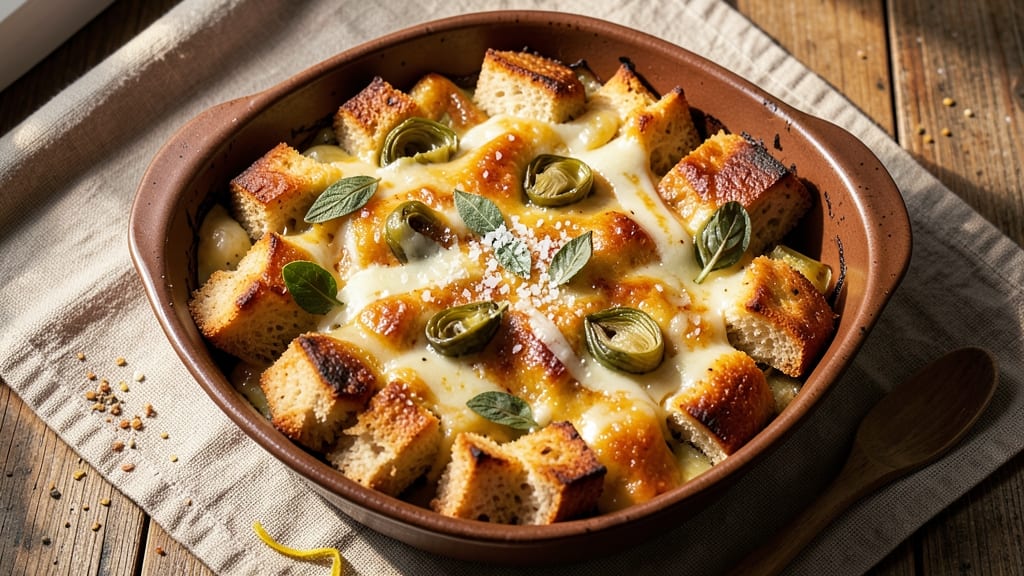
This artichoke bread pudding recipe transforms a classic dessert into a savory-sweet masterpiece that will have everyone asking for seconds. The secret lies in marinated artichoke hearts that add briny depth to the custard-soaked bread, while a touch of Parmesan and thyme elevate it from ordinary to extraordinary. I developed this recipe after realizing how often bread pudding gets overlooked in favor of sweeter treats—until you taste this version.
What sets this apart is the perfect balance between artichoke's natural tang and the warm, custardy bread. You'll start by soaking thick slices of crusty bread in a rich mixture of eggs, cream, and milk, then fold in marinated artichokes and cheese for that signature savory punch.
The baking process creates a golden crust outside while keeping the center tender and custardy inside.
By the time it emerges from the oven, you'll have a dish that's rich, flavorful, and completely unexpected—like a cross between bread pudding and a savory casserole. The artichokes remain tender and packed with flavor, while the bread absorbs the custard perfectly.
This isn't just dessert; it's a showstopper that works as a main course or elegant side.
The best part? This recipe comes together in just 30 minutes of prep, then bakes while you handle other dinner preparations. Serve it warm with a sprinkle of fresh herbs or a drizzle of balsamic glaze for that final touch of sophistication.
Here's how to make it—your taste buds will thank you.
Ingredients for artichoke bread pudding
Pantry staples meet artichoke tang—simple ingredients for a showstopping savory-sweet dish.
| Ingredient | Amount | Notes |
|---|---|---|
| Crusty Bread Loaf 🍞 | 1 ½ lb | Stale or day-old preferred |
| Marinated Artichoke Hearts 🌿 | 14 oz | Drained, quartered |
| Large Eggs 🥚 | 6 whole | Room temperature |
| Heavy Whipping Cream 🥛 | 1 ½ cups | Full-fat for richness |
| Whole Milk 🥛 | 1 cup | Warmed slightly |
| Parmesan Cheese 🧀 | ½ cup | Freshly grated |
| Fresh Thyme Leaves 🌿 | ¼ cup | Chopped finely |
| Garlic Cloves 🧄 | 3 cloves | Minced finely |
| Unsalted Butter 🧈 | 4 tbsp | Melted |
| Salt 🧂 | 1 ½ tsp | Kosher or sea salt |
| Black Pepper 🌶️ | 1 tsp | Freshly ground |
| Olive Oil 🫒 | 2 tbsp | For greasing |
| Balsamic Glaze 🍷 | ¼ cup | For drizzling (optional) |
The bread is non-negotiable—crusty loaves like sourdough or a rustic baguette work best. Whole Foods or Trader Joe's have great options, or grab a day-old loaf from your local bakery. Artichoke hearts? Muir Glen or California artichokes are my go-tos—they marinate beautifully. Fresh thyme is ideal, but dried at one-third the amount works in a pinch. For the Parmesan, grate it yourself—pre-grated tastes like sawdust in comparison. The eggs should be room temperature for a smoother custard.
No artichoke hearts? Sun-dried tomatoes or roasted red peppers add a similar tang. Short on thyme? Rosemary or basil work too, but thyme’s earthy note is key. The custard can be made richer with half-and-half instead of milk, but the cream is non-negotiable for that velvety texture. For extra depth, add a pinch of nutmeg to the custard. And if you’re feeling fancy, swap the balsamic glaze for a drizzle of aged balsamic vinegar—it’s cheaper and just as flavorful.
This keeps beautifully—3 days in the fridge or 3 months frozen. Reheat in a 350°F oven for 15 minutes until golden. I always make a double batch—half goes in the freezer for lazy weeknights. The bread absorbs the custard perfectly, so don’t skimp on the soaking time. And trust me, the extra 10 minutes of baking for that golden crust is worth it.
Why You'll Love This Recipe
- No Chopping Needed: I swear by this trick—just tear that crusty bread into chunks. No knife skills required, and the texture stays perfect every time.
- Creamy Artichoke Magic: That jar of marinated artichoke hearts? It’s the star. The tangy brine soaks into the bread while the cream turns it into something rich, almost like a cross between dessert and savory comfort.
- Leftovers Are Better: Honestly, the second day is my favorite. The bread gets even softer, and reheating it with a splash of milk makes it taste like a hug in pudding form.
- Budget Breakfast Win: Eggs, milk, and a loaf of bread—this feeds four for under $10. Add the artichokes (which last for weeks), and it’s basically a free meal that still feels special.
Step-by-step instructions for artichoke bread pudding
Transform simple ingredients into a rich, savory-sweet masterpiece with these straightforward steps.
Prepare the Bread and Artichoke Mixture
Preheat your oven to 350°F and grease a 9x13-inch baking dish with 2 tablespoons olive oil. Cut the 1.5 lb crusty bread loaf into 1-inch cubes—this ensures even baking and perfect texture. I like to use a serrated knife for clean cuts without crushing the bread.
In a large bowl, combine the bread cubes with the 14 oz quartered marinated artichoke hearts, 3 cloves minced garlic, and 0.25 cup finely chopped fresh thyme leaves. Toss gently to distribute the artichokes and herbs evenly throughout the bread. This step ensures every bite has that signature artichoke flavor and aromatic thyme punch.
Create the Creamy Egg Mixture
In a separate large bowl, whisk together the 6 room-temperature eggs, 1.5 cups heavy whipping cream, 1 cup warmed whole milk, and 1.5 teaspoons salt until just combined. The mixture should be smooth but not frothy. Add the 0.5 cup freshly grated Parmesan cheese and 1 teaspoon freshly ground black pepper, whisking until fully incorporated.
Here's the thing—room-temperature eggs blend more smoothly and create a creamier texture. If your eggs are straight from the fridge, let them sit in warm water for 5 minutes before using. Pour this creamy mixture over the bread and artichoke mixture in the bowl, stirring gently but thoroughly to coat every bread cube. Let it sit for 10 minutes while you prepare the next step.
Assemble and Bake to Golden Perfection
Transfer the bread mixture to the prepared baking dish, pressing down gently to create an even layer. The bread should be mostly submerged in the egg mixture, but don't worry if some cubes peek through—they'll soak up the creaminess as it bakes. Dot the top with the 4 tablespoons melted unsalted butter, spreading it evenly for that golden finish.
Bake for 45-50 minutes until the top is golden brown and the edges are set. You'll know it's ready when the center still jiggles slightly (like a wobbly custard) but the edges pull away cleanly from the pan. If the top browns too quickly, tent loosely with aluminum foil for the last 15 minutes to prevent over-browning.
Rest and Serve with Elegance
Remove the bread pudding from the oven and let it rest for 10 minutes before serving. This resting period allows the custard to set slightly, making it easier to slice and serve. The pudding should be golden on top with a creamy, custard-like center that's just set but still tender.
For that final touch, drizzle with 0.25 cup balsamic glaze just before serving. The sweet-tart contrast with the savory artichoke and rich custard is what makes this dish truly special. Serve warm with a simple arugula salad or roasted vegetables to balance the richness.
Pro Tips For Making Artichoke Bread Pudding
- Drain Artichokes Well: Skip the soggy bread by draining those marinated artichoke hearts for at least 10 minutes before chopping. I learned this the hard way—wet artichokes turn your bread pudding into a sad, mushy mess. Pat them dry with a paper towel if they’re still damp.
- Preheat the Dish: Pop your baking dish in the oven for 5 minutes at 350°F before adding the mixture. This ensures the bread soaks up the custard evenly and gets that golden crust instead of a pale, uneven top. Trust me, it’s worth the extra minute.
- Whisk Eggs Cold: Whisk your eggs and milk cold—straight from the fridge. Warm eggs scramble in the oven, leaving you with a dense, rubbery pudding. I was skeptical until I tried it, and now I never skip this step.
- Toast the Bread First: Give your crusty bread loaf a quick 5-minute toast in the oven before cubing it. This crisps the edges just enough to hold up to the custard and adds texture. (Yes, even if you’re impatient like me.)
Wine and beer pairings for this dish
White Wine Pairings
For this savory-sweet masterpiece, I reach for crisp Italian whites that cut through the richness while complementing the artichoke's briny depth. A Vermentino from Sardinia—bright with citrus and mineral notes—is my go-to. Its acidity balances the custard's creaminess while enhancing the artichoke's natural tang.
If you prefer something lighter, try a Pinot Grigio from Alto Adige, which offers delicate pear and almond flavors that harmonize beautifully. 🍷
Red Wine Options
Don't shy away from reds! A Chianti or Sangiovese with their cherry and earthy undertones pairs surprisingly well, especially if you've added a touch of nutmeg to the custard. The wine's acidity stands up to the artichoke's saltiness, while the tannins provide structure.
For something bolder, a Valpolicella from Verona adds complexity with its dried fruit notes—just avoid heavy, oaky wines that would overpower the dish.
Beer Pairings
Craft beer lovers will find a perfect match in a Belgian witbier, like Hoegaarden. The coriander and citrus notes in these beers echo the thyme and artichoke flavors while cleansing the palate between bites.
For a lighter option, try a German Helles Lager—its malty sweetness contrasts nicely with the savory bread pudding. Avoid heavy IPAs or stouts, as their bitterness can clash with the dish's delicate balance.
Non-Alcoholic Options
For those skipping alcohol, a sparkling apple cider with a hint of cinnamon adds festive bubbles and subtle sweetness. Alternatively, a sparkling mineral water with a squeeze of lemon enhances the artichoke's brightness.
I also love serving this dish with a chilled hibiscus tea—its tartness mirrors the balsamic glaze perfectly while keeping the meal refreshing. 💫
Pro Tips for Pairing
Serve all beverages slightly chilled (around 50-55°F) to complement the warm bread pudding. For wine, decant reds for 15-20 minutes to open their flavors. If using beer, opt for a lightly carbonated option to avoid overwhelming the dish.
And here's my secret: A small glass of dry Riesling (not too sweet) is the ultimate crowd-pleaser for this savory-sweet creation.
Nutrition facts
Frequently asked questions
Can I make this with fresh artichokes instead of marinated hearts?
Fresh artichokes work beautifully but require extra prep! Trim them, remove the tough outer leaves, and steam for 15-20 minutes until tender. Chop the hearts into small pieces and use them just like marinated hearts. Fresh artichokes add a more delicate flavor, so you may want to increase the thyme to 0.5 cup to balance their mildness.
How do I prevent the bread pudding from getting too dry?
Use stale or day-old bread—it absorbs the custard better than fresh. For extra moisture, reduce the baking time by 5 minutes and cover loosely with foil. The custard should be just set in the center when done, not completely firm. If it's still too dry, sprinkle with a little warm milk before serving.
Can I make this ahead of time?
This keeps well for 3 days in the fridge and freezes beautifully for 3 months. To reheat, bake at 350°F for 15 minutes until warmed through. For the best texture, add 1 tablespoon milk or cream before reheating to restore moisture. I often make a double batch—half to eat fresh and half to freeze!
What's the best bread for this recipe?
Crusty, sturdy breads work best—think sourdough, baguettes, or Italian bread. Avoid soft breads like brioche, as they'll fall apart in the custard. For extra flavor, toast the bread cubes lightly before soaking in the custard mixture. This adds a nice crunch and helps the bread hold its shape during baking.
How do I adjust the flavor if I don't like artichokes?
Swap the artichokes for sun-dried tomatoes (oil-packed) or roasted red peppers—both add a similar tangy depth. For a sweeter version, add 1 teaspoon vanilla extract or 0.25 cup raisins to the custard. You could also try caramelized onions (about 1 cup) for a rich, sweet-savory alternative.