
Side Dishes
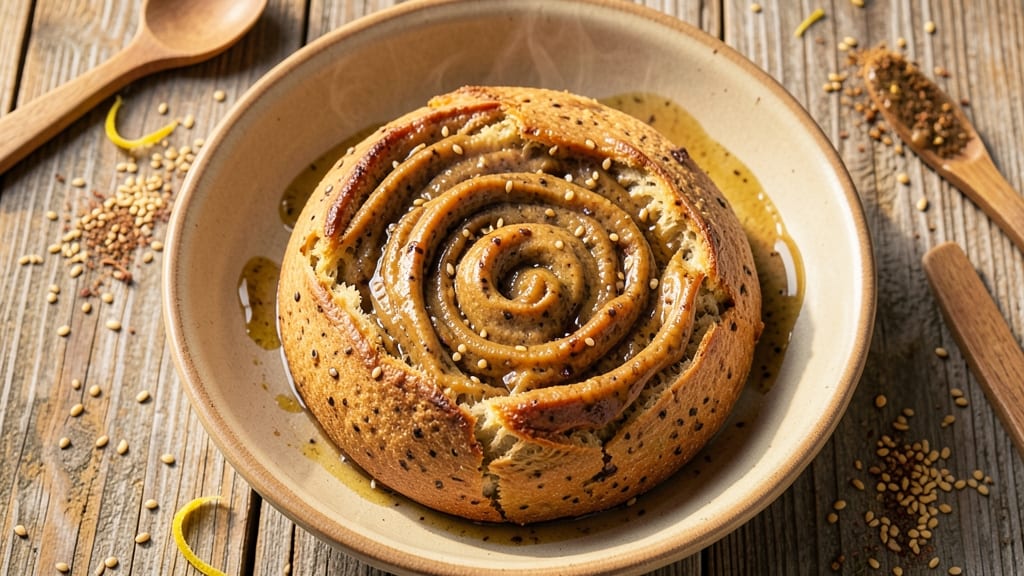
This Armenian tahini bread recipe brings the rich, nutty essence of sesame to your table with every bite—a perfect balance of crispy crust and tender crumb that defines Armenian baking traditions. The tahini isn't just an ingredient; it's the soul of this bread, infusing each slice with its signature depth. I first discovered this recipe during a visit to Yerevan, where it was served warm alongside lamb dishes, its golden crust glistening with melted butter and sesame seeds.
The beauty of this recipe lies in its simplicity: just a few ingredients transform into something extraordinary. The dough comes together effortlessly, and the tahini paste—mixed with warm water and a pinch of salt—creates a rich, flavorful crust that stays crispy even after baking.
What makes it truly special is how the tahini's natural sweetness and nutty richness complement the soft, airy crumb inside, making every bite a harmonious blend of textures and flavors.
Perfect for pairing with soups, stews, or as a standalone snack, this bread is as versatile as it is delicious. The aroma of freshly baked tahini bread fills your kitchen with warmth, while its golden-brown crust and tender interior make it impossible to resist.
Whether you're serving it at a family gathering or enjoying it with a simple meal, this recipe delivers restaurant-quality results with minimal effort.
For an extra touch, brush the baked bread with melted butter and sprinkle more sesame seeds on top—this simple step elevates the flavor and adds a beautiful finish. Let's get started on creating this timeless Armenian classic that will become a staple in your home.
Ingredients for armenian tahini bread
Just nine ingredients transform into golden Armenian tahini bread with crispy crust and soft crumb.
| Ingredient | Amount | Notes |
|---|---|---|
| All-Purpose Flour 🌾 | 4 cups | Spooned and leveled for accuracy |
| Active Dry Yeast 🍞 | ¼ oz | 1 packet or 2 1/4 tsp |
| Granulated Sugar 🍚 | 1 tbsp | For yeast activation |
| Warm Water 💧 | 1 cup | 105-115°F for yeast activation |
| Tahini Paste 🥜 | ½ cup | High-quality sesame seed paste |
| Extra-Virgin Olive Oil 🫒 | ¼ cup | Plus extra for brushing |
| Salt 🧂 | 1 ½ tsp | Fine sea salt preferred |
| Sesame Seeds 🌿 | ¼ cup | For topping, toasted if possible |
| Unsalted Butter 🧈 | ½ cup | Melted for brushing |
The tahini makes this bread special—look for thick, smooth paste at Middle Eastern markets or specialty stores like Whole Foods. The good stuff has no additives and a rich, nutty aroma. If you can only find thin tahini, blend it with a splash of water until smooth. Sesame seeds? Toast them first in a dry pan for 2-3 minutes—they’ll smell amazing and add extra flavor. The yeast should be fresh, so check the expiration date. For flour, King Arthur or Bob’s Red Mill work perfectly, but any all-purpose will do.
No tahini? Substitute with 1/4 cup peanut butter plus 1/4 cup olive oil, though it won’t taste identical. Running low on sesame seeds? Poppy or sunflower seeds work in a pinch, but the flavor won’t be the same. The butter can be swapped for vegan butter or more olive oil if needed. For the dough, if your kitchen feels too warm, chill the dough for 30 minutes before shaping—this prevents overproofing. And if you’re short on time, use instant yeast instead of active dry (just skip the sugar).
This dough keeps for 2 days in the fridge wrapped tightly in plastic. For longer storage, freeze shaped loaves (unbaked) for up to 3 months3-4 days if wrapped in a clean kitchen towel. Pro tip: Brush with extra butter and sesame seeds right after baking—they’ll crisp up beautifully. Store leftovers in an airtight container to keep them soft.
Why You'll Love This Recipe
- No-Knead Nightmare Solved: I swear by this dough—just mix, let it rise, and forget it. The tahini paste does all the work, giving you that rich, nutty depth without any fuss. Honestly, I’ve made it while scrolling through my phone during the first rise.
- Tahini Magic: That single spoonful of tahini transforms basic bread into something ridiculously good. The nutty, slightly bitter edge balances the soft, pillowy center—it’s like a warm hug for your sandwiches. (Yes, even on a Tuesday night.)
- Leftover Goldmine: This bread stays fresh for days, but if you’re like me, it won’t last that long. Toast it the next morning, and it’s just as good—crispy outside, still tender inside. I’ve even frozen slices for quick breakfasts.
- Budget-Friendly Staple: Flour, yeast, sugar—all pantry basics. The tahini adds a little luxury without breaking the bank, and one batch stretches for meals, snacks, or gifts. Between us, I’ve brought this to potlucks and had people ask for the recipe.
Step-by-step instructions for Armenian tahini bread
Here's how to make this nutty, sesame-crusted bread with a soft interior and crisp exterior.
Activate the Yeast with Tahini and Sugar
In a small bowl, combine the 1 cup warm water (between 105-115°F—test by dropping a bit of water on your wrist—it should feel warm but not hot), 1 tbsp granulated sugar, and the 0.25 oz active dry yeast. Let it sit for 5-10 minutes until it becomes frothy and bubbly. This step is crucial—if it doesn't foam, your bread won't rise properly.
Next, whisk in the 0.5 cup tahini paste until fully smooth. Tahini adds that signature nutty flavor and helps create the bread's signature tender crumb. If the mixture looks too thick, add 1-2 teaspoons of warm water to loosen it. Set this aside while you prepare the dough.
Mix the Dough Until Just Combined
In a large mixing bowl, combine the 4 cups all-purpose flour and 1.5 tsp salt. Make a well in the center and pour in the yeast-tahini mixture along with the 0.25 cup extra-virgin olive oil. Using a wooden spoon or dough whisk, gently mix until the dough starts to come together.
Once it forms a shaggy mass, turn it out onto a lightly floured surface and knead for 8-10 minutes until smooth and elastic. The dough should be soft but not sticky—if it's too wet, add 1 tablespoon of flour at a time. Here's the thing—tahini makes this dough behave differently than regular bread dough, so don't overwork it or it'll get tough.
Let the Dough Rise Until Doubled
Lightly grease a large bowl with a bit of olive oil, place the dough inside, and cover with a damp kitchen towel or plastic wrap. Let it rise in a warm place for 1-2 hours or until it has doubled in size. You'll know it's ready when you poke it gently and the indentation stays put.
I like to place my oven light on for 5 minutes before letting the dough rise—this creates a warm environment that helps the yeast work faster. If your kitchen is cold, you might need the extra warmth. Don't skip this rising time—it's what gives the bread its airy texture.
Shape and Second Rise for Perfect Texture
Punch down the risen dough to release any air bubbles, then turn it out onto a lightly floured surface. Divide it into 8 equal pieces (about 3 ounces each) and shape each into a smooth ball. Arrange them in a greased 9x13-inch baking pan, leaving about 1 inch between each ball since they'll expand.
Cover the pan with a damp towel and let the dough rise again for 30-45 minutes until puffy. Here's where the magic happens—the tahini gives these balls a beautiful sheen and helps them develop that signature Armenian bread texture. Preheat your oven to 375°F while the dough rises.
Bake Until Golden and Crisp
Brush the tops of the dough balls with melted unsalted butter (the 0.5 cup from your ingredients) and sprinkle with 0.25 cup sesame seeds20-25 minutes until the bread is golden brown and sounds hollow when tapped on the bottom.
For that perfect crisp crust, I like to broil for 1-2 minutes at the end—just watch closely so they don't burn. Let the bread cool in the pan for 5 minutes before transferring to a wire rack. The crust will be crispy on the outside while the interior remains soft and pillowy—exactly what makes this bread so special.
Pro Tips For Making Armenian Tahini Bread
- Whisk Tahini First: Mix the tahini with the warm water before adding it to the yeast—this prevents clumping and ensures the yeast activates smoothly. I learned this the hard way when my dough took forever to rise because the tahini gummed up the yeast.
- Use Room-Temp Tahini: Scoop tahini straight from the fridge, and it’ll thicken into a paste that fights the dough. Let it sit out for 10 minutes first—your dough will be lighter and easier to handle.
- Don’t Over-Knead: Tahini bread is delicate; knead just until the dough pulls away from the bowl (about 5–7 minutes). Overwork it, and the tahini will make the dough tough and gummy—like chewing on a rubber band.
- Proof at 75°F (24°C): Yeast loves consistency. If your kitchen’s colder, proof the dough in a slightly warm spot (like the oven with the light on) for 1–1.5 hours. Too cold? It’ll rise slowly and taste flat. Too hot? It’ll rise too fast and collapse.
Essential equipment for great armenian tahini bread
Must-Have Tools
Start with a standard 9x13-inch baking pan—I recommend Wilton's nonstick version for easy release. A digital kitchen scale (like OXO's 11-pound model) ensures precise dough measurements, especially when dividing into 8 equal pieces.
Don't skip a damp kitchen towel—it creates the ideal humid environment for proper rising. 🌡️
Dough Handling
A wooden dough whisk or plastic spatula prevents sticking when mixing tahini into the dough. For kneading, I prefer a well-floured surface—King Arthur's bread flour works best—but a stand mixer with a dough hook (like KitchenAid's 5-quart) saves time and effort.
Keep a small bowl of flour nearby to dust your hands during shaping.
Yeast Activation
Your thermometer (I use Thermoworks' sous vide model) is critical for checking water temperature—105-115°F is perfect for yeast activation. A small mixing bowl (6-8 cups) holds the yeast-tahini mixture comfortably.
I keep a spray bottle handy to mist the dough if it dries out during rising—just a light mist maintains moisture without over-wetting.
Baking Essentials
Preheat your oven with a baking stone (like Lodge's cast iron) for even heat distribution. A pastry brush (I love OXO's silicone brush) makes butter application effortless.
For the final broil, keep a heat-resistant mitt nearby—those sesame seeds get hot fast! A wire cooling rack prevents soggy bottoms while cooling.
Optional Upgrades
For professional results, try a proofing box (like Breville's Smart Oven) to control rising temperature precisely. A sesame seed toaster (available at Middle Eastern markets) gives them that restaurant-quality crunch. I also keep extra tahini on hand—Al Yaman's brand is my go-to for that authentic Armenian flavor. 🥜
Nutrition facts
Frequently asked questions
Why does Armenian tahini bread have a nutty flavor?
The signature nutty taste comes from the ½ cup tahini paste used in both the dough and crust. Tahini is made from ground sesame seeds, which contain natural oils that caramelize beautifully during baking. This creates that rich, toasty flavor you'll notice in every bite. The sesame seeds on top add an extra layer of nuttiness when toasted.
Can I make this bread without tahini?
You can substitute with ¼ cup peanut butter plus ¼ cup olive oil, though the flavor won't be identical. For a closer alternative, try ½ cup ground flaxseed or sunflower seed butter mixed with a little water to thin it. The bread will still be delicious, but the nutty depth from tahini is what makes this recipe truly special.
How do I know when the dough is properly risen?
The dough is ready when it's doubled in size and leaves a slight indentation when gently pressed with your finger. For this tahini bread, the dough should be soft but not sticky—if it feels too wet, let it rise a bit longer. A good test is to poke it lightly: if the indentation stays put, it's perfect. The tahini makes the dough behave differently than regular bread, so don't rush this step!
Can I bake this bread in a different pan size?
Yes, but adjust the spacing between loaves. For a 9x9-inch pan, arrange 6 pieces instead of 8, leaving 1 inch between each. If using a round cake pan, shape the dough into a single large loaf and reduce baking time by 5-7 minutes. The key is maintaining proper spacing—overcrowding leads to uneven baking.
Why did my bread turn out dense instead of soft?
Dense bread usually means the dough didn't rise enough or was overworked. Make sure your yeast was active (it should foam within 5-10 minutes in warm water). Also, tahini dough is delicate—avoid kneading more than 8-10 minutes or it'll develop gluten too much. Try placing your dough in a warmer spot (like a turned-off oven with the light on) to help it rise properly.