
Side Dishes
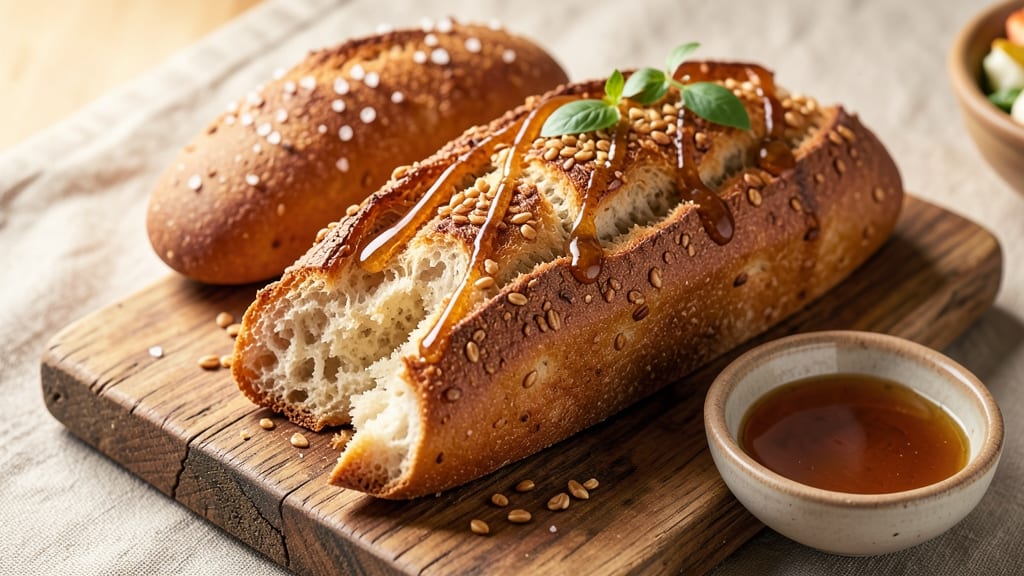
This Arabic barley bread recipe delivers the perfect balance of nutty, spiced crust and chewy interior that pairs beautifully with stews and dips. 🌟 The secret lies in combining barley flour with traditional white flour, creating a bread that's both hearty and delicate—a staple in Middle Eastern cuisine for centuries.
I've refined this recipe over years of baking, ensuring it's approachable for home cooks while staying true to its cultural roots.
The dough comes together with just five key ingredients: barley flour, all-purpose flour, yeast, warm water, and a touch of honey for subtle sweetness. No butter or oil is needed—just a pinch of salt to enhance the natural flavors.
The shaping technique is simple but critical: roll the dough thin and even, either by hand or with a rolling pin, to achieve that signature crispy crust while keeping the center tender.
Baking transforms the dough into golden, fragrant loaves with a crisp exterior and a satisfying chew. The barley adds a subtle nuttiness that deepens as the bread cools, while the spices—like a hint of cumin or sesame seeds—infuse warmth with every bite.
This bread is naturally vegetarian and can be made vegan by adjusting the yeast activation method.
Perfect for serving alongside lamb stews, hummus, or fresh vegetables, this recipe brings a taste of tradition to your table. The process is straightforward, but the results are anything but ordinary—each loaf tells a story of heritage and simplicity.
Let's get started on creating your own batch of this beloved bread.
Ingredients for arabic barley bread
Five core ingredients and a touch of tradition—this bread delivers authentic Middle Eastern flavor with minimal effort.
| Ingredient | Amount | Notes |
|---|---|---|
| Barley Flour 🌾 | 2 cups | Ground fine for even texture |
| All-Purpose Flour 🌾 | 2 cups | White flour for structure |
| Active Dry Yeast 🍞 | ¼ oz | One packet (2.25 tsp) |
| Warm Water 💧 | 1 ½ cups | 110°F for yeast activation |
| Honey 🍯 | 2 tbsp | For subtle sweetness |
| Fine Sea Salt 🧂 | 1 tsp | Enhances natural flavors |
| Ground Cumin 🌿 | ½ tsp | Earthy warmth (optional) |
| Sesame Seeds 🌰 | 2 tbsp | For topping and crunch |
| Olive Oil 🫒 | 1 tbsp | For dough shaping |
Barley flour is the soul of this recipe—Bob's Red Mill or King Arthur brands work best for their fine grind. If you can't find barley flour, substitute half with whole wheat flour, though texture will differ slightly. The all-purpose flour balances the barley's nuttiness while keeping the dough manageable. For yeast, FreshPaks (active dry) are foolproof—just make sure your water is 110°F (not boiling). Too hot kills the yeast; too cold slows activation. The honey should be raw, unprocessed for best flavor, but regular honey works in a pinch.
No cumin? Ground coriander at half the amount gives similar warmth. Sesame seeds can be swapped for poppy seeds or crushed pistachios if you prefer. For a vegan version, dissolve the yeast in 1 tsp sugar + 2 tbsp warm water instead of honey. The olive oil is just for shaping—don't add it to the dough itself. If you're short on time, instant yeast can replace active dry at the same weight (0.25 oz). For extra crust flavor, brush the baked loaves with garlic-infused olive oil after baking.
Freshly mixed dough keeps 24 hours in the fridge, covered tightly. For longer storage, freeze shaped dough balls wrapped in plastic for up to 3 months. Thaw overnight in the fridge before baking. The bread reheats beautifully—wrap in foil and warm in a 350°F oven for 5-10 minutes. Stale bread? Toast slices for 2-3 minutes to revive crispness. Portion dough into 4 equal balls before shaping for consistent loaves.
Why You'll Love This Recipe
- No-Fuss Dough: I mix everything in one bowl—no fancy equipment, just my hands and a little elbow grease. The barley flour gives it that hearty texture without extra steps, and the honey keeps it from being dry.
- Sweet & Earthy Crunch: That balance of warm honey and nutty barley? It’s like a hug for your taste buds. The yeast makes it light enough to eat with soup, but the barley keeps it satisfying—no sad, heavy bread here.
- Meal Prep MVP: I bake a batch on Sundays and it lasts all week—perfect for lunches or quick snacks. The crust stays crispy even when reheated, and it’s way cheaper than buying store-bought flatbread.
- Pantry Staple Power: Honestly, I always have barley flour and yeast on hand, so this is my go-to when I’m low on ingredients. It’s budget-friendly, freezes well, and still tastes amazing—no excuses not to make it.
Step-by-step instructions for Arabic barley bread
Here's the method for crafting authentic, nutty barley bread with a chewy interior and spiced crust.
👨🍳 Step 1: Activate the Yeast and Mix the Dough
In a large mixing bowl, combine the 1.5 cups warm water (about 110°F) with the 2 tbsp honey and 0.25 oz active dry yeast. Let it sit for 5-10 minutes until frothy—this confirms the yeast is alive and ready to work. If it doesn't bubble, your bread won't rise properly.
In a separate bowl, whisk together the 2 cups barley flour and 2 cups all-purpose flour with the 1 tsp fine sea salt and 0.5 tsp ground cumin. Gradually pour the yeast mixture into the dry ingredients while stirring with a wooden spoon. The dough will be shaggy at first, but add the 1 tbsp olive oil and mix until just combined—overmixing develops gluten and makes the bread tough.
🥘 Step 2: Knead Until Smooth and Elastic
Transfer the dough to a lightly floured surface and knead for 8-10 minutes until smooth and elastic. You'll know it's ready when it springs back slowly when poked. The barley flour makes this dough denser than regular bread dough, so don't be surprised if it feels heavier—this is normal.
Shape the dough into a round loaf and place it in a lightly oiled bowl. Cover with a damp towel and let it rise in a warm place for 1-2 hours or until doubled in size. The warm environment helps the yeast activate faster, giving you that perfect rise. If your kitchen is cold, place the bowl near a warm oven with the light on.
🔥 Step 3: Shape and Proof the Bread
Punch down the risen dough to release air, then divide it into 4 equal portions (about 1 cup each). Roll each portion into a smooth ball, then flatten slightly into a round shape. Place them on a parchment-lined baking sheet, spacing them about 2 inches apart.
Cover the shaped dough with a damp towel and let it proof for another 30-45 minutes until puffy. The dough should feel firm but still slightly springy to the touch. This final proofing step ensures a light, airy texture. While it proofs, preheat your oven to 375°F with a baking stone or inverted baking sheet inside.
🔥 Step 4: Bake to Golden Perfection
Just before baking, brush the tops of the dough rounds with a little water and sprinkle generously with the 2 tbsp sesame seeds. Transfer the baking sheet to the preheated oven and bake for 25-30 minutes until the bread is deep golden brown and sounds hollow when tapped on the bottom.
For extra crispiness, I like to broil for 1-2 minutes at the end, watching closely to prevent burning. The bread should have a nutty aroma and a slightly crisp crust with a chewy interior. Let the bread cool on a wire rack for at least 10 minutes before slicing—this prevents the crumb from turning gummy.
Pro Tips For Making Arabic Barley Bread
- Bloom the Yeast First: Skip mixing yeast with dry ingredients—dissolve it in warm water (about 110°F/43°C) with a pinch of honey first. Let it sit for 5-10 minutes until frothy; if it doesn’t bubble, your bread will taste flat. I learned this the hard way after making a batch that tasted like cardboard.
- Sift the Barley Flour: Barley flour is dense and clumpy—sift it with the all-purpose flour before mixing to avoid a gummy dough. Use a fine-mesh sieve and tap it firmly; even distribution makes shaping easier. (Yes, it’s extra work, but your bread will thank you.)
- Don’t Over-Knead: This dough is trickier than regular bread dough—knead just until smooth (about 5-7 minutes by hand). Overworking it activates too much gluten, and your bread will turn out tough. Stop when it springs back slowly when poked.
- Steam the Pan: Brush the baking pan with melted butter or oil, then add a handful of ice cubes or spray water on the sides before baking. The steam keeps the crust from drying out too fast, giving you that classic soft, pillowy texture. (Pro move: Do this right before preheating the oven.)
Creative variations of these flavors
Moroccan Msemen Twist
Transform your barley bread into Moroccan msemen by adding 1 tbsp ground anise seed and ½ tsp cinnamon to the dough. After shaping, flatten each piece into a thin circle (about ⅛-inch thick) and cook in a hot, dry skillet for 1-2 minutes per side until puffed and golden.
Serve immediately with honey and dates or savory tagines—this version is a showstopper at brunch. 🌿
Lebanese Manakeesh Style
For a Lebanese-inspired flatbread, replace 1 cup all-purpose flour with 1 cup whole wheat flour and add ¼ cup crumbled feta cheese to the dough. After shaping into rounds, brush with olive oil and sprinkle with everything bagel seasoning before baking.
This version pairs perfectly with muhammara (red pepper dip) or labneh. The feta adds a tangy contrast that balances the barley’s nuttiness. 🧀
Spiced Za’atar Crust
Elevate your bread with a za’atar crust by mixing 2 tbsp za’atar with 1 tbsp melted butter and brushing it over the dough before baking. For extra flavor, add ½ tsp smoked paprika to the dough.
The za’atar’s herby, lemony notes complement the barley beautifully. Serve with olive oil and warm labneh for dipping—this is a staple in Levantine cuisine. 🌿
Sweet Date-Stuffed Loaves
Create stuffed barley bread by rolling out the dough into a rectangle, spreading ½ cup chopped Medjool dates mixed with 1 tbsp orange zest in the center, then folding and sealing the edges.
Bake as directed, then drizzle with honey after cooling. This sweet version is perfect for breakfast or dessert and adds a festive touch to any meal. 🍯
Smoky Sumac Twist
Add a smoky, tangy kick by sprinkling 1 tbsp sumac over the dough before baking. For extra depth, mix ½ tsp ground coriander into the dough. The sumac’s citrusy tang pairs wonderfully with the barley’s earthiness.
Serve with spiced yogurt sauce or grilled meats for a restaurant-worthy dish. This variation is a must-try for bold flavors. 🌶️
Nutrition facts
Frequently asked questions
Can I substitute barley flour with another type of flour?
The barley flour gives this bread its signature nutty flavor, but you can replace 1 cup with whole wheat flour for a similar texture. For best results, keep at least 1 cup barley flour to maintain authenticity. If you're avoiding gluten, use a 1:1 gluten-free flour blend like Bob's Red Mill, but expect a denser result.
Why does my dough feel dense and sticky?
The barley flour absorbs more moisture, making the dough heavier than regular bread dough. Knead for the full 8-10 minutes to develop gluten properly, and avoid adding extra water—this will make the bread gummy. If it's still too sticky, wet your hands slightly while shaping.
How do I store leftover Arabic barley bread?
Wrap cooled loaves tightly in plastic wrap or store in an airtight container to keep them fresh for 3-4 days at room temperature. For longer storage, freeze the bread for up to 3 months. To reheat, wrap in foil and warm in a 350°F oven for 5-10 minutes or toast slices for 2-3 minutes.
Can I make this bread without yeast?
Yes, but the texture will differ. Replace the yeast with 2 tsp baking powder and 1 tsp baking soda, and skip the rising steps. Mix everything together, shape immediately, and bake at 375°F for 20-25 minutes. The bread will be denser but still delicious—great for quick meals!
What’s the best way to serve this bread?
This bread pairs beautifully with Middle Eastern classics like hummus, baba ganoush, or lamb stews. For a sweet touch, serve with honey, labneh, or fresh fruit. The nutty flavor also complements grilled meats or roasted vegetables perfectly. Warm slices make an excellent base for open-faced sandwiches!