
Side Dishes
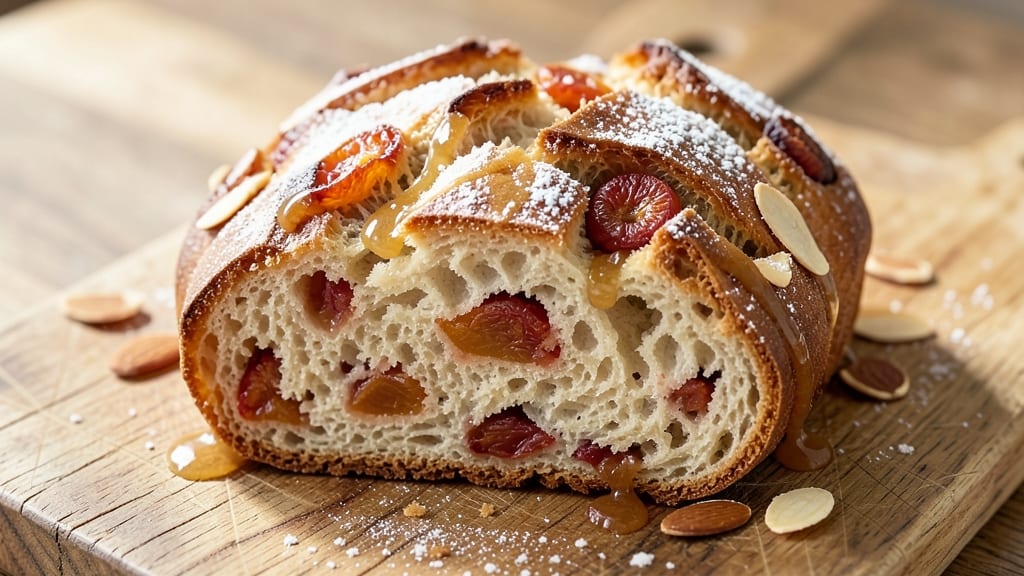
This apricot yeast bread recipe transforms simple dough into a golden, fragrant loaf with bursts of sweet-tart fruit in every bite. 🌟 The secret lies in balancing yeast activation, gentle kneading, and precise proofing to create a tender crumb with a crisp, caramelized crust.
Whether you use fresh apricot jam, dried fruit, or whole apricots, the result is a showstopping bread that tastes like summer in every slice.
Professional bakers know the difference between good bread and exceptional bread comes down to technique—not shortcuts. We’ll start with a warm yeast mixture to ensure proper activation, then build flavor through a slow fermentation.
The dough’s elasticity comes from proper kneading, while the apricot swirls add natural sweetness that pairs perfectly with the bread’s rustic texture. This recipe delivers restaurant-quality results without requiring advanced skills.
Baking at 375°F for 30-35 minutes yields a loaf with a golden-brown crown and an interior that’s perfectly tender yet sturdy enough to hold the fruit swirls. The aroma alone—warm yeast, caramelizing sugar, and apricot—will have your kitchen smelling like a European bakery.
Brush the warm loaf with a light egg wash for extra shine, then let it cool on a wire rack before slicing.
This bread is ideal for breakfast, brunch, or as a sweet accompaniment to cheese boards. The versatility of the recipe means you can adjust the fruit content—add more jam for extra richness or keep it subtle with just a few dried apricots.
Once you master this technique, you’ll never buy store-bought again. Let’s get baking!
Ingredients for apricot yeast bread
Golden crust meets sweet-tart apricot swirls in this artisan-inspired yeast bread.
| Ingredient | Amount | Notes |
|---|---|---|
| Active Dry Yeast 🍞 | 2 ¼ tsp | Ensure freshness by checking expiration date |
| Warm Water 💧 | ¾ cup | 110°F for optimal yeast activation |
| All-Purpose Flour 🌾 | 5 cups | King Arthur or similar high-protein preferred |
| Granulated Sugar 🍚 | ¼ cup | Ensures proper yeast activation |
| Unsalted Butter 🧈 | ½ cup | Cold, cubed for easier incorporation |
| Large Eggs 🥚 | 2 whole | Room temperature for even mixing |
| Diamond Crystal Kosher Salt 🧂 | 1 ½ tsp | Adjust to taste after initial proofing |
| Apricot Jam 🍑 | 1 cup | High-quality, unsweetened preferred |
| Dried Apricots 🍇 | ½ cup | Chopped, for texture variation |
| Whole Milk 🥛 | ¼ cup | Warmed to enhance dough elasticity |
| Egg Wash 🥚 | 1 whole | 1 egg beaten with 1 tbsp water |
| Coarse Sugar 🍚 | 2 tbsp | For sprinkling on top crust |
| Cornmeal 🌽 | ¼ cup | For dusting baking sheet |
The yeast is non-negotiable—King Arthur or similar premium brands ensure reliable activation. For the apricot jam, Maille or Bonne Maman deliver that perfect balance of sweetness and acidity. Dried apricots should be plump and free of wrinkles; Trader Joe's or bulk bins offer the best quality. The butter must be cold when mixed into the dough—cut it into small cubes and let it sit at room temperature for 30 minutes before measuring. For the flour, sift it first to eliminate any lumps, which guarantees a lighter crumb. If you're using whole apricots instead of jam, pat them dry before chopping to prevent excess moisture in the dough.
No apricot jam? Substitute with apricot preserves or even peach jam, though the flavor will differ slightly. Running short on dried apricots? Dried plums or figs work beautifully—just adjust the quantity to maintain the same volume. For a dairy-free version, replace the milk with warm almond milk and use vegan butter, though the texture may vary slightly. If your yeast isn't fresh, test it first by mixing 1 tsp with warm water and 1 tsp sugar—if it bubbles within 10 minutes, it's active. For a richer flavor, add 1 tsp vanilla extract to the dough during mixing. The egg wash can be made ahead and stored in the fridge for up to 2 days.
This dough requires patience—let it rest for 1 hour after mixing before shaping to develop gluten properly. Store any leftover dough in an airtight container in the fridge for up to 24 hours, or freeze for 3 months by wrapping tightly in plastic. The baked loaf keeps well at room temperature for 2 days, but for longer storage, slice and freeze individual portions. To reheat, wrap slices in a damp paper towel and microwave for 10-15 seconds. For an extra-sweet version, brush the warm loaf with a thin layer of melted butter before serving—trust me on this. The crust will stay crisp for hours.
Why You'll Love This Recipe
- Same dough, endless uses: toast it for breakfast, pack slices for lunch, or wrap it in parchment for a last-minute hostess gift. Honestly, I’ve even used it as a base for French toast—because why not?
- Foolproof Rise: I swear by this dough—just toss in the yeast with warm water, let it sit while I chop fruit, and it doubles in time. No kneading, no stress, just magic from the butter and sugar working their flavor into the flour.
- Sweet Without Trying: That apricot jam swirled through the dough? It’s the kind of subtle sweetness that makes you forget bread can be boring. The butter keeps it rich but never heavy, and the crust stays tender—no dry bites here.
- Breakfast, Snack, Gift: Same dough, endless uses: toast it for breakfast, pack slices for lunch, or wrap it in parchment for a last-minute hostess gift. Honestly, I’ve even used it as a base for French toast—because why not?
Step-by-step instructions for apricot yeast bread
Transform simple ingredients into a fragrant, swirled apricot loaf with this professional technique.
👨🍳 Step 1: Activate the Yeast and Mix the Dough
In a small bowl, combine the 2.25 tsp active dry yeast with the 0.75 cup warm water (about 110°F) and 0.25 cup granulated sugar. Let sit for 5-10 minutes until foamy—this confirms your yeast is active. If it doesn't foam, your yeast may be dead or your water too hot.
In a stand mixer fitted with the dough hook, combine the 5 cups all-purpose flour and 1.5 tsp diamond crystal kosher salt. Mix on low speed, then add the yeast mixture, 0.5 cup cold cubed unsalted butter, 2 whole large eggs, and 0.25 cup warmed whole milk. Mix on medium speed for 5-7 minutes until the dough forms a smooth, elastic ball that pulls away from the bowl sides.
🥘 Step 2: Knead and Shape the Dough
Continue kneading for an additional 2-3 minutes until the dough reaches 78°F internally and springs back when gently pressed. This window ensures proper gluten development without overworking. Shape the dough into a rectangle about 12x8 inches on a lightly floured surface.
Spread 1 cup apricot jam evenly over the dough, leaving a ½-inch border. Sprinkle the 0.5 cup chopped dried apricots over the jam. Roll the dough tightly into a log, sealing the edges well. This creates the signature swirl effect while trapping all the fruit filling inside.
⏰ Step 3: Proof and Prepare for Baking
Place the dough seam-side down in a greased 9x5-inch loaf pan. Cover with a damp towel and let rise in a warm place for 1-1.5 hours until doubled in size. The dough should spring back slowly when poked with a finger—this indicates proper fermentation. Preheat your oven to 375°F during the final 15 minutes of proofing.
Brush the risen dough with the 1 whole egg wash and sprinkle with 2 tbsp coarse sugar for a beautiful caramelized crust. Dust a baking sheet with 0.25 cup cornmeal—this prevents sticking and adds texture to the bottom of your loaf.
🔥 Step 4: Bake to Golden Perfection
Carefully transfer the prepared loaf to the cornmeal-dusted baking sheet and bake for 35-40 minutes until the internal temperature reaches 190-195°F and the crust turns a deep golden brown. Tap the bottom—the sound should be hollow, indicating doneness. If the top browns too quickly, tent loosely with foil after 20 minutes.
Remove from the oven and let cool in the pan for 10 minutes before transferring to a wire rack. This resting period prevents the loaf from collapsing as it cools. Slice when completely cooled—this ensures clean cuts through the jam swirls and maintains the perfect texture contrast between the tender crumb and crispy crust.
Pro Tips For Making Apricot Yeast Bread
- Test Your Yeast First: Skip the guesswork—mix 1 packet yeast with ¼ cup warm water (110°F) and 1 tsp sugar, then wait 5–10 minutes for bubbles. If it’s sluggish, your bread will be too. (I learned this the hard way when my dough took hours to rise.)
- Soften Butter Properly: Cold butter makes tough bread. Cut the unsalted butter into small cubes, microwave for 10–12 seconds, then let it sit 2 minutes until it’s just pliable—not melted. (Yes, even if you’re impatient like me.)
- Don’t Overmix the Dough: Once you add the flour, mix just until combined—lumps are fine. Overworking the dough kills the gluten, and your bread will turn out dense instead of light. (I used to beat it like a smoothie. Bad move.)
- Proof in a Warm Spot: Skip the oven light trick—place your dough in a bowl over a pot of simmering water (not boiling) for 30 minutes to get it going. Then let it rise in a warm corner of your kitchen (like near the fridge) until doubled. Consistency matters more than speed.
Storing and reheating this apricot yeast bread
Room-Temp Storage
Keep your freshly baked apricot yeast bread at room temperature for up to 2 days in an airtight container like a Ziploc bread bag or a ceramic bread box.
I always wrap it loosely in a clean kitchen towel first—this helps maintain moisture while allowing the crust to stay crisp. For extra protection, place a slice of white bread inside the container to absorb any excess moisture. 🌟
Fridge Preservation
If you need to store it longer, refrigerate for up to 5 days in the same airtight container. The cold air will keep the bread fresh, but the crust may lose some of its crispness.
To revive it, wrap individual slices in a damp paper towel and warm in a 350°F oven for 5-7 minutes—this restores that bakery-fresh texture.
Freezer Magic
For maximum freshness, freeze your bread in 1-inch slices on a baking sheet first to prevent sticking, then transfer to a freezer bag for up to 3 months.
When ready to eat, thaw at room temperature for 1 hour or warm directly from frozen by wrapping slices in a damp towel and microwaving for 15-20 seconds. This method preserves the fruit swirls perfectly.
Reheating Secrets
For oven reheating, wrap the entire loaf in foil and bake at 300°F for 10-12 minutes—this gently warms the bread without drying it out. For a quick fix, place slices on a baking sheet and broil for 1-2 minutes until golden.
My favorite trick? Brush warm slices with melted unsalted butter and sprinkle with coarse sugar while still hot for that bakery finish. ✨
Slice Smart
Always slice your apricot yeast bread with a serrated bread knife when completely cooled—this ensures clean cuts through the jam swirls. For even better results, chill the loaf in the fridge for 30 minutes before slicing.
Store individual slices in a paper bag at room temperature to maintain freshness for up to 3 days. 💫
Nutrition facts
Frequently asked questions
Can I substitute apricot jam with fresh or dried apricots?
For a fresher flavor, use 1 cup finely chopped fresh apricots (pat them dry first to avoid excess moisture). For texture variation, try ½ cup chopped dried apricots plus ½ cup jam. The key is maintaining the same total volume of fruit filling—just adjust the sweetness by adding a pinch of sugar if needed.
Why did my dough rise too quickly and collapse?
Overproofing or using expired yeast are common culprits. Always check your yeast's expiration date and test it first by mixing with warm water and sugar—it should bubble within 5-10 minutes. Also, ensure your kitchen is warm enough (around 78°F) for proper fermentation. If the oven isn't hot enough during baking, the center may remain undercooked while the crust browns too fast.
How do I make this bread dairy-free?
Replace the ½ cup butter with ½ cup vegan butter and the ¼ cup milk with ¼ cup warm almond or oat milk. The texture will be slightly less rich, but still delicious. For extra moisture, add 1 tbsp neutral oil to the dough. The crust may not be as golden, so brush with melted coconut oil after baking for shine.
Can I shape this into a free-form loaf instead of a pan loaf?
Yes! After proofing, shape the dough into a round or oval on a parchment-lined baking sheet. For extra flavor, brush with egg wash and sprinkle with coarse sugar before baking at 375°F for 30-35 minutes. The crust will be thicker and more rustic, with beautiful jam swirls visible on the sides. Let it cool completely before slicing to prevent crumbling.
What's the best way to serve this bread?
Warm slices make the perfect toast for breakfast—spread with cream cheese or almond butter. For brunch, serve with Greek yogurt and honey. The jam swirls pair beautifully with sharp cheeses like blue cheese or aged cheddar** on charcuterie boards. Save a slice for dessert with a dollop of whipped cream!