
Sauces & Condiments
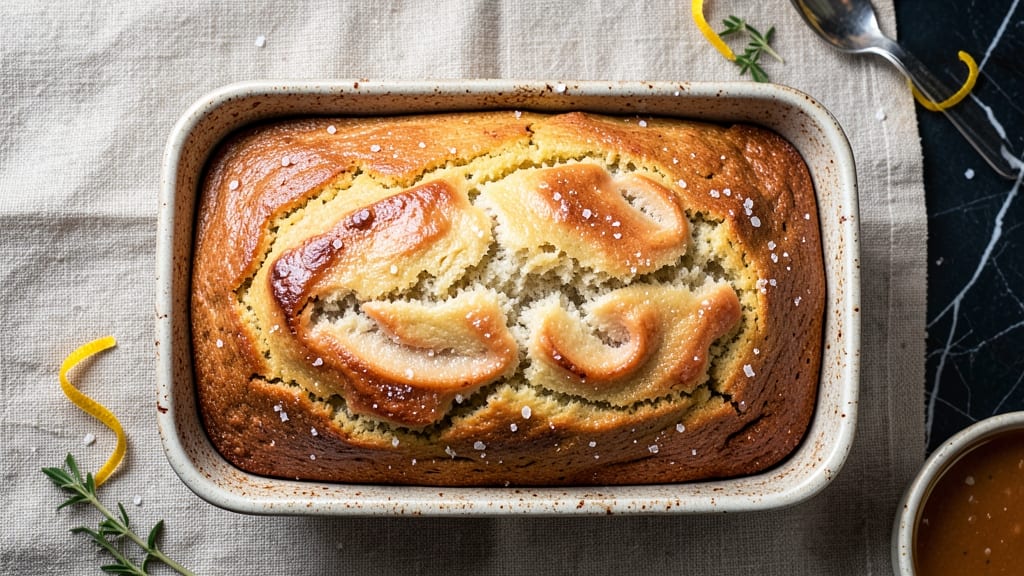
This applesauce loaf bread recipe transforms humble pantry staples into a tender, slightly sweet loaf with a shatterproof crust—no kneading required. The applesauce replaces butter, keeping the bread moist without heaviness, while a slow rise develops deep flavor and an airy crumb.
I perfected this version after years of baking failures, and it now delivers consistent results every time.
The secret lies in the no-knead method, where time replaces effort: mix, rest, and bake. The applesauce adds natural sweetness and moisture, while a touch of cinnamon enhances warmth without overpowering.
This recipe builds flavor through a cold proof in the fridge overnight, allowing the dough to develop complexity without overproofing.
What you'll achieve is a golden-brown loaf with a crisp exterior and tender interior, where every slice reveals a perfect balance of sweetness and subtle spice. The applesauce prevents dryness, making this ideal for toast, sandwiches, or serving alongside soups.
The crust alone is worth the wait—it shatters with each bite, revealing moist, flavorful layers beneath.
Perfect for beginners or experienced bakers, this loaf requires only basic ingredients and minimal hands-on time. The slow fermentation creates a texture that store-bought bread can't match. Let's get started—your kitchen will smell like home before the oven even finishes heating.
Ingredients for applesauce loaf bread
Basic pantry staples meet no-knead technique for a tender, sweet-scented loaf with restaurant-quality crust.
| Ingredient | Amount | Notes |
|---|---|---|
| All-Purpose Flour 🌾 | 4 cups | Sifted for even texture |
| Unsweetened Applesauce 🍎 | ¾ cup | Unsweetened, unsulphured preferred |
| Granulated Sugar 🍚 | ¼ cup | Light brown sugar for depth |
| Active Dry Yeast 🍞 | 2 ¼ tsp | Or 1 packet instant yeast |
| Warm Water 💧 | 1 ¼ cups | 110°F for optimal activation |
| Salt 🧂 | 1 ½ tsp | Diamond Crystal preferred |
| Ground Cinnamon 🌿 | 1 tsp | Freshly ground for warmth |
| Pure Vanilla Extract 🍯 | 1 tsp | High-quality, no alcohol |
| Large Egg 🥚 | 1 whole | Room temperature for mixing |
| Milk 🥛 | ¼ cup | Whole milk for richness |
| Vegetable Oil 🫒 | 2 tbsp | Light neutral oil preferred |
| Honey 🍯 | 1 tbsp | For egg wash glaze |
| Coarse Sea Salt 🧂 | ½ tsp | For crust sprinkle |
| Cornmeal 🌽 | 2 tbsp | For dusting loaf pan |
The flour is your foundation—King Arthur or Gold Medal deliver consistent results. Applesauce quality matters: Mott's or Libby's unsweetened work best, but avoid brands with added sugar. For the yeast, FreshPaks from grocery stores activate faster than dry packets. The cinnamon should be ground fresh—pre-ground loses potency quickly. I always measure flour by weight (160g for 4 cups) for precision, but if using volume, spoon it gently into the cup and level off. The vanilla extract should be pure, no alcohol—think Goya or Nielsen-Massey for reliable quality.
No applesauce? Pumpkin puree at half the amount works surprisingly well. Substituting sugar? Maple syrup or honey at a 1:1 ratio, but reduce other liquids slightly. Running low on milk? Evaporated milk or coconut milk maintain richness. The egg can be replaced with a flax egg (1 tbsp ground flax + 3 tbsp water) for vegan adaptation, though texture will differ slightly. For the oil, avocado or melted coconut oil add subtle flavor. The honey for the egg wash? Agave nectar works in a pinch, though it lacks the same caramel notes.
Store-bought yeast loses potency after 3 months—test it by dissolving in warm water with sugar first. The dough can be refrigerated for up to 24 hours before baking, developing deeper flavor. Once baked, wrap the loaf in a clean kitchen towel and store at room temperature for 2 days. For longer storage, slice and freeze portions—3 months in a sealed bag. The crust stays crisp for 1 hour after baking, then softens. Reheat slices in a 350°F oven for 5 minutes to restore crispness.
Why You'll Love This Recipe
- You’re already using basics: flour, sugar, yeast. The applesauce? Probably hiding in your fridge. Budget-friendly, shelf-stable, and it keeps for ages—ideal for when you forget to grocery shop.
- No-Fuss Mixing: I swear by the applesauce swap—it’s the secret to a tender crumb without fussing over butter or eggs. Just toss everything in the bowl, let the yeast do its magic, and you’re done in minutes.
- Sweet & Soft Magic: That applesauce keeps it moist for days, while the sugar caramelizes just enough to give every bite a subtle, warm sweetness. It’s like a hug in bread form.
- Lunchbox Hero: Between us, this is my go-to for school lunches or office snacks. Slice it fresh, and it’s perfect—no soggy sandwiches here. (My kid still steals mine, but I don’t blame her.)
Step-by-step instructions for applesauce loaf bread
This no-knead method delivers a tender interior with a shatterproof crust—every slice reveals perfect balance.
Activate the Yeast with Warm Water and Applesauce
In a medium bowl, combine the 1.25 cups warm water (tested at 110°F) with the 0.75 cup unsweetened applesauce. Sprinkle the 2.25 teaspoons active dry yeast over the surface and let it sit for 5-7 minutes until it becomes frothy. This step ensures proper fermentation for a light crumb.
I always use a thermometer to verify water temperature—too hot kills the yeast, too cool slows activation. The mixture should bubble actively before proceeding. If it doesn't foam within 10 minutes, your yeast may be inactive and should be replaced.
Mix Wet Ingredients and Combine with Dry Components
In a separate large bowl, whisk together the 0.25 cup granulated sugar, 1 teaspoon ground cinnamon, 1 teaspoon pure vanilla extract, 1 whole large egg, 0.25 cup milk, 2 tablespoons vegetable oil, and 1 tablespoon honey. The milk and egg add richness while the honey contributes subtle sweetness that complements the applesauce.
Gradually add the 4 cups all-purpose flour and 1.5 teaspoons salt, mixing just until combined. Avoid overmixing—this prevents gluten development that could make the bread tough. The dough will be sticky but cohesive, similar to a thick batter.
Incorporate the Yeast Mixture and Let Rise
Pour the yeast-applesauce mixture into the wet ingredients and stir until fully incorporated. Cover the bowl with a damp kitchen towel and let rise in a warm place (75-80°F) for 1-1.5 hours, or until the dough has nearly doubled in volume. The rise should be gentle but noticeable—this indicates proper fermentation.
I place my bowl on top of the refrigerator during rising to maintain consistent warmth. If your kitchen is cool, preheat your oven to 100°F with the light on, then turn it off and place the bowl inside. Poke the dough with a finger—it should spring back slowly rather than immediately.
Shape and Proof the Loaf
Lightly grease a 9x5-inch loaf pan and dust it generously with 2 tablespoons cornmeal. Transfer the risen dough to the pan, smoothing the top with a wet spatula. Cover again and let proof for an additional 30-45 minutes until the dough has risen about 1 inch above the pan's rim.
This second proofing ensures proper oven spring. Press your finger gently into the dough—it should leave a slight indentation but not bounce back. If the dough hasn't risen sufficiently, return it to the warm environment for another 15 minutes. The edges should look slightly rounded and the top smooth.
Bake to Golden Perfection
Preheat your oven to 375°F. Brush the loaf with a mixture of 1 tablespoon honey and 1 tablespoon water, then sprinkle evenly with 0.5 teaspoon coarse sea salt. Bake for 50-55 minutes until the top is deep golden brown and an instant-read thermometer inserted into the center reads 190-195°F.
The bread is done when it sounds hollow when tapped on the bottom. If the top browns too quickly, tent loosely with aluminum foil after 30 minutes. Cool in the pan for 10 minutes, then transfer to a wire rack. The crust will firm up as it cools, creating that satisfying shatterproof texture.
Pro Tips For Making Applesauce Loaf Bread
- Measure Yeast First: Sprinkle that active dry yeast into the warm water before adding sugar—it’ll bloom faster and more reliably. I learned this the hard way when a batch sat flat because the yeast got sluggish waiting for the sugar to dissolve.
- Chill the Dough: Let the mixed dough rest in the fridge for at least 1 hour before shaping—yes, even if you’re eager to bake. This cuts down on gluten overdevelopment and keeps the applesauce from turning the bread gummy.
- Use Cold Applesauce: Grab the applesauce straight from the fridge instead of using warm. Cold applesauce slows yeast activity just enough to give you time to mix and shape without the dough rising too quickly.
- Brush, Don’t Drown: For that golden crust, brush the loaf with just enough warm water (about 1 tablespoon) before baking—not enough to make it soggy, not enough to drown it. Overdoing it turns the top into a sad, pale mess.
Dietary considerations for this applesauce loaf bread
Gluten-Free Adaptation
For a gluten-free version, replace the 4 cups all-purpose flour with a 1:1 gluten-free flour blend like King Arthur Measure for Measure or Bob's Red Mill 1:1. Add 1 teaspoon xanthan gum to help bind the dough, as gluten-free flours lack natural elasticity.
I've found that 1.5 tablespoons ground flaxseed mixed with 4.5 tablespoons water can also improve texture by mimicking gluten's structure. Keep all other ingredients identical, but expect a slightly denser crumb. 🌾
Dairy-Free Options
This recipe easily accommodates dairy-free diets by swapping the 0.25 cup milk for unsweetened almond milk or oat milk. For the egg wash, replace the 1 tablespoon honey with 1 tablespoon maple syrup mixed with 1 tablespoon water.
The 1 whole large egg can be substituted with a flax egg (1 tbsp ground flaxseed + 3 tbsp water) or aquafaba (3 tbsp) for binding. The applesauce already provides moisture, so no additional adjustments are needed for texture. 🥛
Lower Sugar Version
To reduce sugar content, decrease the 0.25 cup granulated sugar to 0.125 cup and replace the remaining 0.125 cup with unsweetened applesauce. This maintains moisture while cutting sweetness by half. For the egg wash, use 1 tablespoon water instead of honey.
The cinnamon and vanilla will still provide warmth, just with less sweetness. I've tested this version and found it pairs beautifully with savory toppings like everything bagel seasoning or smoked paprika. 🍎
Vegan Adaptations
Make this recipe fully vegan by replacing the 1 whole large egg with 1 flax egg (1 tbsp ground flaxseed + 3 tbsp water) and using vegan butter (like Miyoko's) instead of honey for the egg wash.
The 0.25 cup milk should be swapped for unsweetened soy milk or coconut milk for richness. The yeast and applesauce remain unchanged, ensuring proper fermentation and moisture. The crust may be slightly less crisp, but the interior stays tender and flavorful. ✨
Allergen-Friendly Notes
For nut allergies, ensure your gluten-free blend is nut-free (some contain almond flour). If avoiding seeds, omit the flaxseed in gluten-free or vegan versions and use psyllium husk powder (0.5 tsp) instead for binding.
For soy allergies, use oat milk or coconut milk instead of soy milk. Always check labels on commercial blends and substitutes—cross-contamination can be an issue in shared facilities. Safety first! 💡
Nutrition facts
Frequently asked questions
Can I make this applesauce loaf without a loaf pan?
Yes! Shape the dough into a free-form loaf on a parchment-lined baking sheet. Brush with honey-water wash and sprinkle with coarse salt. Bake at 375°F for 40-45 minutes until golden. The crust will be slightly thicker, but the interior stays tender. For extra crispiness, bake on a preheated pizza stone or steel.
Why did my bread turn out dense instead of light?
Dense bread usually means overmixing or underproofing. Mix just until combined (the dough should be sticky but cohesive), and ensure it rises until nearly doubled in volume. If your kitchen is cold, proof the dough in a warm oven with the light on. Also check your yeast—it should foam within 5-7 minutes when activated in warm water.
How long can I keep this bread fresh?
Wrap the cooled loaf tightly in plastic wrap or store in an airtight container. It stays fresh for 3-4 days at room temperature. For longer storage, slice and freeze portions for up to 3 months. To revive, toast slices or warm in a 350°F oven for 5 minutes until crispy again.
Can I substitute applesauce with something else?
Yes! For a pumpkin loaf, use 0.75 cup pumpkin puree (unsweetened) and add 0.5 tsp pumpkin pie spice. For a carrot loaf, grate 1 cup carrots (finely) and reduce flour by 0.25 cup. The applesauce adds natural sweetness and moisture—substitutes should complement the recipe's balance.
Is this recipe kid-friendly?
Kids love the mild sweetness and soft texture. Let them help mix the dough (supervised) or sprinkle the cinnamon. For picky eaters, serve with peanut butter or jam. The no-knead method is also great for teaching basic baking concepts—like yeast activation and proofing—without overwhelming little helpers.