
Side Dishes
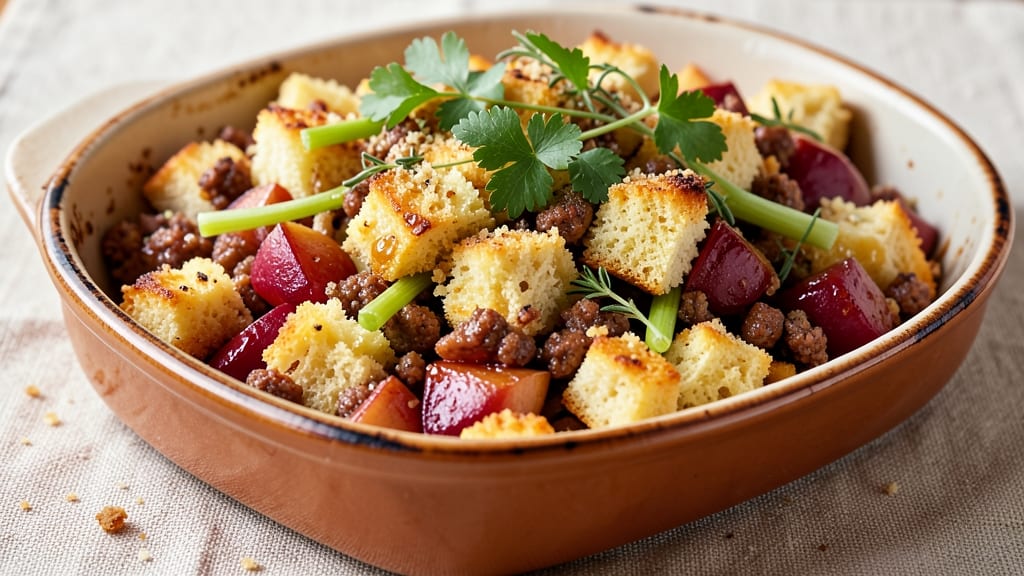
This apple and sausage cornbread stuffing recipe transforms a classic holiday side into something truly special with crispy edges, tender sausage, and sweet-tart apple bites. The secret lies in perfectly balancing textures—crispy cornbread crumbs, savory sausage, and just the right amount of caramelized apple.
I developed this version after years of testing, ensuring every bite delivers that perfect harmony of sweet, smoky, and herby flavors that make it unforgettable.
The foundation starts with cornbread baked until golden and crisp, then crumbled into perfect-sized pieces for maximum crunch. Sausage adds depth with its smoky, savory notes, while apples bring a subtle sweetness that brightens the dish.
A blend of fresh herbs—parsley, thyme, and sage—ties everything together, creating a fragrant aroma that fills your kitchen and makes your home feel like a cozy gathering spot.
What makes this recipe stand out is how it elevates a traditional side dish into a showstopper. The apples caramelize just enough to soften slightly while holding their shape, ensuring each bite has that satisfying mix of textures.
The herby crumb topping adds an extra layer of flavor and visual appeal, making it perfect for holiday tables or weeknight dinners when you want something hearty and impressive.
Ready in about 45 minutes, this stuffing is foolproof and delivers restaurant-quality results without the fuss. Serve it alongside roasted turkey, ham, or even as a standalone dish with a drizzle of maple glaze. Here's how to make it!
Ingredients for apple and sausage cornbread stuffing
This stuffing transforms ordinary cornbread into a showstopper with sweet apples, smoky sausage, and herby crumbs—perfect for holiday feasts.
| Ingredient | Amount | Notes |
|---|---|---|
| Sweet Apples (Honeycrisp or Fuji) 🍎 | 2 medium | Peeled, diced into small pieces |
| Cooked Cornbread 🍞 | 1 loaf | Baked until golden, cooled and crumbled |
| Sausage (Sweet or Smoked) 🥓 | 1 lb | Cooked, crumbled into small pieces |
| Fresh Parsley 🌿 | ¼ cup | Chopped finely, stems removed |
| Fresh Thyme 🌿 | 1 tbsp | Leaves only, finely chopped |
| Fresh Sage 🌿 | 1 tbsp | Leaves only, finely chopped |
| Unsalted Butter 🧈 | ½ cup | Cold, cubed for crispy crumbs |
| Yellow Onion 🧅 | 1 medium | Diced finely, about 1 cup |
| Celery Stalks 🧅 | 3 whole | Diced finely, about 1 cup |
| Chicken Broth 💧 | 2 cups | Low-sodium preferred |
| Salt 🧂 | 1 ½ tsp | Adjust to taste |
| Black Pepper 🌶️ | ½ tsp | Freshly ground |
| Garlic Powder 🧄 | 1 tsp | For extra depth |
| Maple Syrup 🍯 | 1 tbsp | For subtle sweetness |
The apples are the star—Honeycrisp or Fuji hold their shape beautifully when caramelized. Local farmers markets often have the freshest varieties, but any sweet apple works in a pinch. For the sausage, Johnsonville or Bob Evans brands give that perfect smoky-sweet balance. Cook it thoroughly, then crumble it into bite-sized pieces—this is where the magic happens. The cornbread should be fully cooled and crumbled into crispy, uneven pieces for maximum texture contrast. If you're short on time, Trader Joe's pre-made cornbread works surprisingly well.
No fresh herbs? Dried thyme and sage at half the amount get you close, though fresh is ideal. Substituting chicken broth for turkey? Use the same amount—just skip the extra salt. Running out of maple syrup? Honey or agave works in a bind, but maple's earthy notes are worth seeking out. The onions and celery should be finely diced—about the size of a pea—so they melt into the stuffing without becoming noticeable. For extra crunch, toast your cornbread crumbs in the oven with butter until golden before mixing everything together.
This stuffing tastes even better the next day—make it ahead and store in the fridge for up to 4 days. Reheat gently in a skillet with a splash of broth to revive the crispiness. For holiday prep, it freezes beautifully for 3 months. Just thaw overnight in the fridge before reheating. Serve warm with a drizzle of maple glaze or extra butter for that restaurant-quality finish. Leftovers? Tuck them into sandwiches or use as a hearty breakfast hash—trust me, they disappear fast.
Why You'll Love This Recipe
- No Chopping Chaos: I swear by this recipe because the apples only need a rough chop—no peeling, no dicing into perfect cubes. Just toss those Honeycrisp slices in, and let the oven work its magic while you sip your coffee.
- Sweet-Savory Magic: That crispy cornbread crumb mixed with caramelized apples and smoky sausage? It’s the kind of combo that makes you pause mid-bite. Honestly, the thyme and parsley tie it all together like a cozy hug in dish form.
- Leftovers Reinvented: Turns out, this stuffing reheats like a dream—crispy edges, tender center, all that apple sweetness still singing. I’ve had it cold in sandwiches, warmed up with gravy, even tossed into fried eggs for brunch. (Yes, even on a Tuesday night.)
- Budget Crowd-Pleaser: A single bag of cornbread mix, a few apples from the farmer’s market, and a pack of sausage stretches to feed six without breaking the bank. Between us, this is the dish that makes potlucks feel like a win for everyone.
Step-by-step instructions for savory apple-sausage cornbread stuffing
Transform humble cornbread into a showstopping centerpiece with crispy edges and tender, herby layers.
Sauté the Vegetable Base
In a large skillet, melt 0.25 cup of the unsalted butter over medium heat. Add the diced yellow onion and celery stalks, cooking for 8-10 minutes until softened and translucent. I like to stir occasionally to prevent sticking—this is where the foundational flavors develop.
Add the diced sweet apples and cook for another 5 minutes until they begin to caramelize slightly at the edges. The apples should release their juices, creating a fragrant base. This step builds the sweet-savory balance that defines the dish. Keep the heat steady to avoid burning the onions.
Combine Sausage and Herbs
Push the vegetable mixture to one side of the skillet and add the remaining 0.25 cup unsalted butter. Once melted, add the cooked, crumbled sausage and cook for 3-4 minutes until lightly browned. This step enhances the sausage's flavor and ensures it's properly heated through.
Stir in the finely chopped fresh parsley, thyme, and sage along with 1 tsp garlic powder. Cook for 1 minute until the herbs release their aromatic oils. The fresh herbs will brighten the dish while the garlic powder adds depth. Remove the skillet from heat and let it cool slightly before combining with other ingredients.
Assemble the Stuffing Mixture
In a large mixing bowl, combine the crumbled cooked cornbread with the sautéed vegetable-sausage mixture. Add 2 cups chicken broth, 1.5 tsp salt, 0.5 tsp black pepper, and 1 tbsp maple syrup. The maple syrup adds subtle sweetness that complements the apples and sausage perfectly.
Gently mix everything together with a wooden spoon until well combined. You want the cornbread to absorb the broth but still maintain some texture. The mixture should be moist but not soupy—if it looks too dry, add a splash more broth. This is the heart of your stuffing, where all the flavors come together.
Create the Crispy Topping
In a separate bowl, cut the remaining 0.25 cup unsalted butter into small cubes. Mix with 0.25 cup of the crumbled cornbread until the butter is evenly distributed. This creates the crispy topping that makes this stuffing truly special. The butter will melt and create golden, crispy edges when baked.
Transfer the stuffing mixture to a greased 9x13-inch baking dish and spread it evenly. Sprinkle the buttery cornbread mixture evenly over the top. The contrast between the tender stuffing and crispy topping is what makes this dish extraordinary. Press down gently to help the topping adhere.
Bake to Golden Perfection
Preheat your oven to 375°F. Bake the stuffing for 30-35 minutes until the top is golden brown and crispy, and the internal temperature reaches 165°F. The edges should be beautifully browned while the center remains moist and flavorful.
Let the stuffing rest for 10 minutes before serving. This resting period allows the juices to redistribute, ensuring each bite is moist and delicious. The crispy topping will be at its best when served warm, so don't skip this step. Serve with gravy for the ultimate stuffing experience.
Pro Tips For Making Apple And Sausage Cornbread Stuffing
- Dice Apples Small: The difference between soggy stuffing and perfect texture? Tiny, even cubes—about ¼-inch. Larger pieces stay too firm, while smaller ones melt into the cornbread and sausage. Use a sharp knife and don’t rush; precision here matters more than you’d think.
- Sauté Sausage First: Skip tossing raw sausage straight into the stuffing—brown it first in a skillet until crispy. The rendered fat adds richness, and the flavor penetrates deeper than if you just crumbled it in cold. If using smoked sausage, cook it low and slow to avoid burning.
- Dry the Cornbread: Fresh cornbread is moist, and wet stuffing gets gummy. Cut the cornbread into cubes, spread them on a baking sheet, and let them sit for 20 minutes before mixing. This step is non-negotiable if you want fluffy, not gluey, results.
- Toast the Herbs: Chop the parsley and thyme fine, then lightly toast them in a dry pan for 30 seconds until fragrant. This intensifies their flavor and prevents them from turning bitter. Add them to the stuffing right before baking—freshness matters, but so does this quick prep.
Troubleshooting your apple and sausage cornbread stuffing
Dry Topping Nightmare
If your stuffing's topping turns out dry and crumbly instead of crispy, you likely didn't use enough butter or didn't press it down properly. I've found that using ¼ cup cold cubed butter mixed thoroughly with the cornbread crumbs makes all the difference.
Spread the stuffing evenly in your baking dish first, then sprinkle the buttery topping on top and press down gently with a fork. This ensures the butter melts into the crumbs during baking, creating that perfect golden crust. 💫
Mushy Cornbread
The cornbread crumbling into a mushy mess usually means it absorbed too much liquid. To prevent this, make sure your cornbread is fully cooled and crumbled into even-sized pieces before mixing. If your stuffing looks too wet, add an extra ½ cup of crumbled cornbread to soak up excess moisture.
For extra insurance, toast the cornbread crumbs in the oven with butter for 5 minutes at 375°F before mixing everything together. This adds an extra layer of crispiness and helps balance the texture.
Apples Too Soft
Overcooked apples that turn into a mushy pulp happen when they're cooked too long in the skillet. Keep the heat at medium and cook the apples for only 5 minutes after adding them to the onions and celery.
For extra control, try sautéing them in a nonstick skillet—I use a Calphalon nonstick—to prevent sticking. If your apples are already too soft, reduce the cooking time next batch to 3-4 minutes and add them later in the process, right before baking.
Sausage Overpowering
If the sausage flavor dominates and masks the other ingredients, you might have used too much. Stick to 1 lb of cooked sausage for this recipe, and make sure it's crumbled into small, even pieces.
To balance the flavors, increase the herbs slightly—add ½ tsp extra thyme or sage—and ensure the apples are caramelized properly. For a milder sausage flavor, try a milder sweet sausage like Johnsonville Sweet Italian instead of smoked varieties.
You can also add a splash of apple cider (about 1 tbsp) when sautéing to mellow the richness.
Broth Not Absorbing
When the broth pools at the bottom of your baking dish instead of being absorbed, it's usually because the cornbread wasn't crumbled finely enough. Break your cornbread into small, irregular pieces—think rice-sized crumbles—for maximum surface area to absorb the liquid.
If your stuffing still looks too wet after mixing, let it sit for 10 minutes before baking. The cornbread will absorb more liquid as it cools.
For extra insurance, spread the stuffing in a 9x13-inch baking dish instead of a deeper dish to help the heat penetrate evenly and absorb moisture more effectively.
Nutrition facts
Frequently asked questions
Can I use dried herbs instead of fresh?
Yes, but use half the amount of dried herbs compared to fresh. For example, ½ teaspoon dried thyme equals 1 tablespoon fresh thyme. Fresh herbs provide more vibrant flavor, but dried works in a pinch. Just be sure to crush dried herbs between your fingers to release their oils before adding to the skillet.
How do I make this stuffing ahead of time?
This stuffing tastes even better the next day! Assemble it completely (except baking), cover tightly, and refrigerate for up to 4 days. When ready to bake, add 1-2 tablespoons extra broth if it looks dry, then bake as directed. For freezing, assemble and bake, then cool completely, wrap tightly, and freeze for up to 3 months. Thaw overnight in the fridge before reheating.
What's the best way to reheat leftovers?
For maximum crispiness, transfer leftovers to a skillet with 1-2 tablespoons butter and 2 tablespoons broth. Cover and heat on medium-low for 5-7 minutes, stirring occasionally. The butter and broth will revive the crispy edges while keeping the center moist. Avoid microwaving—it makes the stuffing soggy.
Can I substitute the cornbread with another bread?
While cornbread is ideal, you can use crumbled sourdough or day-old brioche for a different texture. For best results, cube the bread into ½-inch pieces and toast in the oven with butter until golden before mixing. Avoid soft breads like white sandwich bread—they'll turn mushy. The cornbread's natural sweetness and crumbly texture are what make this stuffing special, though!
Why do my apples turn mushy?
Overcooking is the most common culprit. Keep the heat at medium and cook apples for only 5 minutes after adding them to onions and celery. For extra control, use a nonstick skillet and reduce cooking time to 3-4 minutes if needed. Also, choose firmer apple varieties like Honeycrisp or Fuji—they hold up better than softer varieties like Gala.