
Side Dishes
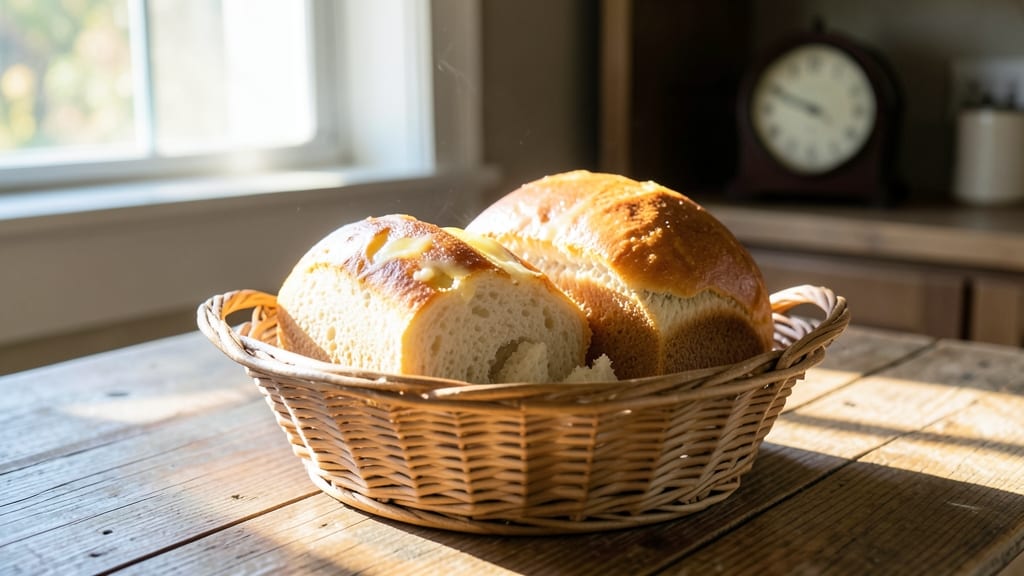
This Amish sweet white bread delivers the comforting aroma and tender crumb that makes it a staple at family tables and church gatherings. The secret lies in a perfect balance of sugar and butter—just enough sweetness to satisfy without overpowering the bread's classic flavor.
I've refined this recipe over years of baking, ensuring every slice has that signature golden crust and vanilla-kissed softness that defines Amish tradition.
The process begins with a simple yet precise dough made from all-purpose flour, sugar, yeast, and butter, kneaded until smooth and elastic. Proofing the dough twice—once after mixing and again after shaping—creates the light, airy texture that makes this bread so irresistible.
The key to that perfect crust? Baking at a high temperature for just the right amount of time, then brushing the warm loaves with melted butter for an extra touch of richness.
What you'll end up with is bread that's slightly sweet, tender, and just crisp enough at the edges to hold up to butter slathered thick. The aroma alone will bring back memories of Sunday suppers and holiday feasts.
This recipe stays true to Amish roots while being simple enough for any home baker to recreate.
For those who want to explore variations, adding raisins or cinnamon creates delicious twists without losing the bread's signature qualities. Perfect for sandwiches, toast, or simply enjoyed with butter and jam, this recipe brings a taste of tradition to your kitchen.
Ingredients for amish sweet white bread
These simple yet essential ingredients create the classic Amish sweet white bread with that perfect golden crust.
| Ingredient | Amount | Notes |
|---|---|---|
| All-Purpose Flour 🌾 | 5 cups | Sifted for light texture |
| Granulated Sugar 🍚 | ½ cup | White sugar preferred |
| Active Dry Yeast 🍞 | 2 ¼ tsp | Fresh yeast preferred |
| Unsalted Butter 🧈 | ½ cup | Cold, cubed for dough |
| Warm Whole Milk 🥛 | 1 cup | 110°F for yeast activation |
| Large Egg 🥚 | 1 whole | Room temperature |
| Vanilla Extract 🌸 | 1 tsp | Pure vanilla preferred |
| Salt 🧂 | 1 tsp | Kosher or sea salt |
| Granulated White Sugar 🍚 | ¼ cup | For brushing crust |
| Melted Unsalted Butter 🧈 | ¼ cup | For finishing loaves |
The flour is the foundation—King Arthur or Gold Medal brands work best for that tender crumb. Sift it first to avoid dense bread. Butter matters too—Land O’Lakes unsalted is my go-to, but any cold, high-fat butter works. Warm milk should feel like bathwater (110°F)—too hot kills the yeast, too cold won’t activate. The vanilla extract? Pure Madagascar bourbon is ideal, but imitation works in a pinch. Yeast loses potency after 3 months, so check the date—Bob’s Red Mill sells it in small jars perfect for this recipe.
No vanilla extract? Vanilla sugar at double the amount works, or a splash of vanilla bean paste if you’re fancy. Short on butter? Coconut oil gives similar richness, though the flavor differs slightly. Using whole wheat flour? Replace up to 1 cup of all-purpose with whole wheat, but expect a denser crumb. The sugar for brushing? Turbinado or raw sugar adds nice texture contrast, but white sugar keeps it classic. Proofing too long? The dough rises too much—look for doubled size with gentle puffs when it’s ready.
Store wrapped in a clean kitchen towel for 3 days at room temperature, or freeze loaves for up to 3 months. The butter brushing keeps best for 2 days—after that, brush with extra sugar for flavor. Slice with a serrated knife for clean cuts. Leftovers? Toast them—the crispy edges are even better the second time around. This bread freezes beautifully too—just thaw at room temp before serving.
Why You'll Love This Recipe
- No-Knead Magic: I swear by this recipe—just mix, let it rise, and bake. The yeast does all the heavy lifting while I sip coffee, no stand mixer required.
- Sweet Butter Bliss: That warm milk and softened butter? It makes the bread so tender, with just enough sugar to satisfy a sweet tooth without overpowering.
- Breakfast to Picnic: Toss it in a basket for church potlucks, or serve it toasted with jam for lazy mornings. It’s the one loaf that works everywhere.
- Budget-Friendly Staple: A single batch costs pennies and stretches for days—freeze slices for quick toast or sandwiches. My wallet and my family thank me weekly.
Step-by-step instructions for Amish sweet white bread
Here's how to craft that iconic golden crust and tender crumb—every slice will be pure comfort.
Activate the Yeast for Maximum Rise
In a small bowl, combine the 1 cup warm whole milk (about 110°F) with 0.5 cup granulated sugar and 2.25 tsp active dry yeast. Stir gently and let sit for 5-10 minutes until foamy. You'll see tiny bubbles forming—this confirms your yeast is alive and ready to work its magic.
I always test the milk temperature first with my finger—it should feel warm but not hot to the touch. If the mixture doesn't bubble, your yeast might be old or the milk too hot. In that case, start fresh with new yeast and slightly cooler milk.
Mix the Dough Until Smooth and Elastic
In a stand mixer fitted with the dough hook, combine the 5 cups all-purpose flour, 1 tsp salt, and 0.5 cup cold cubed unsalted butter. Mix on low speed until the butter is fully incorporated and the flour looks shaggy. Add the yeast mixture, 1 whole large egg, and 1 tsp vanilla extract.
Knead on medium speed for 5-7 minutes until the dough pulls away from the sides of the bowl and forms a smooth, elastic ball. The dough should be slightly tacky but not sticky—if it sticks too much, add 1 tablespoon flour at a time until it reaches the right consistency. This kneading develops gluten, which gives your bread that signature soft texture.
Let the Dough Rise Until Doubled in Size
Lightly grease a large bowl with melted butter, place the dough inside, and cover with a clean kitchen towel. Let it rise in a warm spot for 1-1.5 hours or until it has doubled in size. You'll know it's ready when you poke it gently and the indentation stays rather than springing back immediately.
I like to place the bowl on top of my turned-off oven with the light on for consistent warmth. The dough should feel soft and airy—if it doesn't rise enough, it might be too cold or the yeast wasn't active enough. Patience here pays off with that perfect crumb structure.
Shape and Second Rise for Perfect Loaves
Punch down the risen dough to release air, then divide it into 4 equal portions (about 1 pound each). Shape each portion into a smooth, slightly tapered oval loaf. Place them on a baking sheet lined with parchment paper, cover with the towel again, and let rise for another 30-45 minutes until puffy.
For that classic Amish look, I press my thumb gently into the top of each loaf to create a slight indentation. This helps the bread expand evenly in the oven. The second rise is crucial—it ensures those light, airy pockets that make this bread so irresistibly soft.
Bake to Golden Perfection with Vanilla-Kissed Crust
Preheat your oven to 375°F. Brush the tops of the loaves with a mixture of 0.25 cup melted unsalted butter and 0.25 cup granulated white sugar. Bake for 25-30 minutes until the crust is deep golden brown and the internal temperature reaches 190°F.
Here's the secret: don't open the oven door during the first 15 minutes—this prevents the bread from collapsing. You'll know it's done when it sounds hollow when tapped on the bottom and has that glorious caramelized crust. The vanilla butter topping gives it that signature sweetness without being overpowering.
Cool and Slice for Maximum Enjoyment
Transfer the loaves to a wire rack and let them cool completely for at least 1 hour. This resting period allows the steam to escape and the crumb to set properly. If you can resist, wait until the next day to slice—this bread tastes even better after it's had time to fully develop its flavors.
When you're ready, slice with a sharp serrated knife for clean cuts. Each slice should have that perfect balance of tender crumb and crispy crust, with just a hint of vanilla sweetness. Serve warm with butter or jam for the ultimate comfort experience.
Pro Tips For Making Amish Sweet White Bread
- Measure Milk Precisely: Warm whole milk to 110°F—no thermometer? Dip your finger in; it should feel like bathwater, not scalding. Cold milk kills yeast, and too-hot milk does the same. I learned this the hard way when my dough took three hours to rise the first time.
- Cut Butter Cold: Use unsalted butter straight from the fridge, cut into small cubes—no softening needed. This keeps the dough from getting gummy, and the butter melts cleanly during baking instead of pooling. (Yes, even if you’re impatient like me.)
- Don’t Over-Knead: Stop kneading when the dough springs back slowly (about 2 seconds) when poked. Overworking it makes the bread dense. My grandmother swore by this, and she was right: the texture stays light and tender.
- Proof in a Warm Spot: Place the risen dough in a turned-off oven with a bowl of hot water for the final proof—consistent 80°F heat speeds it up without risking overproofing. I skip this when I’m lazy, but the dough rises twice as fast when I don’t.
Dietary considerations for this amish sweet white bread
Gluten-Free Adaptation
For a gluten-free version, replace the 5 cups all-purpose flour with a 1:1 gluten-free flour blend like King Arthur Measure for Measure. Add ½ tsp xanthan gum to mimic gluten’s structure. The texture won’t be identical—expect a slightly denser crumb—but it’s still delicious.
Use 1 extra tablespoon of milk to compensate for the blend’s dryness. Proofing times may extend by 15-20 minutes due to slower gluten development. 🌾
Dairy-Free Options
Skip the butter entirely and use ½ cup coconut oil (solid) instead for richness. Replace the milk with 1 cup unsweetened almond milk warmed to 110°F. For the egg, add 1 flax egg (1 tbsp ground flaxseed + 3 tbsp water, mixed and rested for 5 minutes).
The crust will lack some crispness, but the crumb stays soft. Brush with melted coconut oil instead of butter for finishing. 🥛
Lower Sugar Version
Reduce the sugar to ¼ cup granulated sugar (half the original) and add 1 tsp cinnamon for warmth. Use 1 tbsp maple syrup in the yeast mixture to enhance flavor without extra sweetness.
The bread will still be tender but less sweet—perfect for those watching sugar intake. Pair with fruit jam to balance the flavor. 🍚
Allergy-Friendly Swaps
For nut allergies, stick with dairy-free milk and coconut oil as above. For egg allergies, use the flax egg method. If yeast is a concern, try a sourdough starter (replace yeast with ½ cup active starter), but expect a slightly tangy flavor.
Always test substitutions in small batches first—some blends can alter texture dramatically. 🌱
Keto-Friendly Twist
This bread isn’t naturally keto, but you can adapt it with almond flour and cream cheese. Replace flour with 3 cups almond flour and 1 cup shredded mozzarella.
Use ½ cup cream cheese instead of butter, and omit sugar entirely. Add 1 tsp erythritol for sweetness. The result is a denser, cheesy loaf—best enjoyed in small portions. 🧀
Nutrition facts
Frequently asked questions
Why does Amish sweet white bread have two rises?
The first rise activates the yeast and develops basic structure, while the second rise after shaping creates those signature airy pockets. Skipping the second rise makes the bread dense—think of it like letting cake batter puff before baking for maximum fluffiness.
Can I make this bread without a stand mixer?
Knead by hand for 8-10 minutes on a floured surface until the dough is smooth and elastic. Work it vigorously to develop gluten—this is where you'll feel the difference in texture. A wooden dough whisk helps speed up the process.
What makes the crust so golden and crispy?
The magic comes from brushing with melted butter and sugar before baking, then baking at 375°F until deep golden brown. The butter creates a moisture barrier that crisps beautifully, while the sugar caramelizes for that classic Amish look.
How do I store leftovers to keep them fresh?
Wrap cooled loaves tightly in a clean kitchen towel or plastic wrap, then store at room temperature for 3 days. For longer storage, freeze slices in a ziplock bag for up to 3 months. The towel method preserves moisture better than plastic alone.
Can I add raisins or nuts to this recipe?
Yes! Fold in ½ cup raisins or ½ cup chopped pecans during the second kneading (after first rise). For nuts, toast them first to enhance flavor. Just be gentle when shaping to avoid tearing the dough—press them lightly into the sides.