
Side Dishes
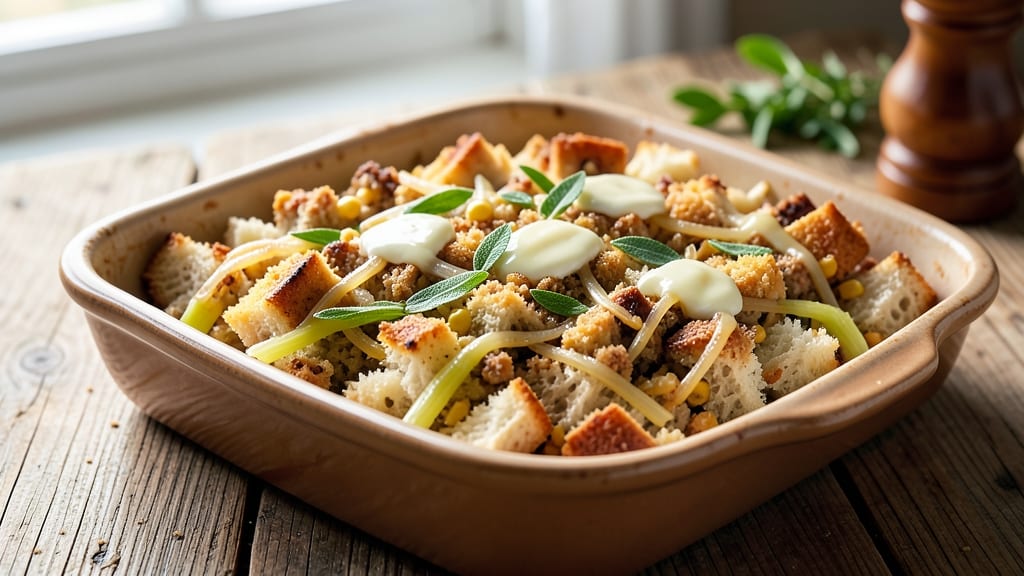
This Amish bread stuffing recipe delivers the perfect balance of crispy cornbread bites and tender herb swirls—just like Grandma used to make. 💛 The secret lies in toasting the bread cubes until golden, then mixing them with savory herbs, onions, and celery for a flavor-packed centerpiece that’s ideal for holiday feasts.
I’ve perfected this version over years of family gatherings, ensuring it stays moist yet crispy at the edges.
The traditional Pennsylvania Dutch influence shines through in the simple yet robust ingredients: cornbread, white bread, fresh herbs, and a touch of poultry seasoning.
Unlike many stuffings, this one includes a swirl of melted butter and herbs for extra richness, while the cornbread adds a delightful crunch that disappears with every bite. It’s the kind of dish that transforms a simple side into the star of the table.
Baking at 350°F for 35-40 minutes ensures a golden, crispy exterior with a soft, flavorful interior. The aroma alone will have everyone gathering around the table, and the texture—crispy yet tender—makes it impossible to resist.
This stuffing pairs beautifully with roasted turkey, ham, or even as a hearty side for weeknight dinners.
For a meatier twist, consider adding cooked sausage or diced ham, but the classic version remains a crowd-pleaser. Once you try this, you’ll never go back to store-bought stuffing again. Let’s get started on creating a dish that tastes like home.
Ingredients for amish bread stuffing
Six ingredients transform into the heart of your holiday table—crispy, herby, and full of Grandma's touch.
| Ingredient | Amount | Notes |
|---|---|---|
| Day-Old Cornbread 🍞 | 6 cups | Cubed into 1-inch pieces |
| Day-Old White Bread 🍞 | 4 cups | Cubed into 1-inch pieces |
| Unsalted Butter 🧈 | ¾ cup | Melted and cooled |
| Fresh Sage Leaves 🌿 | ½ cup | Chopped finely |
| Yellow Onion 🧅 | 1 whole | Diced small |
| Celery Stalks 🥬 | 3 whole | Diced small |
| Garlic Cloves 🧄 | 4 cloves | Minced fine |
| Fresh Parsley Leaves 🌿 | ¼ cup | Chopped finely |
| Poultry Seasoning 🌶️ | 1 tbsp | Or 1 tsp each thyme, sage, marjoram |
| Salt 🧂 | 1 ½ tsp | Diamond Crystal preferred |
| Black Pepper 🌶️ | ½ tsp | Freshly ground |
| Chicken Broth 💧 | 1 ½ cups | Low-sodium preferred |
The bread is non-negotiable—day-old works best (the drier, the crispier). Grab a loaf of Sara Lee Texas Toast or Wonder White from the bakery section, or use that slightly stale cornbread from last night. For the herbs, fresh is best—sage and parsley have the most impact, but if you're short, dried works at half the amount. The onion and celery should be finely diced (almost paste-like) so they melt into the stuffing. Pro tip: Pulse them in a food processor for perfect consistency. If you're feeling fancy, Trader Joe's sells pre-diced mirepoix that saves time.
No fresh sage? Dried sage at one-third the amount is the closest swap. Short on parsley? Fresh thyme or basil works in a pinch, though it'll change the flavor profile slightly. The poultry seasoning can be tricky to find—McCormick makes a solid version, or mix your own with thyme, sage, and marjoram. For the broth, low-sodium is key—you don't want to over-salt your stuffing. If you're making this ahead, reduce the broth by 2 tbsp to account for moisture loss during baking. And trust me on the melted butter—it's what makes this stuffing irresistibly rich.
This keeps beautifully for 3 days in the fridge, covered tightly. For longer storage, freeze portions in airtight containers for up to 3 months. To reheat, pop it in the oven at 350°F for 15-20 minutes until crispy again. I always make a double batch—one for Thanksgiving, one for Christmas. The leftovers reheat just as good as the first time, and it's perfect for sandwiches or as a side for fried chicken. Store any extra butter in the fridge to keep it from going rancid.
Why You'll Love This Recipe
- No-Waste Magic: I swear by using day-old bread—no crusts, no stress. The cornbread adds that perfect crumbly texture while the white bread soaks up all the flavor, and honestly? The leftovers are just as good the next day.
- Sage & Butter Bliss: That buttery sage aroma? It’s what makes this stuffing irresistible. The onions caramelize just enough to give it depth, and the fresh sage leaves add a bright, herby finish that pairs perfectly with turkey or gravy.
- Weeknight & Holiday Hero: Make a double batch on Sunday, and you’ve got dinner covered for the week. It reheats beautifully—great for potlucks, Thanksgiving leftovers, or even a cozy weeknight sandwich with some turkey and gravy.
- Budget-Friendly Crowd-Pleaser: Uses pantry staples, stretches easily, and tastes like you slaved over it. Between us, this is the stuffing that makes people ask for seconds without breaking the bank—especially when you’re feeding a houseful of guests.
Step-by-step instructions for Amish bread stuffing
Here's how to transform simple ingredients into golden, crispy stuffing with perfect herb swirls.
👨🍳 Step 1: Prep the Bread Mixture
Preheat your oven to 350°F and line a large baking sheet with parchment paper. Spread the 6 cups day-old cornbread and 4 cups day-old white bread cubes evenly on the sheet. Toast them for 15-20 minutes until they're completely dry and just starting to turn pale golden—this prevents a soggy stuffing later.
While the bread toasts, chop the 1 whole yellow onion and 3 whole celery stalks into small dice. I like to use the "brunoise" cut here—tiny, even pieces that disappear into the stuffing. Transfer these to a large mixing bowl once they're ready.
🍳 Step 2: Sauté the Herb Base
In a large skillet, melt the 0.75 cup unsalted butter over medium heat. Add the diced onion and celery, cooking for 8-10 minutes until they're softened and the onion becomes translucent. This is where all the flavor develops—don't rush it.
Add the 4 cloves minced garlic and cook for another 30 seconds until fragrant. Then stir in the 0.5 cup finely chopped fresh sage leaves and 0.25 cup finely chopped fresh parsley leaves. Cook for 1 minute just until the herbs release their aroma. Remove from heat and let cool slightly.
🥘 Step 3: Combine Everything
Add the toasted bread cubes to the skillet with the herb mixture. Pour in the 1.5 cups chicken broth and gently fold everything together with a wooden spoon. Sprinkle in the 1 tbsp poultry seasoning, 1.5 tsp salt, and 0.5 tsp black pepper, mixing until evenly distributed.
Here's the trick for those crispy edges: fold in the melted butter (if not already mixed in) and toss until every bread cube is lightly coated. The butter helps create that golden crust we're after. Taste and adjust seasoning if needed—this is your last chance before baking.
🔥 Step 4: Bake to Golden Perfection
Transfer the stuffing mixture to a greased 9x13-inch baking dish. Press down gently but firmly to create an even surface—this helps with even baking and crispy edges. Bake at 350°F for 30-35 minutes until the top is deep golden brown and the edges are crispy.
I know it's tempting to peek, but resist! Every time you open the oven, you let out steam that prevents proper browning. When it's done, the stuffing should be hot throughout and have that irresistible crunch on the edges. Let it rest for 5 minutes before serving—this helps it set and makes slicing easier.
Pro Tips For Making Amish Bread Stuffing
- Dry the bread first: The day-old bread is key, but don’t just toss it in. Cut the white bread into 1-inch cubes and spread them on a baking sheet for 30 minutes at 200°F—this dries them out just enough to soak up the butter and broth without turning to mush. I learned this the hard way when my stuffing collapsed into a sad, soggy pile.
- Toast the cornbread: Skip the raw crumbles. Crumble the day-old cornbread and toast it in a dry skillet over medium heat for 3-4 minutes until it’s golden and smells nutty. This adds depth and prevents the stuffing from tasting flat. (Yes, even if you’re impatient like me.)
- Sauté the onion low and slow: The onion should be soft, not browned—think translucent, not caramelized. Cook it in the butter over medium-low heat for 10-12 minutes, stirring occasionally, until it’s tender but still holds its shape. Rushing this step means your stuffing will taste bitter.
- Add sage at the end: Fresh sage burns easily, so wait until the stuffing is nearly done before folding in the leaves. Tear them roughly and sprinkle them in the last 10 minutes of baking—this keeps their bright flavor instead of turning them to dust. (Your future self will notice the difference.)
Storing and reheating your amish bread stuffing
Refrigerator Storage
Store your Amish bread stuffing in an airtight container with a tight-fitting lid for up to 3 days in the refrigerator. The key is letting it cool completely before sealing—this prevents condensation that makes the bread soggy.
I use glass Pyrex containers because they distribute heat evenly when reheating. Just be sure to press the stuffing down firmly before covering to maintain that perfect texture. 💛
Freezer Prep Tips
For longer storage, divide the stuffing into single-serving portions in quart-sized freezer bags or airtight containers. Remove as much air as possible to prevent freezer burn, and label with the date. This stuffing keeps its quality for up to 3 months in the freezer—perfect for holiday meal prep.
When freezing, I recommend adding an extra 1 tablespoon of broth per serving to compensate for moisture loss during thawing.
Oven Reheating
The best way to restore that crispy texture is in the oven. Preheat to 350°F, spread the stuffing on a baking sheet, and cover loosely with aluminum foil for 15 minutes. Then remove the foil and bake for another 5-10 minutes until golden brown and crispy.
For extra moisture, drizzle 1 tablespoon of melted butter over the top before reheating. This method brings back all the comforting flavors and textures you love.
Microwave Shortcut
When you're short on time, the microwave works in a pinch. Cover the stuffing with a damp paper towel and heat on 50% power for 2-3 minutes, stirring halfway. Add 1-2 tablespoons of water or broth if it looks dry.
While it won't be as crispy as oven-reheated, it's still delicious and perfect for quick meals. Just be careful—stuffing reheats fast and can dry out if overcooked.
Make-Ahead Magic
This stuffing actually tastes better the next day! I always make a double batch—one for Thanksgiving and one to freeze for Christmas. The flavors meld beautifully overnight, and reheating brings back that perfect balance of crispy edges and tender interior.
For extra convenience, prepare the stuffing one day ahead, refrigerate overnight, then bake straight from the fridge at 350°F for 40-45 minutes—just add 5-10 minutes to the cooking time.
Serving Suggestions
Serve your reheated stuffing straight from the oven with a sprinkle of fresh parsley and a pat of cold butter on top. It pairs perfectly with roasted turkey, ham, or even as a hearty side for fried chicken.
For a festive touch, transfer it to a cast-iron skillet just before serving—it stays warm longer and adds a rustic presentation. Leftovers make amazing sandwiches the next day with a little extra butter and gravy. ✨
Nutrition facts
Frequently asked questions about Amish bread stuffing
Why does my stuffing turn out soggy?
The key is toasting the bread cubes until completely dry (15-20 minutes at 350°F) and pressing them firmly into the baking dish. Too much broth or not enough toasting creates a mushy texture. For extra insurance, add 1 extra tablespoon of bread cubes per serving to absorb moisture.
Can I make this stuffing without cornbread?
Use 8 cups day-old white or sourdough bread instead. The cornbread adds that signature crunch and slight sweetness, but a good quality bread works just fine. For extra flavor, add 1 teaspoon of cornmeal to the baking dish before adding the stuffing mixture.
What's the best way to keep stuffing crispy?
Bake it uncovered at 350°F for the full time, then broil for 2-3 minutes at the end. The broiler creates that perfect golden crust. Also, avoid opening the oven door during baking—steam is your enemy when it comes to crispy edges. For serving, transfer to a cast-iron skillet for 5 minutes to restore crispiness.
How do I make this vegetarian?
Swap the chicken broth for vegetable broth and omit the poultry seasoning. Add 1 teaspoon of smoked paprika and ½ teaspoon of nutmeg for depth. For extra protein, fold in ½ cup cooked quinoa or ½ cup crumbled tofu with the herbs. The stuffing will still be rich and flavorful without meat.
Can I use this stuffing for Thanksgiving turkey?
This stuffing is perfect for stuffing your turkey! Cook the turkey as usual, then carefully spoon the stuffing mixture into the cavity. Cover the opening with foil and bake as directed. For extra safety, add ½ cup extra broth to compensate for the turkey's juices. Remove the stuffing 10 minutes before the turkey finishes cooking to prevent drying out.