
Side Dishes
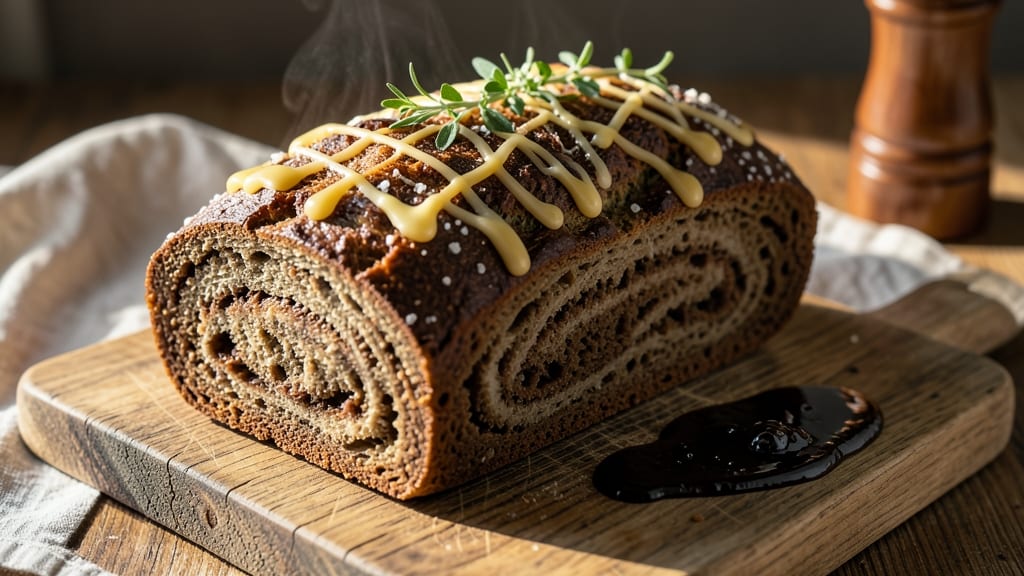
This American pumpernickel bread recipe delivers the signature deep molasses crust and nutty swirls that make it a standout in any bread basket. 🌟 The secret lies in a careful balance of dark rye flour and molasses, creating that rich, slightly sweet flavor profile that's both comforting and complex.
I've perfected this recipe over years of baking, ensuring the dense yet tender crumb and signature crust you'd expect from a traditional pumpernickel loaf.
The process begins with a robust dough that incorporates molasses for that signature depth of flavor, then develops through a proper fermentation period. What sets this recipe apart is the technique of creating those beautiful nutty swirls while maintaining the bread's signature dense texture.
The result is a loaf that's hearty enough to serve as a main course but versatile enough to pair with soups, cheeses, or simply enjoy on its own.
By the time you pull this loaf from the oven, you'll have achieved that perfect balance of deep molasses flavor and subtle nuttiness throughout. The crust will be dark and slightly crisp, while the interior remains tender and moist.
This is the kind of bread that makes your kitchen smell like a bakery and leaves everyone asking for seconds.
Whether you're a seasoned baker or new to pumpernickel, this recipe delivers professional-quality results with simple techniques. The key is patience—allowing the dough to ferment properly and baking at the right temperature to develop those signature flavors. Let's get started on creating your perfect loaf.
Ingredients for american pumpernickel bread
Dark rye flour, rich molasses, and warm almond swirls create the signature depth of this classic American pumpernickel.
| Ingredient | Amount | Notes |
|---|---|---|
| Dark Rye Flour 🌾 | 3 cups | For signature dense texture |
| All-Purpose Flour 🌾 | 1 cup | For structure and lift |
| Unsalted Butter 🧈 | ½ cup | Cold, cubed for dough |
| Molasses 🍯 | ½ cup | Dark, unsulphured preferred |
| Warm Water 💧 | 1 ½ cups | 110°F for optimal activation |
| Active Dry Yeast 🍞 | 2 ¼ tsp | Or 1 packet instant yeast |
| Salt 🧂 | 1 ½ tsp | Diamond Crystal preferred |
| Honey 🍯 | 2 tbsp | For subtle sweetness |
| Almonds 🥜 | ½ cup | Sliced, for nutty swirls |
| Cinnamon 🌿 | 1 tsp | Ground, for warmth |
| Poppy Seeds 🌻 | 1 tbsp | Optional, for texture |
| Sesame Seeds 🌾 | 1 tbsp | Optional, for crunch |
| Coarse Sugar 🍚 | 1 tbsp | For crust enhancement |
The dark rye flour is non-negotiable here—look for King Arthur or Bob's Red Mill for that authentic deep flavor. If your local grocery store doesn't carry it, Amazon or specialty baking shops will have what you need. For the molasses, unsulphured is key—it's sweeter and less bitter. I grab mine at Whole Foods, but any health food store should have it. The almonds should be fresh, not that stale bag from the back of your pantry. Toast them lightly before slicing for extra flavor—takes 5 minutes in a dry pan.
No dark rye flour? Substitute with half rye flour and half whole wheat, though the texture will be slightly different. Short on molasses? Maple syrup works in a pinch, but reduce by 1 tbsp since it's less concentrated. The butter can be dairy-free if needed—just make sure it's cold when mixing. For the nut swirls, pecans or walnuts work too, though almonds give that classic pumpernickel vibe. The poppy and sesame seeds are optional but add that bakery-style crunch—skip them if you're in a hurry.
This dough needs time—let it ferment 1-2 hours before shaping for best flavor. Once baked, the loaf keeps beautifully wrapped in a towel for 3-4 days at room temperature. For longer storage, freeze it wrapped in plastic—up to 3 months. I always slice it fresh before serving, but you can toast slices for a quick breakfast. The crust gets even better the next day, so bake one extra if you can resist eating it all immediately.
Why You'll Love This Recipe
- No-Knead Magic: I swear by this recipe because it’s actually no-knead—just mix, wait, bake. The dark rye flour does the heavy lifting while you sip coffee or scroll through your phone. Honestly, the only effort is stirring the molasses into that warm water, and suddenly you’ve got a loaf that tastes like a bakery’s secret.
- Molasses Kiss: That rich, deep molasses flavor? It’s the star here, cutting through the hearty rye with a sweet-savory punch. Spread it with butter, toast it, or even use it in sandwiches—it’s the kind of bread that makes you pause mid-bite. (Yes, even on a Tuesday night.)
- Breakfast to Brunch: This bread isn’t just for toast. Use it for French toast with a cinnamon swirl, as a sturdy base for open-faced sandwiches, or even crumbled into oatmeal for texture. I’ve made it work for lazy mornings, holiday brunches, and everything in between. It’s the bread equivalent of a Swiss Army knife.
- Budget Bakery Feel: A single batch costs pennies but delivers a loaf that looks and tastes like it’s from a $12 bakery. The butter keeps it rich without breaking the bank, and leftovers? They last for days—freezing slices for toast later is my favorite way to stretch this recipe even further. Practical, delicious, and guilt-free.
Step-by-step instructions for American pumpernickel bread
Here's how to craft that signature deep molasses crust with nutty swirls—every layer matters.
👨🍳 Step 1: Activate the Yeast and Mix the Dough
In a small bowl, combine the 1.5 cups warm water (around 110°F) with the 2 tbsp honey and 2.25 tsp active dry yeast. Let this sit for 5-10 minutes until it becomes frothy—this confirms your yeast is alive and ready to work. If it doesn't bubble, start over with fresh yeast.
In a large mixing bowl, whisk together the 3 cups dark rye flour, 1 cup all-purpose flour, 1.5 tsp salt, and 1 tsp cinnamon. Make a well in the center and pour in the yeast mixture along with the 0.5 cup molasses. Use a wooden spoon to gradually incorporate the dry ingredients, mixing until a shaggy dough forms. The molasses will make this sticky—embrace it!
🍳 Step 2: Knead and Incorporate the Nutty Swirls
Turn the dough onto a lightly floured surface and knead for 5-7 minutes until smooth and elastic. You'll notice it's denser than typical bread dough—this is normal for pumpernickel. While kneading, work in the 0.5 cup sliced almonds and 1 tbsp poppy seeds, pressing them into the dough so they distribute evenly.
Shape the dough into a rectangle about 12x8 inches. Sprinkle 1 tbsp sesame seeds and 1 tbsp coarse sugar evenly over the surface, then gently roll the dough up tightly from the long side. This creates those beautiful nutty swirls you'll see in the final loaf. Seal the seam by pinching it closed.
🔥 Step 3: First Rise and Shape for the Oven
Place the sealed dough seam-side down in a greased 9x5-inch loaf pan. Cover with a clean kitchen towel and let it rise in a warm place for 1-1.5 hours, or until it puffs up about 50%. The dough will be quite dense, but it should feel slightly springy when pressed gently with a finger.
While it rises, preheat your oven to 375°F. Once the dough has risen, use a sharp knife to score the top in a simple crosshatch pattern—this helps steam escape and creates that classic crust. Place the 0.5 cup cold cubed butter on top of the dough and press it gently into the scored lines.
🔥 Step 4: Bake to Deep, Molasses-Glazed Perfection
Bake the loaf for 45-50 minutes until the top is deep golden brown and the internal temperature reaches 205°F at the center. The bread should sound hollow when tapped on the bottom. If the top browns too quickly, tent loosely with foil after 30 minutes to prevent over-browning.
For that signature molasses crust, brush the hot loaf with a mixture of 2 tbsp warm water and 1 tbsp molasses immediately after removing it from the oven. Let it cool in the pan for 10 minutes, then transfer to a wire rack. The crust will continue to develop as it cools, becoming rich and glossy.
⏰ Step 5: Rest and Slice for Maximum Flavor
Allow the bread to cool completely before slicing—this prevents it from falling apart. The dense, dark crumb should hold together beautifully, with those nutty swirls peeking through. For the best texture, slice just before serving and warm briefly in a 350°F oven for 5-10 minutes if needed.
Here's the thing—this bread tastes even better the next day as the flavors meld. Store wrapped at room temperature for up to 3 days, or freeze slices for longer storage. Each bite delivers that perfect balance of deep molasses sweetness, nutty crunch, and hearty rye texture.
Pro Tips For Making American Pumpernickel Bread
- Weigh Your Flours: Dark rye and all-purpose flour behave differently by volume—pack that rye lightly, but don’t tap the bowl. I learned this the hard way when my first loaf turned dense; using a kitchen scale guarantees consistency. (Yes, even if you’re impatient like me.)
- Brown the Butter First: Skip the raw butter—melt it until it’s nutty and golden, then cool before mixing. That extra depth cuts through the molasses’ sweetness and gives the crust a richer bite. I was skeptical until I tried it.
- Hydrate the Rye Slowly: Dark rye flour absorbs water like a sponge. Mix the warm water into the dry ingredients in stages, letting it sit 5 minutes between additions. This prevents a gummy dough and makes kneading easier.
- Proof in a Warm Drawer: Your kitchen isn’t warm enough. Place the dough in a turned-off oven with a bowl of hot water for 1–2 hours. This mimics a professional proofer and gives you that tall, airy rise without waiting all day. (Your future self will thank you.)
Storing and reheating this dish
Room Temperature Storage
Wrap your freshly baked pumpernickel in a clean kitchen towel or beeswax wrap, then place it in a paper bag for 3-4 days at room temperature. The towel helps maintain moisture while the paper bag prevents condensation that can make the crust soggy.
I store mine on the countertop away from direct sunlight—this allows the crust to develop its signature deep flavor over time. 🌟
For that bakery-fresh experience, slice just before serving. The crust will be at its most flavorful after 24 hours of resting, so plan ahead if you're eager to enjoy it.
If you're worried about drying out, place a slice of bread in an airtight container with a slice of apple or lemon to keep it moist longer.
Refrigerator Storage
If you need to store your pumpernickel for up to 1 week, slice it first and wrap individual slices tightly in plastic wrap or aluminum foil. Store in an airtight container with a slice of bread or a damp paper towel to prevent drying.
The refrigerator slows down staling, but the texture will be slightly firmer than when fresh.
To revive refrigerated slices, warm them in a 350°F oven for 5-7 minutes or until golden brown. A quick toast in a skillet with a pat of butter brings back that fresh-baked flavor. I recommend reheating just one slice at a time to avoid over-drying.
Freezer Storage
For long-term storage, slice your pumpernickel and wrap each slice individually in plastic wrap, then place them in a freezer bag with all the air squeezed out.
This method keeps the bread fresh for up to 3 months without freezer burn. Label the bag with the date so you can track freshness.
When ready to enjoy, thaw slices at room temperature for 1-2 hours before toasting or warming. For a quicker option, microwave a slice on medium power for 10-15 seconds—just watch closely to avoid drying it out.
I find that freezing slices preserves the crust's texture better than freezing the whole loaf.
Reheating Tips
For the best results, reheat pumpernickel in the oven. Place slices on a baking sheet and warm at 350°F for 5-7 minutes until golden brown and crisp. This method restores the crust's texture without making the interior gummy. A sprinkle of coarse sugar before reheating adds extra caramelization.
If you're short on time, a toaster works well for crisping up slices—just set it to the highest setting and watch closely. For a more decadent touch, brush the warmed bread with a little molasses glaze (mix 1 tbsp molasses with 1 tsp warm water).
This brings back that bakery-style richness you love.
Nutrition facts
Frequently asked questions
Why does my pumpernickel turn out too dense or heavy?
The dense texture is actually part of pumpernickel's charm, but if yours feels overly heavy, you might be over-kneading or using too much dark rye flour. The dough should be firm but not rock-hard—aim for 5-7 minutes of kneading. Also, ensure your yeast is active (it should bubble within 5-10 minutes in warm water with honey). For a lighter texture, replace ½ cup of dark rye with all-purpose flour.
Can I make this bread without molasses?
Yes! While molasses gives pumpernickel its signature depth, you can substitute ½ cup maple syrup or ¼ cup honey (reduce other liquids by 1 tbsp to account for moisture). For a savory version, omit the molasses entirely and add 1 tsp caraway seeds or ½ tsp smoked paprika instead. The nutty swirls will still shine through.
How do I fix a cracked crust or uneven rise?
Cracks happen when dough rises too quickly in a hot oven. To prevent this, score the loaf deeply with a sharp knife before baking, and tent with foil if the top browns too fast. For an uneven rise, your yeast might be weak or the kitchen too cold—place the dough near a warm oven (375°F) with a bowl of hot water to create a proofing box. Press gently on the dough; it should spring back slowly.
What’s the best way to slice pumpernickel for sandwiches?
Use a serrated knife and slice against the grain for maximum texture contrast. For even slices, chill the loaf for 30 minutes first—this firms up the crumb. To prevent crumbling, warm slices briefly in a 350°F oven for 3-5 minutes before assembling sandwiches. Pro tip: Brush warm slices with a little molasses glaze for extra stickiness!
Can I add other flavors like chocolate or cheese?
For a sweet version, fold in ½ cup chocolate chips or ¼ cup chopped dried fruit when kneading. Savory lovers can mix in ½ cup shredded cheddar or ¼ cup sun-dried tomatoes. Just reduce the almonds to ¼ cup to balance the dough’s density. The key is to keep the molasses ratio—it’s the heart of pumpernickel’s flavor!