
Side Dishes
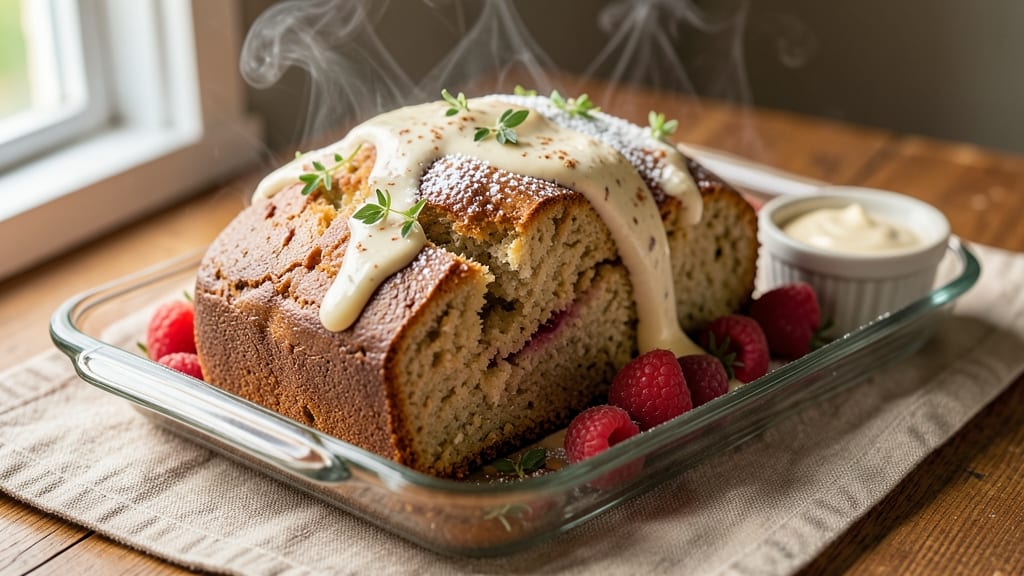
This ambrosia bread recipe transforms simple dough into a showstopping dessert with swirls of vanilla custard and crunchy pecans. The secret lies in layering rich, custardy filling between flaky, golden layers of bread—each bite delivers a perfect balance of sweet, creamy, and nutty flavors.
I’ve perfected this version to stay tender yet sturdy enough to slice beautifully, making it ideal for gatherings or a decadent weekend treat.
The magic happens in the custard—smooth, lightly sweetened vanilla pudding that swirls through the bread without making it soggy. Toasted pecans add a satisfying crunch, while a hint of cinnamon in the dough ties everything together.
This recipe requires patience (the custard must chill overnight), but the reward is a bread that tastes like a cross between a cake and a pie—without needing a pie dish.
What you’ll end up with is a loaf that’s visually stunning and irresistibly delicious: golden-brown crust, creamy custard swirls peeking through, and crunchy pecans in every bite. The texture is surprisingly light for a custard-filled bread, and the vanilla flavor shines without being overpowering.
It’s the kind of dessert that disappears quickly but leaves everyone asking for seconds.
Serve warm with a dusting of powdered sugar or a drizzle of honey for extra indulgence. This bread also freezes beautifully, so you can bake ahead and enjoy it whenever the craving strikes. Ready to bake something extraordinary? Let’s get started.
Ingredients for ambrosia bread
Eight simple ingredients create this showstopping dessert with creamy custard and nutty crunch.
| Ingredient | Amount | Notes |
|---|---|---|
| All-Purpose Flour 🌾 | 4 cups | Sifted, for light texture |
| Granulated Sugar 🍚 | ½ cup | Light brown sugar for depth |
| Unsalted Butter 🧈 | 1 cup | Cold, cubed for flaky layers |
| Large Eggs 🥚 | 2 whole | Room temperature for blending |
| Milk 🥛 | ½ cup | Whole milk for richness |
| Vanilla Extract 🌿 | 2 tsp | Pure extract, not imitation |
| Ground Cinnamon 🍃 | 1 tsp | Freshly ground preferred |
| Salt 🧂 | ½ tsp | Fine sea salt |
| Pecans 🥜 | 1 cup | Toasted, roughly chopped |
| Heavy Cream 🥛 | 1 ½ cups | Cold for custard |
| Powdered Sugar 🍚 | ¼ cup | Sifted for smooth custard |
| Cornstarch 🌾 | 2 tbsp | For thick custard |
| Vanilla Bean Paste 🌿 | 1 tbsp | Or 1 tsp pure extract |
The flour and butter are your foundation—King Arthur flour if you can find it, but any all-purpose works. Cold butter is key for flaky layers, so don't let it soften before mixing. Toast the pecans in a dry pan until golden and fragrant—about 5 minutes—then chop them while still warm. The custard relies on cold heavy cream and cornstarch for that perfect pudding texture, so don't skip chilling the cream overnight. For the vanilla, Madagascar bourbon vanilla adds depth, but pure extract works too.
No vanilla bean paste? Double the extract—just add an extra teaspoon. Running short on pecans? Walnuts or almonds toast just as well, though they'll change the flavor slightly. The custard can be made a day ahead—cover with plastic wrap pressed directly on the surface to prevent a skin. If you're baking for a crowd, double the recipe but use two loaf pans for even baking. The dough should be cool before adding the custard—press it into the dough gently to avoid tearing the layers.
This bread keeps beautifully for 3 days at room temperature, wrapped in foil. For longer storage, freeze the fully baked loaf—wrap tightly in plastic and thaw at room temperature before serving. Reheat slices in a warm oven for 5-10 minutes to restore that custardy creaminess. The crust stays crisp for about 12 hours after baking, so slice it fresh if you're serving warm.
Why You'll Love This Recipe
- No Mixer Needed: I swear by this recipe because it’s all by hand—no stand mixer, no fuss. Just a bowl, a wooden spoon, and a few minutes of elbow grease. The butter gets creamed with sugar until it’s light and fluffy, which is my favorite part (and the secret to that melt-in-your-mouth texture).
- Sweet But Not Cloying: The sugar and butter combo gives it a rich, almost custard-like warmth, but the eggs and milk balance it so it’s never heavy. Honestly, it’s the kind of bread where every slice feels like a little dessert—without tasting like one.
- Breakfast or Snack: I’ve eaten this cold with jam, toasted with butter, and even as a quick French toast base. My kids grab slices straight from the fridge for lunch, and I’ve served it warm with honey at brunch. It’s that kind of bread.
- Budget-Friendly Staple: Flour, sugar, butter, eggs, milk—these are pantry basics that won’t break the bank. A single batch feeds my family for days, and leftovers stay fresh for almost a week. (Yes, even on a Tuesday night.)
Step-by-step instructions for ambrosia bread with vanilla custard swirls
This decadent bread combines a tender vanilla custard with a buttery, toasted pecan-studded dough.
Prepare the Vanilla Custard Filling
In a medium saucepan, combine the 1.5 cups heavy cream, 0.25 cup powdered sugar, 2 tbsp cornstarch, 1 tbsp vanilla bean paste, and 2 tsp vanilla extract. Whisk until smooth over medium heat. Cook for 5-7 minutes, stirring constantly, until the mixture thickens to a pudding-like consistency and coats the back of a spoon.
Here's the thing—you want it to thicken just right. If it gets too thick too fast, whisk in 1-2 tablespoons of milk to loosen it. Remove from heat and let it cool completely to room temperature. This custard will be the luxurious swirl that makes this bread truly special.
Make the Pecan Shortbread Dough
In a large mixing bowl, cream together the 1 cup unsalted butter and 0.5 cup granulated sugar until light and fluffy, about 3-4 minutes. Beat in the 2 whole large eggs, one at a time, making sure each is fully incorporated before adding the next. Stir in the 2 tsp vanilla extract and 1 tsp ground cinnamon.
In a separate bowl, whisk together the 4 cups all-purpose flour and 0.5 tsp salt. Gradually add the dry ingredients to the butter mixture, mixing just until combined. Fold in the 1 cup toasted, roughly chopped pecans. The dough will be crumbly but will come together when pressed—this is normal. Divide the dough into two equal portions and flatten each into a 6-inch round disc. Wrap each in plastic wrap and refrigerate for 30 minutes.
Assemble and Swirl the Layers
Preheat your oven to 350°F. Line a 9-inch round baking pan with parchment paper, leaving an overhang on the sides for easy removal. Place one of the dough discs in the bottom of the pan and press it gently to fit. Spread the cooled vanilla custard evenly over the dough, leaving a ½-inch border around the edges. This ensures the custard stays contained and creates those beautiful swirls.
Place the second dough disc on top of the custard and gently press down to seal. Using a sharp knife, cut through all the way to the bottom of the pan in 6-8 equal wedges, rotating the knife slightly as you go to create a marbled effect. This is where the magic happens—the custard will peek through the cuts as it bakes, creating stunning visual layers.
Bake to Golden Perfection
Bake the bread in the preheated oven for 45-50 minutes, or until the top is golden brown and a toothpick inserted into the center comes out clean. The edges should pull away slightly from the pan, and the custard should be fully set but still creamy inside. If the top browns too quickly, tent the pan with foil to prevent over-browning while allowing the center to finish cooking.
Let the bread cool in the pan for 10 minutes before transferring it to a wire rack. The custard will firm up as it cools, but it should still have that luscious, slightly jiggly texture when sliced. For the best experience, serve it warm or at room temperature—this allows the flavors to meld and the custard to soften just enough to be irresistible.
Pro Tips For Making Ambrosia Bread
- MEASURE BUTTER COLD: Take that unsalted butter straight from the fridge—no softening, no room-temperature nonsense. Cold butter creates flaky layers in ambrosia bread, and I learned this after making a dense brick the first time. Cut it into cubes and let them sit for just 5 minutes before mixing, or your dough will fight you.
- WHISK EGGS LIKE YOU MEAN IT: Don’t half-ass the eggs. Beat those large eggs until they’re pale, thick, and ribbon-like—about 2 minutes with a hand mixer or until the streaks hold their shape. This ensures your bread rises smoothly and doesn’t collapse later. (Yes, even if you’re impatient like me.)
- DON’T OVERMIX THE DOUGH: Stop mixing the moment the flour is just incorporated. Overworking the dough develops gluten, and ambrosia bread should be tender, not chewy. Scrape the bowl with a spatula to check—if it clumps, you’ve gone too far. Less mixing = lighter bread.
- USE WARM MILK: Heat the milk to about 110°F (43°C)—just warm enough to dissolve the sugar fully before mixing. Cold milk makes the butter seize up and creates uneven texture. Test it by dipping your finger in; it should feel like bathwater, not scalding. (Your future self will notice the difference.)
Troubleshooting this recipe
Custard Too Thin?
If your custard isn't thickening enough, you're likely undercooking it. Keep whisking constantly and cook for 1-2 extra minutes—it needs to reach 160°F to set properly.
For a quick fix, mix 1 tsp cornstarch with 1 tbsp cold water, stir into the custard, and cook for 30 seconds more. The custard should coat the back of a spoon and hold its shape when chilled. 💡
Dough Too Sticky
Crumbly dough is normal, but if it's too sticky, you've likely overmixed or added too much milk. Add 1-2 tbsp more flour and knead just until combined—overworking develops gluten and makes the bread tough.
For extra insurance, chill the dough 15 minutes longer before assembling. The cold temperature firms up the fat and makes handling easier. ✨
Custard Leaking
This happens when the custard isn't fully set or the dough isn't sturdy enough. First, ensure your custard cooled completely before assembling—warm custard melts the butter in the dough. For extra stability, press the top dough layer firmly and make cuts only halfway through the bottom layer.
Bake on the lower oven rack for the first 20 minutes to help set the custard faster. 🧂
Uneven Swirls
For perfect swirls, spread the custard evenly and smoothly—no thick or thin spots. Use a bench scraper to level it out. When cutting wedges, angle the knife slightly as you go to create a marbled effect.
If the custard pools in the center, gently press down on the top dough to distribute it. A light tap on the pan before baking helps settle the layers. 🔥
Pecans Not Toasted
Toasted pecans add incredible flavor and crunch. If yours aren't browned enough, spread them on a baking sheet and toast at 350°F for 5-7 minutes, stirring halfway. Watch closely—they burn quickly!
For extra depth, add ½ tsp cinnamon while toasting. If you forget, chop raw pecans fine—they'll soften during baking but won't add the same richness. 🥜
Top Not Browning
A pale top usually means the oven isn't hot enough or the bread needs more time. Increase heat to 375°F for the last 10 minutes of baking. For even browning, brush the top with egg wash (1 egg + 1 tbsp water) before baking.
If using a dark pan, reduce heat by 25°F to avoid over-browning. A broiler blast for 1-2 minutes at the end can add color without drying it out. 🌟
Nutrition facts
Frequently asked questions
Can I make this ambrosia bread without pecans?
Swap pecans for walnuts or almonds—toast them first for maximum flavor. For a nut-free version, omit them entirely or add chopped dried fruit like apricots or cherries instead. Just reduce the amount by ¼ cup to maintain balance in the dough.
How long does the custard need to chill before assembling?
The custard should be completely cool to the touch before spreading—this prevents it from melting the butter in the dough. Chill for at least 2 hours (or overnight) in the fridge. If you're short on time, place the saucepan in an ice bath while stirring for 10 minutes to speed up cooling.
Can I bake this in a different shaped pan?
Yes! A 9x5-inch loaf pan works well for a more traditional shape, but avoid pans wider than 9 inches—the custard may spread too thin. For a single-serving version, use a 6-inch round cake pan. Line all pans with parchment for easy removal. The baking time will vary slightly based on pan size.
Why does my bread taste bland?
Ambrosia bread relies on quality vanilla and proper toasting of nuts. Use pure vanilla extract (not imitation) and toast your pecans until fragrant. For extra depth, add ½ tsp cinnamon to the custard or a pinch of salt to the dough. Freshly ground cinnamon makes a noticeable difference!
Can I make this recipe gluten-free?
With modifications! Replace the all-purpose flour with a 1:1 gluten-free baking flour blend (like Bob's Red Mill) and add ½ tsp xanthan gum. The custard remains the same, but gluten-free dough is more delicate—press it gently when assembling. Expect a slightly denser texture. For best results, use a gluten-free pan liner.