
Side Dishes
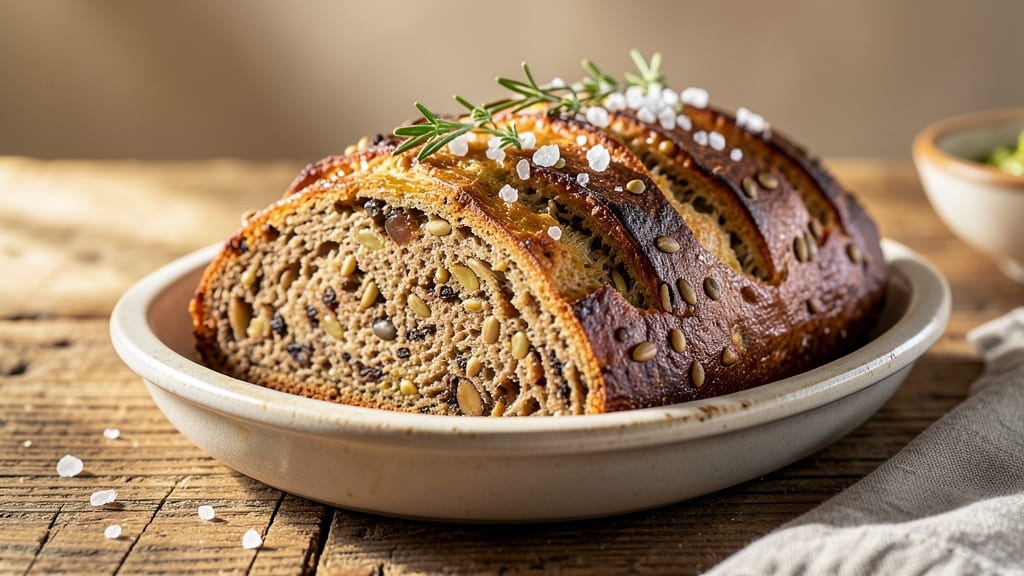
This amazing grains and salty bread recipe delivers the perfect balance of crusty crunch and nutty depth in one satisfying bake—no fancy equipment required. 🌟 I developed it after years of experimenting with different grain blends, and the secret lies in the mix of whole grains and proper hydration, which creates that irresistible texture and flavor.
The beauty of this recipe is its simplicity: just flour, water, yeast, salt, and your choice of grains (like wheat berries, rye, or seeds) come together to form a dough that’s easy to handle but packed with flavor.
The key steps—kneading just enough, letting it proof slowly, and baking at high heat—ensure a golden crust and a tender, airy crumb that’s impossible to resist.
By the time it’s done, you’ll have a loaf with a shatteringly crisp exterior and a soft, nutty interior that’s perfect for dipping, sandwiches, or just enjoying on its own. The grains add texture and depth, making every bite feel special without requiring advanced baking skills.
Serve warm with butter or olive oil for the full experience. Here’s how to make it—foolproof and delicious every time.
Ingredients for amazing grains salty bread
Pantry staples meet whole grains for a loaf that crackles with crunch and nutty depth.
| Ingredient | Amount | Notes |
|---|---|---|
| All-Purpose Flour 🌾 | 4 cups | High-protein preferred for structure |
| Whole Wheat Berries 🌾 | 1 cup | Toasted for enhanced nutty flavor |
| Rye Flour 🌾 | ½ cup | Adds deep, earthy complexity |
| Sunflower Seeds 🌻 | ¼ cup | Lightly toasted for crunch |
| Active Dry Yeast 🍞 | 2 ¼ tsp | Fresh yeast for best activation |
| Diamond Crystal Kosher Salt 🧂 | 2 tsp | Fine grain for even distribution |
| Extra-Virgin Olive Oil 🫒 | 2 tbsp | High-quality for dough elasticity |
| Warm Water 💧 | 1 ½ cups | 105°F for optimal yeast activation |
| Honey 🍯 | 1 tbsp | Enhances yeast fermentation |
| Sesame Seeds 🌰 | 1 tbsp | For decorative crust topping |
| Poppy Seeds 🌱 | 1 tbsp | Optional for extra texture |
| Cornmeal 🌽 | ¼ cup | For dusting and crust formation |
The grains are where the magic happens. Wheat berries and rye flour from King Arthur Flour or Bob's Red Mill deliver that signature nutty complexity—skip the pre-ground stuff if you can find whole grains. Toast them lightly in a dry pan first (5 minutes on medium) to deepen their flavor. For seeds, Bob's Red Mill has the best quality at a reasonable price, and toasting them just until golden (3-4 minutes) prevents bitterness. The yeast? Fresh is always better, but if you're using active dry, make sure it's within the expiration date—old yeast won't activate properly. And for the salt, Diamond Crystal is your best bet—it dissolves perfectly without leaving grainy bits in your dough.
No wheat berries? Substitute with extra rye flour or whole spelt flour—both work beautifully. Running low on sesame seeds? Flaxseeds or pumpkin seeds add a different but equally satisfying crunch. The honey can be swapped for maple syrup at a 1:1 ratio, though it does add a slightly different depth of flavor. If you're making this ahead, pre-toast your grains and store them in an airtight container for up to a week—they'll keep their flavor much better than if you toast them fresh every time. And for the olive oil, avoid the cheap stuff—you can taste the difference in the final crust.
This dough is best made a day ahead. Store it wrapped tightly in plastic in the fridge overnight, and it'll develop even more flavor. The proofing dough? Keep it at room temperature for 1-2 hours before baking—don't rush it. Once baked, the loaf stays fresh for 3-4 days at room temperature, but if you're not going to eat it that fast, wrap it in foil and freeze it. To reheat, warm it in a 350°F oven for 5-10 minutes until it's toasty again. The crust gets even better the second day, so don't fight the urge to save half for tomorrow.
Why You'll Love This Recipe
- No-Knead Magic: I swear by this dough—just mix, let it rise, and bake. The whole wheat berries and rye flour do the heavy lifting while I sip my coffee.
- Earthy Crunch Factor: That toasted sunflower seed crunch on the crust? It’s the star. The yeast and rye give it a tangy depth that pairs with everything—soup, butter, or straight from the oven.
- Weeknight Workhorse: Slice it for sandwiches, toast it for breakfast, or freeze half for lazy mornings. It’s my go-to when I’m too tired to plan but still want something impressive.
- Budget-Friendly Staple: Whole wheat berries and rye flour bulk up the dough cheaply, and a single batch feeds my family for days. Leftovers? Toss them in the freezer—no waste, all flavor.
Step-by-step instructions for crusty grains and salty bread
This dough comes together beautifully with just a few key techniques—let's make it shine.
👨🍳 Step 1: Toast the Whole Wheat Berries and Sunflower Seeds
Spread the 1 cup whole wheat berries and 0.25 cup sunflower seeds on a baking sheet lined with parchment paper. Toast them in a 375°F oven for 15-20 minutes, stirring halfway, until they're deeply golden and fragrant. You'll know they're ready when you can smell that nutty aroma—this enhances their flavor dramatically. Let them cool completely before using, about 10 minutes. I like to do this first because it adds complexity to the bread while giving me time to prepare everything else.
While they cool, lightly toast the 0.25 cup cornmeal in the same oven for 5 minutes—this prevents it from absorbing too much moisture later. The toasted cornmeal will give your bread a subtle crunchy texture on the crust. Set it aside to cool as well. This prep work might seem tedious, but it's worth it for that extra layer of flavor and texture in your final loaf.
🍳 Step 2: Activate the Yeast and Mix the Dough
In a large bowl, combine the 1.5 cups warm water (about 105°F), 1 tbsp honey, and 2.25 tsp active dry yeast. Let it sit for 5-10 minutes until it becomes foamy and bubbly—this confirms your yeast is alive and ready to work. If it doesn't bubble, your yeast might be old, and you'll need to start over. Here's the thing—yeast activation is the foundation of your bread's rise, so don't skip this step.
Add the 4 cups all-purpose flour, 0.5 cup rye flour, 2 tsp diamond crystal kosher salt, and the toasted whole wheat berries and sunflower seeds to the yeast mixture. Stir with a wooden spoon until a shaggy dough forms. Then add the 2 tbsp extra-virgin olive oil and mix until everything comes together. The dough should be sticky but manageable—if it's too wet, add 1 tablespoon of flour at a time until it pulls away from the sides of the bowl.
🥘 Step 3: Knead the Dough for Structure and Flavor
Turn the dough out onto a lightly floured surface and knead for 8-10 minutes until smooth and elastic. I press down firmly with the heel of my hand and fold the dough over itself, rotating it as I go. You're building gluten strands that will give your bread its structure. The dough should spring back slightly when pressed—this is your signal that it's ready. If it's still sticky after kneading, add just a bit more flour, but don't overdo it or your bread will turn out dense.
Once kneaded, place the dough in a lightly oiled bowl, cover it with a damp towel, and let it rise in a warm place for 1-2 hours, or until it has roughly doubled in size. I like to place my bowl on top of my oven with the light on for gentle warmth. This slow rise allows the flavors to develop fully. Poke the dough gently—if it springs back slowly, it's ready for shaping.
🔪 Step 4: Shape and Proof the Loaf
Punch down the risen dough to release any air bubbles, then divide it into 4 equal portions (about 1 pound each). Shape each portion into a round boule by tucking the edges under as you roll it. Place the shaped dough onto a baking sheet lined with parchment paper, brush the tops lightly with water, and sprinkle with the sesame seeds and poppy seeds. This gives that beautiful decorative crust and adds a subtle crunch. Let the dough proof for another 30-45 minutes until it's puffy and nearly doubled in size again.
While the dough proofs, preheat your oven to 450°F with a Dutch oven inside for 30 minutes. This creates steam, which is crucial for that crispy crust. When the dough is ready, carefully transfer it to the hot Dutch oven (use parchment paper to help slide it in). Bake covered for 20 minutes, then remove the lid and bake for another 15-20 minutes until the crust is deep golden brown and sounds hollow when tapped on the bottom.
⏰ Step 5: Cool and Enjoy Your Crusty Creation
Remove the bread from the oven and let it cool on a wire rack for at least 30 minutes—this prevents the crust from becoming soggy. The bread will be warm inside but firm enough to slice. Here's where the magic happens: the crust should be thick and crackly, with a beautiful golden hue. The interior should be soft and airy, with pockets of nutty flavor from the whole wheat berries and rye flour.
Slice the bread and serve it warm with butter or your favorite spread. You'll notice the combination of textures—the crispy crust, the chewy interior, and the subtle crunch from the seeds. This bread is perfect for sandwiches, toast, or simply enjoying on its own. Store any leftovers in an airtight container for up to 3 days, or freeze for longer storage. Trust me, this bread is worth every step of the process.
Pro Tips For Making Amazing Grains Salty Bread
- SOAK THE WHOLE WHEAT BERRIES: I learned this the hard way—skipping the soak means your bread will taste like you chewed on a handful of gravel. Toss the berries in warm water (not boiling) for at least 4 hours, or overnight if you’re patient. They’ll triple in size, and your bread will have that satisfying chew instead of a dry, chalky bite.
- WEIGH YOUR FLOUR—DON’T SCOOP: That kitchen scale isn’t just for show. Rye and whole wheat flours pack differently than all-purpose, so scooping leads to inconsistent texture. Spoon the flour into the bowl, level it off, and weigh it—this keeps your dough from turning out either too dense or too crumbly.
- KNEAD JUST UNTIL IT STOPS STICKING: I used to over-knead this dough, thinking more work = better bread. Wrong. Mix in the sunflower seeds and knead by hand (or 3-4 minutes in a mixer) until the dough pulls away from the bowl but still feels slightly tacky. Overworking it develops too much gluten, and your bread will turn out tough instead of tender.
- PROOF IN A COOL PLACE: Your yeast will thank you if you let the dough rise in the fridge overnight. The slower fermentation deepens the flavor—especially with rye and whole wheat—and gives you a more controlled rise. Just take it out 2 hours before baking to let it warm up and puff. (Yes, even if you’re impatient like me.)
Best sauces and condiments for these flavors
Butter Compound
Nothing elevates this bread like a simple butter compound—just mix ½ cup softened unsalted butter with 1 tbsp honey and 1 tsp flaky sea salt (like Maldon). Whip until smooth and spread generously on warm slices.
The honey cuts through the saltiness while the butter melts into the crust's crunch. I love this combo for breakfast or as a snack—it's like a flavor bomb in every bite. 💛
Olive Oil Drizzle
For a Mediterranean twist, drizzle 2 tbsp extra-virgin olive oil (like California Avocado Ranch) over freshly sliced bread. Add a sprinkle of flaky salt and a pinch of red pepper flakes for heat.
The oil enhances the nutty grains while adding richness. Serve with roasted vegetables or as a side to soups—it's a game-changer for dipping. 🌿
Garlic-Herb Spread
Blend ½ cup softened butter, 2 cloves roasted garlic, 1 tbsp chopped fresh rosemary, and 1 tsp lemon zest into a smooth spread. This aromatic mix pairs perfectly with the bread's crusty texture.
I use it as a sandwich spread or slather it on warm slices with a sprinkle of coarse salt. The garlic and herbs complement the grains beautifully. 🌱
Spicy Honey Glaze
Combine 3 tbsp honey, 1 tsp smoked paprika, and ½ tsp cayenne pepper in a small saucepan. Heat gently until smooth, then drizzle over warm bread slices.
The sweet-spicy contrast is addictive—especially with crumbled feta on top. This glaze works wonders for brunch or as a dessert with fruit. 🔥
Cheese Pairings
This bread handles bold cheeses like a champ. Try aged cheddar or goat cheese with a drizzle of local honey. For extra decadence, layer with prosciutto and arugula. The crust's crunch balances the creamy cheese perfectly. I often make mini sandwiches with these combos for a satisfying bite. 🧀
Herbed Oil Dip
Infuse ½ cup olive oil with 1 tbsp chopped thyme, 1 tbsp chopped parsley, and 2 garlic cloves (lightly crushed). Let it steep for 15 minutes, then strain.
Serve warm bread with this fragrant dip alongside charcuterie boards. The herbs brighten the bread's nutty flavors while adding a fresh, aromatic touch. ✨
Nutrition facts
Frequently asked questions
Why does my grains bread turn out dense instead of crusty?
Dense bread usually means one of two things: either the dough didn't develop enough gluten during kneading (try kneading 10-12 minutes total) or it didn't proof long enough. The slow rise (1-2 hours) is key—rushing this step prevents proper air pockets. Also, make sure your oven is fully preheated with the Dutch oven inside for 30 minutes before baking to create that steamy environment for a crisp crust.
Can I substitute whole wheat berries with something else?
If you can't find whole wheat berries, use extra rye flour (½ cup more) or whole spelt flour for similar nutty depth. For crunch, toasted oat groats or quinoa work too—just adjust the total grain amount to 1.5 cups total. The key is maintaining that texture contrast in your loaf.
How do I store this bread to keep it fresh?
Wrap cooled bread tightly in plastic wrap or place in an airtight container to prevent drying. It stays fresh for 3-4 days at room temperature, but for longer storage, freeze slices wrapped individually. To reheat, warm in a 350°F oven for 5-10 minutes until the crust crisps up again—it's even better the second day!
What's the best way to test if my dough is ready for shaping?
Do the "poke test": gently press your finger into the dough. If it springs back slowly (not immediately), it's ready. Another trick is to check the volume—it should have roughly doubled in size after the first rise. Overproofed dough won't hold its shape, so keep an eye on it during the final 30-45 minute proof before baking.
Can I make this bread without a Dutch oven?
Yes! If you don't have a Dutch oven, try this: place your shaped loaf on a baking sheet lined with parchment, then pour 1 cup hot water into the oven when you put the bread in. Close the door and bake as directed. The steam will help create that crisp crust, though it might not be quite as dramatic as with a Dutch oven.