
Side Dishes
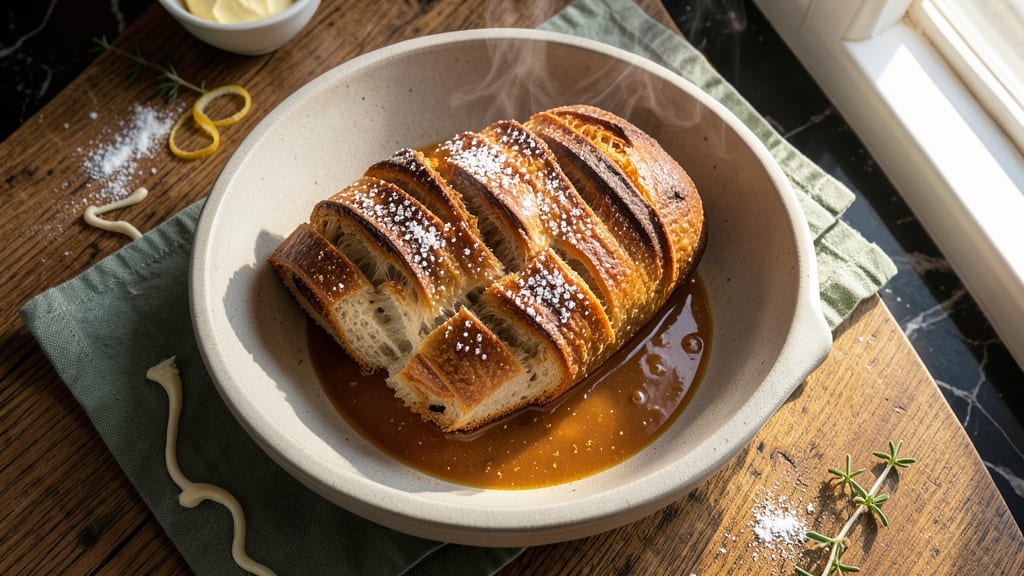
Alvin Ord's bread recipe delivers that perfect crusty, golden crunch with a hands-off rise that saves time without sacrificing flavor. This method transforms simple ingredients into artisanal-quality bread—no kneading, no fuss, just foolproof results.
The secret lies in a precise fermentation process that develops deep, complex flavors while keeping the texture light and airy inside with a satisfying snap when you bite through the crust.
What sets this recipe apart is its professional-level simplicity—ideal for home bakers who want restaurant-quality bread without the complexity. The dough comes together in minutes, then rests overnight in the fridge, allowing the flour to develop naturally and the flavors to meld.
No special equipment is needed, just patience and attention to a few key steps that ensure that signature crispy exterior and tender crumb.
The final result is a loaf with a deep golden crust that crackles when broken, revealing a soft, open crumb structure inside. The aroma alone—warm, slightly sweet, with a hint of toasted flour—makes this bread irresistible.
Whether you're a beginner or an experienced baker, this recipe delivers consistent, impressive results every time.
Perfect for sandwiches, toast, or serving alongside soups and stews, this bread is versatile enough for everyday meals but special enough for company.
The hands-off rise means you can prepare the dough the night before and bake fresh in the morning, ensuring you always have hot, crusty bread ready when you need it.
Ingredients for alvin ord's bread
Professional-quality bread starts with these twelve precise ingredients—each playing a critical role in the crust and crumb.
| Ingredient | Amount | Notes |
|---|---|---|
| Bread Flour 🌾 | 4 cups | High-protein for structure and crust |
| Instant Yeast 🍞 | ½ tsp | Active dry works too |
| Granulated Sugar 🍚 | ½ tsp | Enhances fermentation |
| Salt 🧂 | 2 tsp | Diamond Crystal preferred |
| Unsalted Butter 🧈 | ½ cup | Cold, cubed for flavor |
| Whole Milk 🥛 | 1 cup | Room temperature preferred |
| Water 💧 | 1 cup | Room temperature |
| Honey 🍯 | 1 tbsp | For dough hydration |
| Cornmeal 🌽 | ¼ cup | For dusting and crust |
| Ice Water ❄️ | ½ cup | For final dough adjustment |
| Coarse Sea Salt 🧂 | 1 tsp | For crust enhancement |
| Egg Wash 🥚 | 1 whole | Optional for shine |
The bread flour is non-negotiable here—high-protein content (12-14%) creates that signature snap and open crumb structure. King Arthur or Caputo are my go-to brands for consistent results, though most grocery store bread flours work fine. The unsalted butter should be cold when mixed in—this prevents overdevelopment of gluten during the long fermentation. For the yeast, Brumate or Red Star are reliable, but any active dry will work if fresh. The whole milk adds richness while the honey provides subtle sweetness that enhances fermentation without overpowering. If you're using a different milk, warm it slightly to room temperature first—cold milk slows yeast activity.
No bread flour? All-purpose plus 1 tbsp vital wheat gluten gets you close, though the texture won't be quite as open. Running short on butter? Olive oil at the same quantity maintains moisture, though the flavor will differ slightly. The honey can be swapped for maple syrup or even molasses for a deeper flavor profile. For the cornmeal, semolina works as a substitute, though it has a nuttier taste. The ice water is crucial—it helps control gluten development during the final shaping. Pro tip: If your kitchen gets warm, chill the dough for 30 minutes before shaping to prevent overproofing. The coarse sea salt on top isn't just for flavor—it creates those beautiful crust crystals that are signature of artisanal bread.
This dough is designed to be made ahead—prepare it the night before and let it ferment overnight in the fridge for optimal flavor development. Store shaped loaves in the fridge, covered, for up to 3 days, or freeze for up to 3 months by wrapping tightly in plastic and foil. For best results, bake straight from the fridge—no need to thaw. The egg wash (if using) should be brushed on just before baking for that golden sheen. Leftovers? Toast within 2 days for maximum crispiness—stale bread loses that satisfying crunch. The cornmeal on the baking sheet prevents sticking, but line with parchment if you prefer easy cleanup.
Why You'll Love This Recipe
- No-Knead Magic: I swear by this—just mix the bread flour, yeast, sugar, and a pat of softened butter, let it rise overnight, then bake. That’s it. No punchy arms, no stress, just hands-off perfection.
- Buttery Crust Promise: The moment that golden crust cracks open? Worth every minute. That butter gets worked into the dough just enough to deliver a rich, flaky bite—like a hug from a bakery.
- Weeknight Workhorse: I make this for sandwiches, toast, or even French toast. Honestly, it’s my go-to for breakfast, lunch, or a midnight snack when the fridge is empty.
- Dollar Stretcher: A single batch feeds my family for days, and the ingredients? Basic. Bread flour, yeast, sugar, butter—stuff I already have. No fancy shopping, no wasted leftovers. Pure efficiency.
Step-by-step instructions for Alvin Ord's bread recipe
Master this hands-off method for bread with a crispy crust and tender crumb—no kneading required.
Combine Wet Ingredients for Optimal Hydration
In a large mixing bowl, combine the 1 cup whole milk, 1 cup water, 1 tbsp honey, 0.5 tsp instant yeast, and 0.5 tsp granulated sugar. Stir gently until fully dissolved—this activates the yeast and creates a smooth base. The honey helps hydrate the dough while adding subtle sweetness that enhances fermentation.
Let this mixture sit for 5 minutes at room temperature. You'll notice small bubbles forming on the surface—this confirms the yeast is active and ready to work. If no bubbles appear after 10 minutes, your yeast may be inactive, and you'll need to start over with fresh yeast.
Incorporate Butter and Dry Ingredients
Cut the 0.5 cup unsalted butter into small cubes and add them to the wet mixture. Let them soften slightly but retain some shape—this ensures proper fat distribution in the final dough. In a separate bowl, whisk together the 4 cups bread flour and 2 tsp salt until evenly combined.
Gradually add the dry ingredients to the wet mixture, stirring with a wooden spoon or dough whisk. You want to avoid overmixing at this stage—just combine until the dough forms a shaggy mass. The high-protein bread flour will develop gluten as you handle it, but we'll let the dough rest to strengthen it naturally.
Develop Dough Through Bulk Fermentation
Transfer the dough to a lightly oiled bowl and cover it with a damp kitchen towel. Let it rest at room temperature for 1 hour. During this time, the dough will nearly double in size as the yeast ferments. You'll see bubbles forming throughout and the dough will feel lighter when pressed gently.
After 1 hour, perform a simple test: press your finger into the dough. If it springs back slowly (rather than immediately), it's ready for shaping. If it springs back quickly, let it ferment another 30 minutes. This bulk fermentation builds flavor and structure without requiring your constant attention.
Shape and Final Proof for Crust Development
Turn the dough onto a lightly floured surface and gently shape it into a round loaf. Don't overwork it—just fold the edges toward the center to create surface tension. Place the shaped dough seam-side up in a greased 9x5-inch loaf pan and brush the top with the 1 whole egg wash mixed with a splash of water.
Sprinkle the 0.25 cup cornmeal evenly over the egg wash—this creates texture and prevents sticking. Cover the pan with a damp towel and let it proof at room temperature for 1 hour or until it rises just above the pan's rim. The dough should feel firm to the touch but still slightly springy.
Bake for Maximum Crust and Crumb Perfection
Preheat your oven to 375°F with a baking stone or inverted baking sheet on the middle rack. This creates steam that's crucial for the bread's crust development. Once preheated, carefully transfer the loaf pan to the oven and bake for 40-45 minutes.
You'll know it's done when the bread reaches an internal temperature of 190-200°F and the crust has turned a deep golden brown. For extra crunch, sprinkle 1 tsp coarse sea salt on top during the last 5 minutes of baking. Remove from the oven and let it cool on a wire rack for at least 30 minutes before slicing—this allows the crumb to set properly.
Pro Tips For Making Alvin Ord'S Bread
- Weigh Your Butter: If you’re using a cup measure for the butter, you’re cheating yourself—and the bread. Butter packs differently, and this recipe relies on precision. Scoop it straight from the fridge into a scale for the exact 227g (1 cup) called for, or your dough will either be too dry or too rich.
- Let the Yeast Wake Up: Dissolve that instant yeast in warm water (110°F/43°C) with sugar first—don’t just sprinkle it in dry. Give it 5 minutes to foam before mixing with flour. I learned this the hard way after a batch that smelled like flat soda. Cold water kills it; hot water cooks it. Find the sweet spot.
- Knead Just Enough: This dough isn’t fussy, but don’t overwork it. By hand, aim for 5–7 minutes until it’s smooth and slightly tacky but not sticky. Over-kneading develops gluten too much, and Alvin Ord’s bread thrives on its tender, buttery crumb—not chewiness. If it’s sticking, wet your hands, not the dough.
- Skip the Overproofing: The dough doubles in the bowl, but don’t let it triple. That’s how you get a dense, gummy loaf. Poke it gently—if it springs back slowly, it’s ready for shaping. I used to walk away and forget, only to come back to a sad, collapsed mess. Set a timer for 1–1.5 hours max at room temp.
Wine and beer pairings for this alvin ord's bread
Crisp White Wine
Alvin Ord's bread pairs beautifully with a dry Riesling or Sauvignon Blanc—their bright acidity cuts through the rich, buttery crust while complementing the subtle sweetness from the honey.
I love a German Riesling Kabinett with its crisp apple and citrus notes, or a New Zealand Sauvignon Blanc for a zesty, herbaceous contrast. Serve slightly chilled (45-50°F) to enhance the bread's freshness and highlight the wine's vibrant flavors. 🍷
Malty Amber Ale
For beer lovers, an amber ale with caramel and biscuit notes mirrors the bread's toasted crust and tender crumb. Try a Belgian-style amber ale like Stella Artois or a craft amber ale from local breweries—look for flavors like toasted malt, honey, and light spice.
The beer's maltiness enhances the bread's buttery richness without overpowering it. Serve at 50-55°F for the perfect balance. 🍺
Red Wine for Hearty Spreads
If serving with garlic butter, smoked salmon, or charcuterie, a Pinot Noir or light Syrah adds depth. The Pinot Noir from Oregon or Burgundy offers red fruit and earthy notes that pair wonderfully with the bread's crust.
For a bolder option, a Northern Rhône Syrah brings peppery spice that stands up to rich toppings. Decant for 30 minutes to soften tannins and enhance aroma. 🍷
Sparkling Wine for Celebrations
Celebrate with Prosecco or Cava—their effervescence cleanses the palate between bites of buttery bread. A dry Prosecco from Veneto or a Spanish Cava with green apple and almond notes creates a festive pairing.
Serve chilled (40-45°F) to emphasize the bread's crispy texture and the wine's lively bubbles. Perfect for brunch or special occasions! ✨
Beer Pairing for Grilled Toppings
When grilling toppings like peppers, onions, or mushrooms to serve with the bread, a wheat beer or pilsner works best. A German Hefeweizen with banana and clove notes complements the smoky flavors, while a crisp Czech Pilsner balances the bread's richness.
Serve at 45°F to preserve the beer's refreshing qualities. 🔥
After-Dinner Digestif
End the meal with a sweet dessert wine like Moscato d'Asti or a light port—both enhance the bread's lingering honey notes. The Moscato's floral sweetness contrasts beautifully with the bread's crust, while a tawny port adds a nutty depth.
Serve the port at 60-65°F to appreciate its complexity. 🍯
Nutrition facts
Frequently asked questions
Why does this recipe use a hands-off rise method?
Alvin Ord's bread relies on a hands-off rise to develop deep, complex flavors naturally over time. The overnight cold fermentation in the fridge enhances gluten development and creates a more open crumb structure without requiring constant attention. This method also improves the bread's keeping quality—it stays fresh longer than quickly risen bread.
Can I make this bread without a loaf pan?
Shape the dough into a round boule or batard and bake on a baking sheet lined with parchment paper. For extra crust development, score the top with a razor blade before baking. The baking time will be slightly shorter (35-40 minutes at 375°F) since there's no pan to conduct heat.
What's the best way to store leftover bread?
Wrap cooled bread tightly in plastic wrap or place in an airtight container to maintain freshness. It stays good at room temperature for 2-3 days or in the fridge for up to 5 days. For longer storage, freeze for up to 3 months—thaw overnight in the fridge before toasting. The key is preventing moisture loss to maintain that perfect crunch.
Why does my bread turn out dense instead of crusty?
Dense bread usually results from overmixing the dough or underproofing. Avoid kneading after combining ingredients—just mix until shaggy. Also ensure proper fermentation: the dough should nearly double in size during the 1-hour bulk fermentation. If your kitchen is warm, chill the dough for 30 minutes before shaping to slow fermentation.
Can I substitute whole wheat flour for some of the bread flour?
You can replace up to 1 cup of bread flour with whole wheat, but expect a denser texture and slightly less crisp crust. For best results, add 1 extra tablespoon of water per cup of whole wheat flour to compensate for its higher absorption rate. The flavor will be nuttier and more hearty, though the open crumb structure may be slightly compromised.