
Side Dishes
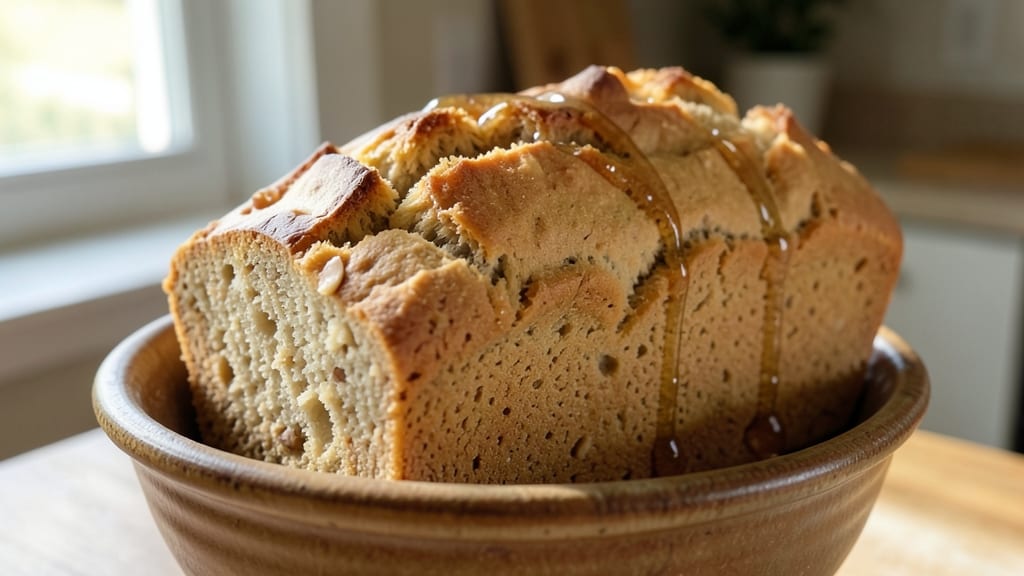
This almond flour yogurt bread delivers a light, airy rise without gluten, proving that fluffy texture isn't reserved for traditional wheat-based loaves. 💛 The secret lies in a combination of plant-based yogurt and almond flour that creates a tender crumb with just the right amount of structure—no heavy, dense results here.
What makes this recipe stand out is how it mimics classic yogurt bread while accommodating dietary restrictions, offering a high-protein, gluten-free option that still satisfies cravings for soft, pillowy bread.
The magic happens in the mixing process, where yogurt's natural acidity activates the baking soda for lift, while almond flour provides structure without gluten.
This recipe uses simple ingredients you likely already have on hand, including almond flour, plant-based yogurt, eggs (or flax eggs for vegan), and a touch of honey for subtle sweetness.
The result is a loaf that's perfect for sandwiches, toast, or serving alongside soups—its mild tang and tender crumb make it incredibly versatile.
What sets this bread apart is its foolproof method that guarantees a successful rise every time, even for beginners. The dough comes together quickly, then proofs at room temperature for a lighter texture compared to refrigerated proofs.
Baking time is short, and the loaf emerges with a golden crust and a crumb that's soft yet sturdy enough to hold fillings without falling apart. This is the kind of bread that transforms everyday meals into something special.
Whether you're baking for dietary needs or simply exploring gluten-free options, this recipe delivers restaurant-quality results at home. The almond flour adds a subtle nuttiness that pairs beautifully with the yogurt's tang, creating a flavor profile that's both familiar and exciting.
Ready to bake bread that's as nutritious as it is delicious? Let's get started.
Ingredients for almond flour yogurt bread
The perfect blend of almond flour and yogurt creates a gluten-free loaf with restaurant-quality rise.
| Ingredient | Amount | Notes |
|---|---|---|
| Almond Flour 🌰 | 2 ½ cups | Finely ground, unsweetened preferred |
| Unsweetened Plant-Based Yogurt 🥛 | 1 cup | Vegan, full-fat preferred |
| Flax Eggs 🥚 | 3 whole | 1 tbsp ground flaxseed + 3 tbsp water each |
| Granulated Sugar 🍯 | ¼ cup | Or coconut sugar for refined-free |
| Extra-Virgin Olive Oil 🫒 | ¼ cup | Lightly flavored, not strong |
| Baking Soda 🧪 | 1 ½ tsp | Pure, aluminum-free |
| Apple Cider Vinegar 🍏 | 1 tbsp | For acidity activation |
| Salt 🧂 | ½ tsp | Fine sea salt preferred |
| Vanilla Extract 🌸 | 1 tsp | Pure, alcohol-free preferred |
| Water 💧 | ½ cup | Room temperature |
| Sunflower Seeds 🌻 | ¼ cup | Optional, for texture |
| Sesame Seeds 🌾 | 1 tbsp | Optional, for topping |
Almond flour is the backbone of this recipe—Bob's Red Mill or Anthony's Goods brands deliver the finest grind for optimal texture. Look for blanched almond flour (not almond meal) to avoid grittiness. The plant-based yogurt should be full-fat and unsweetened for best flavor and structure; Cocojune or Silk brands work exceptionally well. Flax eggs provide the binding power of traditional eggs while keeping the recipe vegan—ground flaxseed from bulk bins ensures maximum freshness. For the olive oil, California Olive Ranch or Colavita offer consistent quality without overpowering flavors.
No almond flour? Oat flour or coconut flour can be substituted at a 1:1 ratio, though texture will differ slightly. Short on yogurt? Unsweetened cashew yogurt or even Greek-style vegan yogurt (like Forager) works, but adjust liquid slightly if needed. The flax eggs can be prepped ahead—store ground flaxseed in the freezer for up to 6 months to preserve freshness. For the vinegar, raw apple cider vinegar adds subtle depth, but white vinegar works in a pinch. The optional seeds can be swapped for chia seeds or pumpkin seeds if preferred—just toast them briefly for enhanced flavor.
Store-bought almond flour absorbs moisture quickly, so keep it in an airtight container in a cool, dark place for up to 3 months. The dough can be prepped a day ahead and refrigerated, covered tightly—bring to room temperature before proofing. Once baked, the loaf stays fresh for 3 days at room temperature or 5 days refrigerated, wrapped in a clean kitchen towel. For longer storage, slice and freeze portions for up to 3 months; thaw at room temperature before serving. The seeds, if used, should be toasted fresh for maximum crunch.
Why You'll Love This Recipe
- No-Fuss Mix-In: The dough comes together with just five ingredients—no stand mixer, no kneading, just a bowl and a spoon. Honestly, I’ve made it while chatting on the phone because it’s that simple.
- Tangy-Sweet Magic: That yogurt keeps it moist while the almond flour gives it a nutty depth, and a touch of sugar? It’s the kind of bread you’ll reach for instead of grabbing something processed.
- Breakfast or Snack: Toast it for a quick breakfast, pack slices for lunch, or serve warm with jam—it’s my go-to for busy mornings and unexpected guests. (Yes, even on a Tuesday night.)
- Budget-Friendly Staple: Almond flour might seem pricey, but it stretches further than regular flour, and the yogurt adds richness without breaking the bank. One batch feeds my family for days.
Step-by-step instructions for almond flour yogurt bread
Here's how to achieve that perfect light, airy crumb using only almond flour and yogurt.
👨🍳 Step 1: Prepare the Flax Eggs and Wet Ingredients
In a small bowl, combine 1 tablespoon ground flaxseed with 3 tablespoons water for each flax egg. Stir well and let sit for 5 minutes until thickened and gelatinous—this is your egg substitute. The mixture should resemble raw egg whites in consistency.
In a separate large mixing bowl, whisk together the 1 cup unsweetened plant-based yogurt, 0.25 cup granulated sugar, 0.25 cup extra-virgin olive oil, 1 tablespoon apple cider vinegar, 1 teaspoon vanilla extract, and 0.5 cup water. The vinegar will create a slight tang that balances the sweetness, while the oil ensures moisture in your final loaf.
👨🍳 Step 2: Combine Dry Ingredients and Fold Wet Mixture
In a medium bowl, sift together the 2.5 cups almond flour, 1.5 teaspoons baking soda, and 0.5 teaspoon salt. Sifting prevents lumps and ensures even distribution of the leavening agent. Whisk gently to avoid developing gluten-like proteins that could make your bread dense.
Add the prepared flax eggs to the wet mixture and whisk until fully incorporated. Then, gradually fold in the dry ingredients using a spatula, mixing just until combined. Be careful not to overmix—you should still see small pockets of flour in the batter. This prevents a tough texture and helps create that signature airy crumb.
🥘 Step 3: Add Seeds and Prepare the Loaf Pan
Gently fold in the 0.25 cup sunflower seeds and 1 tablespoon sesame seeds using a rubber spatula. These seeds add texture and nutrition while keeping the bread light. If you prefer a seed-free crust, omit them and simply sprinkle with extra sesame seeds before baking.
Preheat your oven to 350°F and lightly grease a 9x5-inch loaf pan with olive oil or line it with parchment paper. The pan should be well-coated to prevent sticking—almond flour bread has a tendency to cling to surfaces. Pour the batter into the prepared pan and smooth the top with a spatula.
🔥 Step 4: Bake Until Golden and Springy
Bake for 45-50 minutes until the top is golden brown and a toothpick inserted into the center comes out clean. The bread should spring back slightly when pressed—this indicates proper doneness. If the top browns too quickly, tent loosely with aluminum foil to prevent over-browning while allowing steam to escape.
For best results, I recommend baking on the middle rack of your oven. This ensures even heat distribution throughout the loaf. The internal temperature should reach 205-210°F when fully baked. Remove from the oven and let cool in the pan for 10 minutes before transferring to a wire rack to cool completely.
Pro Tips For Making Almond Flour Yogurt Bread
- STIR THE FLOUR FIRST: Mix your almond flour and sugar together before adding wet ingredients—this prevents dry clumps that turn into rock-hard pockets in your bread. I used to just toss everything in the bowl and ended up with uneven texture every time.
- LET FLAX EGGS REST: Measure your flax eggs (1 tbsp ground flax + 3 tbsp water per egg) and let them sit for at least 10 minutes before mixing—this ensures proper thickening. Skipping this step means your bread will be denser and less tender.
- DON’T OVERMIX THE BATTER: Stir just until combined—overworking the batter makes gluten-like strings in almond flour, leading to a gummy texture. Two minutes max with a spatula, then stop before it looks like pancake batter.
- USE COLD YOGURT: Pull your plant-based yogurt from the fridge right before measuring—warm yogurt makes the batter too loose, causing the bread to collapse as it bakes. Cold yogurt also gives a lighter crumb, and yes, I’ve learned this from burnt attempts.
Troubleshooting this dish
Dense Texture Fix
If your bread turns out dense instead of light and airy, you likely overmixed the batter. Almond flour lacks gluten, so gentle folding is key—stop mixing when just combined. For extra lift, add 1 extra teaspoon baking soda to the dry ingredients.
Also, ensure your almond flour is finely ground—coarse flour creates a grittier texture that can weigh down the crumb. 🌰
Flat or Caved Top
A flat or caved top usually means the dough didn’t rise enough. First, check your baking soda—it should be fresh (test by mixing with water; if it fizzes vigorously, it’s active). Let the dough proof for an extra 15-20 minutes at room temperature if it feels underproofed.
For a taller rise, place the pan on the lower oven rack during baking to encourage expansion.
Sticky or Gummy Interior
Gummy bread often results from too much moisture or underbaked dough. Reduce the yogurt by 2 tablespoons if your dough feels overly wet. Bake until a toothpick comes out clean (or with a few moist crumbs).
For extra insurance, bake 5 minutes longer if the center feels doughy. A properly baked loaf should have a slight springiness when pressed.
Burnt Crust Too Soon
If the crust browns too quickly while the center stays raw, tent the loaf with aluminum foil after 20 minutes of baking. This traps steam while preventing over-browning.
For a crispier crust, brush the top with a little olive oil before baking. Avoid opening the oven door frequently—temperature fluctuations cause uneven baking.
Crumbly or Dry Texture
Almond flour absorbs moisture quickly, so dryness often means the dough was too stiff. Add 1 extra tablespoon olive oil or 1 tablespoon water if the dough feels crumbly. For extra moisture, brush the baked loaf with melted butter or olive oil after cooling.
Storing the bread in an airtight container with a slice of apple (which releases moisture) helps preserve softness.
Uneven Baking
Uneven baking usually stems from poor heat distribution. Rotate the pan halfway through baking for even cooking. Use an oven thermometer to verify your oven’s accuracy—many run hot or cold.
If your oven has hot spots, place the pan on a baking sheet to catch drips and improve stability. Baking on the middle rack ensures consistent results. ⚡
Nutrition facts
Frequently asked questions
Can I substitute regular yogurt for plant-based yogurt in this recipe?
While you can use regular yogurt, the texture and flavor will differ slightly. Plant-based yogurt provides a tangier profile that complements the almond flour beautifully. If using dairy yogurt, reduce the liquid by 2 tablespoons since it's thicker. For a fully vegan version, stick with unsweetened coconut or almond-based yogurt.
Why does my almond flour yogurt bread turn out dense instead of light?
Density usually comes from overmixing or using coarse almond flour. Mix just until combined—stop when small flour pockets remain. For extra lift, add ½ teaspoon extra baking soda and ensure your almond flour is finely ground. Also, let the dough proof at room temperature for 1 hour before baking for optimal rise.
How do I store this bread to keep it fresh longer?
Wrap the cooled loaf tightly in a clean kitchen towel, then place in an airtight container. It stays fresh for 3 days at room temperature or 5 days refrigerated. For longer storage, slice and freeze portions for up to 3 months. To revive, thaw at room temperature or warm in a 300°F oven for 5 minutes.
Can I make this bread without seeds for a smoother texture?
Simply omit the sunflower and sesame seeds from the recipe. For a seed-free crust, you can also skip the topping seeds entirely. The bread will still have a tender crumb—just without the nutty crunch. If you prefer texture, try adding 1 tablespoon chopped walnuts instead for a different flavor profile.
Is this bread suitable for sandwiches or does it crumble too easily?
This recipe yields a sturdy yet tender loaf perfect for sandwiches! The almond flour provides structure while the yogurt keeps it moist. For extra stability, let the bread cool completely before slicing. If you're concerned about crumbling, brush the cut surfaces lightly with olive oil before assembling sandwiches.