
Side Dishes
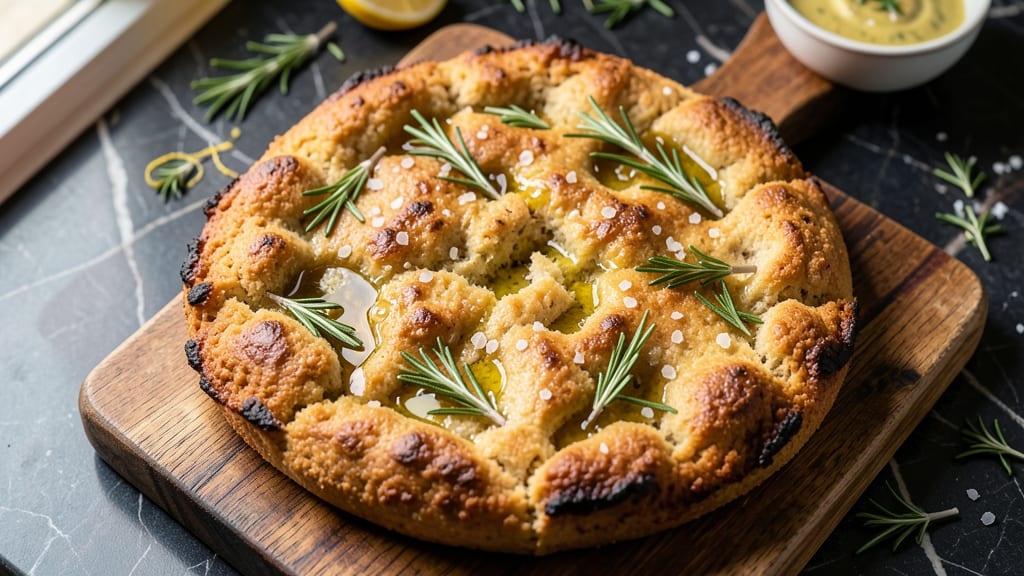
This almond flour focaccia bread recipe delivers a golden, airy loaf without a single gluten grain—proving plant-based baking can be just as satisfying. The secret lies in almond flour's natural moisture retention and rich flavor, which creates a tender crumb and crispy crust.
Unlike traditional focaccia, this version relies on aquafaba for binding and xanthan gum for structure, ensuring it holds together beautifully.
What sets this recipe apart is its simplicity: no kneading, no complicated techniques, just a few key ingredients mixed together before proofing and baking. The almond flour absorbs liquid differently than wheat flour, so we'll adjust hydration and proofing time to achieve that perfect chewy-yet-airy texture.
Baking at 375°F ensures a golden crust without burning, while a light olive oil drizzle after baking enhances the natural nutty flavor.
By the time you pull this focaccia from the oven, you'll have a loaf with crisp edges and a tender interior—ideal for serving alongside soups, salads, or as a base for vegan bruschetta.
The almond flour adds subtle sweetness and a satisfying nutty depth, making every bite feel indulgent yet wholesome. This is focaccia reimagined for modern, gluten-free diets.
For best results, let the dough rest after mixing to develop flavor, and don't skip the xanthan gum—it's what gives this focaccia its signature structure. Whether you're baking for a meal or prepping ahead, this recipe delivers restaurant-quality results with minimal effort. Let's get started!
Ingredients for almond flour focaccia bread
Golden crust and tender crumb—this almond flour focaccia needs just 11 simple ingredients for a gluten-free masterpiece.
| Ingredient | Amount | Notes |
|---|---|---|
| Almond Flour 🌰 | 3 cups | Finely ground, unsweetened preferred |
| Aquafaba 🥫 | ½ cup | Liquid from canned chickpeas |
| Extra-Virgin Olive Oil 🫒 | ½ cup | Lightly flavored for baking |
| Water 💧 | ¾ cup | Room temperature preferred |
| Xanthan Gum 🧪 | ¼ tsp | Essential for structure |
| Fine Sea Salt 🧂 | 1 ½ tsp | Diamond Crystal preferred |
| Dried Rosemary 🌿 | 1 tbsp | Finely chopped for flavor |
| Dried Thyme 🌿 | 1 tsp | Or 1 tbsp fresh thyme |
| Garlic Powder 🧄 | 1 tsp | Fresh garlic for stronger flavor |
| Baking Powder 🍞 | ½ tsp | Aluminum-free preferred |
| Fresh Basil Leaves 🌿 | ¼ cup | Chopped for topping (optional) |
Almond flour is the star here, so don't skimp on quality. Bob's Red Mill or Anthony's Goods brands are my go-to—their finely ground flour blends smoothly without grit. If you're using pre-ground, pulse it in a food processor for 30 seconds to ensure even texture. The aquafaba (chickpea brine) is non-negotiable—it replaces eggs perfectly while adding lightness. Save the liquid from a can of chickpeas, or buy bottled aquafaba at Whole Foods if you're short on time. For the olive oil, California extra-virgin brands like Corto or Filippo Berio add subtle fruitiness that complements the almond flavor beautifully.
No aquafaba? Flax eggs (1 tbsp ground flax + 3 tbsp water per egg) work in a pinch, though texture may be slightly denser. Short on almond flour? Substitute up to 1 cup with tapioca starch for better structure, but expect a slightly different crumb. The xanthan gum is crucial—never skip it, as it mimics gluten's binding properties. If you can't find it, psyllium husk powder at half the amount is a decent alternative. For the herbs, fresh basil adds vibrant color, but dried works too (use half the amount). The garlic powder can be swapped for 1 clove fresh minced garlic if you're feeling fancy—just fold it in after mixing the dough.
This dough needs at least 1 hour of rest at room temperature before baking—don't rush it. Store leftovers wrapped in parchment at room temperature for 2 days, or freeze for 3 months in an airtight container. To revive, warm in a 350°F oven for 5-10 minutes until crispy again. For extra crispiness, bake the focaccia on a preheated baking stone or in a cast-iron skillet. The golden crust develops best when baked at 375°F—any hotter and it'll burn before the center cooks.
Why You'll Love This Recipe
- No Fuss, No Stress: I’ve made this at least six times—just mix the almond flour, aquafaba, and olive oil, then let it rise while I fold laundry. The xanthan gum does all the heavy lifting for structure, so no overworking the dough or second-guessing the texture.
- Nutty Olive Oil Magic: That first bite? Warm, crispy crust with a buttery almond richness that’s not sweet—just pure, toasty depth. Drizzle it with extra virgin olive oil while it’s still hot, and suddenly your focaccia tastes like a sun-drenched Italian market.
- Weeknight Workhorse: Slice it for toast, tear it into croutons, or use it as a low-carb base for sandwiches. Honestly, I keep a loaf in the fridge for days—it’s my go-to for quick lunches or when I’m too tired to bake from scratch.
- Budget-Friendly Indulgence: Almond flour isn’t cheap, but this recipe stretches further than regular focaccia. A single batch feeds my family for three meals, and the aquafaba (chickpea water) replaces eggs—zero waste, all flavor. Plus, it’s one of those recipes that tastes expensive but costs next to nothing.
Step-by-step instructions for almond flour focaccia bread
This gluten-free focaccia achieves that coveted golden crust and airy texture using simple techniques and precise measurements.
Whisk Wet Ingredients for a Smooth Batter
In a large mixing bowl, combine the 0.5 cup aquafaba and 0.75 cup water. Whisk vigorously for 2 minutes until the mixture becomes thick and foamy—this step mimics egg whites in traditional focaccia. The aquafaba should nearly triple in volume and hold soft peaks when you lift the whisk.
Next, add the 0.5 cup extra-virgin olive oil and whisk again for 1 minute until fully incorporated. The oil should blend seamlessly, creating a silky base. This is where the bread's signature richness comes from—don't skip this thorough mixing. If you notice any separation, whisk for an additional 30 seconds to ensure complete emulsification.
Mix Dry Ingredients Until Just Combined
In a separate bowl, sift together the 3 cups almond flour, 0.25 tsp xanthan gum, 1.5 tsp fine sea salt, 1 tbsp dried rosemary, 1 tsp dried thyme, 1 tsp garlic powder, and 0.5 tsp baking powder. The xanthan gum is crucial here—it provides the gluten-free structure that almond flour alone can't achieve.
Gradually pour the dry mixture into the wet ingredients while whisking on low speed. Mix just until combined—you should still see small flour streaks. Overmixing develops gluten-like proteins in almond flour, which can make the focaccia dense. The batter should be thick but pourable, similar to pancake batter consistency.
Prepare the Baking Pan and Transfer Batter
Preheat your oven to 375°F. Lightly grease a 9x13-inch baking pan with olive oil or line it with parchment paper for easy removal. Pour the batter into the prepared pan and spread it evenly using an offset spatula, pressing gently to eliminate air bubbles. The batter should cover the bottom completely—about ¼-inch thick.
Here's the thing—almond flour batter behaves differently than wheat flour. Don't worry if it looks too thick or if you need to press firmly to spread it. The key is even distribution so the focaccia bakes uniformly. Tap the pan gently on the counter a few times to release any remaining air bubbles before baking.
Bake Until Golden and Springy
Bake the focaccia for 25-30 minutes until the edges are deep golden brown and the center springs back slightly when pressed. The top should have a crispy, crackly crust while remaining soft underneath. If you notice the edges browning too quickly, loosely tent the pan with aluminum foil after 20 minutes to prevent over-browning.
During the last 5 minutes of baking, you can optionally sprinkle the 0.25 cup chopped fresh basil leaves over the top for freshness. The basil will wilt slightly but still impart its aromatic flavor. Remove from the oven and let cool in the pan for 10 minutes before transferring to a wire rack. This resting period prevents the focaccia from becoming gummy when sliced.
Create Classic Focaccia Dents and Serve
While still warm, use your fingers to gently press dimples all over the focaccia—this creates those signature pockets that hold olive oil and toppings. Drizzle with an additional 1 tablespoon olive oil if desired, and sprinkle with extra sea salt for contrast. The focaccia should be crispy on the outside with a tender, slightly chewy interior.
Slice into squares or rectangles and serve warm. This gluten-free focaccia holds its shape well when sliced and maintains its texture for 2-3 days when stored in an airtight container. The almond flour gives it a subtle nutty flavor that pairs beautifully with soups, salads, or as a base for bruschetta.
Pro Tips For Making Almond Flour Focaccia Bread
- Mix Aquafaba First: Whisk the aquafaba until it forms stiff peaks—like meringue—before folding it into the almond flour. I learned this the hard way: skipping the stiff peaks means a dense, gummy focaccia instead of that light, airy texture you’re after.
- Preheat Pan Like It’s 1980: Your oven needs to scream hot—425°F (220°C) with the pan inside for at least 20 minutes. I used to rush this, and the oil would pool instead of crisping. A screaming-hot pan guarantees that golden crust, not a sad, greasy bottom.
- Weigh the Almond Flour: Scooping almond flour by volume is a disaster—it packs differently every time, throwing off the ratio. Use a kitchen scale for precision; 1 cup of almond flour can weigh anywhere from 90 to 120 grams. Your focaccia’s structure depends on this.
- Skip the Xanthan Gum: If your almond flour is fresh and finely ground (like Bob’s Red Mill), you might not need it. I tested this after reading debates online—turns out, xanthan gum can make the crumb gummy if overused. Taste the batter first; if it’s sticky but not gluey, you’re golden.
Regional styles of this dish
Italian Roots
The classic focaccia originated in the Liguria region of Italy, where it was traditionally made with simple ingredients like olive oil, flour, and salt. This version stays true to those roots while adapting to gluten-free needs.
The almond flour brings a nutty depth that mimics the richness of traditional Italian olive oil, while the rosemary and thyme evoke the Mediterranean herbs used in Ligurian cuisine. 🌿
Southern French Twist
In Provence, focaccia often incorporates local lavender and herbs. For a French-inspired variation, replace the rosemary with 1 tsp dried lavender buds (steeped in warm water first) and add 1 tbsp chopped fresh tarragon.
The floral notes pair beautifully with the almond flour's natural sweetness, creating a fragrant, aromatic loaf perfect for spring gatherings.
Spanish-Inspired
For a tapas-style focaccia, swap the garlic powder for 1 tsp smoked paprika and add 1 tsp ground cumin to the dry ingredients. Top with ¼ cup chopped smoked Spanish paprika after baking and drizzle with 1 tbsp olive oil mixed with ½ tsp lemon zest.
This version has a warm, slightly smoky flavor that's perfect for pairing with Spanish olive oils and Manchego-style vegan cheese.
Middle Eastern Adaptation
Transform this focaccia into a za'atar-inspired loaf by replacing the rosemary and thyme with 1 tbsp za'atar seasoning and ½ tsp ground coriander. Add 1 tbsp sesame seeds to the dry ingredients and sprinkle 2 tbsp toasted sesame seeds on top before baking.
The nutty almond flour complements the earthy za'atar beautifully, creating a flavor profile that's perfect for pairing with hummus or baba ganoush.
Herb Garden Fusion
If you have a variety of fresh herbs, create a custom herb blend by combining 1 tbsp each of fresh rosemary, thyme, and oregano (finely chopped) with 1 tbsp fresh parsley. Mix this into the wet ingredients before combining with the dry ingredients.
The fresh herbs add vibrant color and a bright, aromatic flavor that makes this focaccia perfect for summer picnics or as a base for vegan pesto toppings.
Sweet Almond Version
For a dessert-style focaccia, reduce the salt to 1 tsp and add 2 tbsp maple syrup to the wet ingredients. Stir in ½ cup chopped almonds and ½ cup dried cranberries after spreading the batter in the pan.
Bake as directed, then drizzle with 2 tbsp melted vegan butter and a sprinkle of cinnamon. This sweet version is perfect for breakfast or as a dessert with a cup of chai tea. 🍯
Nutrition facts
Frequently asked questions
Why does this almond flour focaccia need xanthan gum?
Almond flour lacks gluten's natural elasticity, so xanthan gum replaces that structure. It creates the signature chewy-yet-airy texture by binding the ingredients together during baking. Without it, your focaccia would crumble instead of hold its shape. Think of it as the gluten-free "glue" that makes this recipe work perfectly.
Can I make this focaccia without aquafaba?
Yes, but texture will differ. Replace 0.5 cup aquafaba with 2 flax eggs (2 tbsp ground flax + 6 tbsp water) or 0.5 cup unsweetened applesauce for moisture. The focaccia will be slightly denser but still delicious. For best results, let the dough rest 30 minutes extra to compensate for the different binding properties.
How do I prevent the focaccia from burning before the center cooks?
Bake at 375°F and tent loosely with foil after 20 minutes if edges brown too quickly. For even cooking, use a baking stone or preheat your oven 15 minutes extra. The internal temperature should reach 205°F for perfect doneness. A toothpick inserted should come out clean with minimal crumbs.
Can I add cheese to this vegan focaccia?
Sprinkle ½ cup vegan shredded mozzarella or ¼ cup nutritional yeast on top before the final 5 minutes of baking. For extra richness, mix 2 tbsp vegan cream cheese into the wet ingredients. The cheese melts beautifully into the crispy crust, creating a decadent flavor.
Why does my almond flour focaccia taste bitter?
Bitterness usually comes from overcooked almond flour or using low-quality oil. Use freshly ground almond flour (not pre-ground) and lightly flavored extra-virgin olive oil. If the flour tastes bitter, pulse it in a food processor for 1 minute to reduce bitterness. Also check your baking powder—ensure it's fresh (over 6 months old can taste bitter).