
Side Dishes
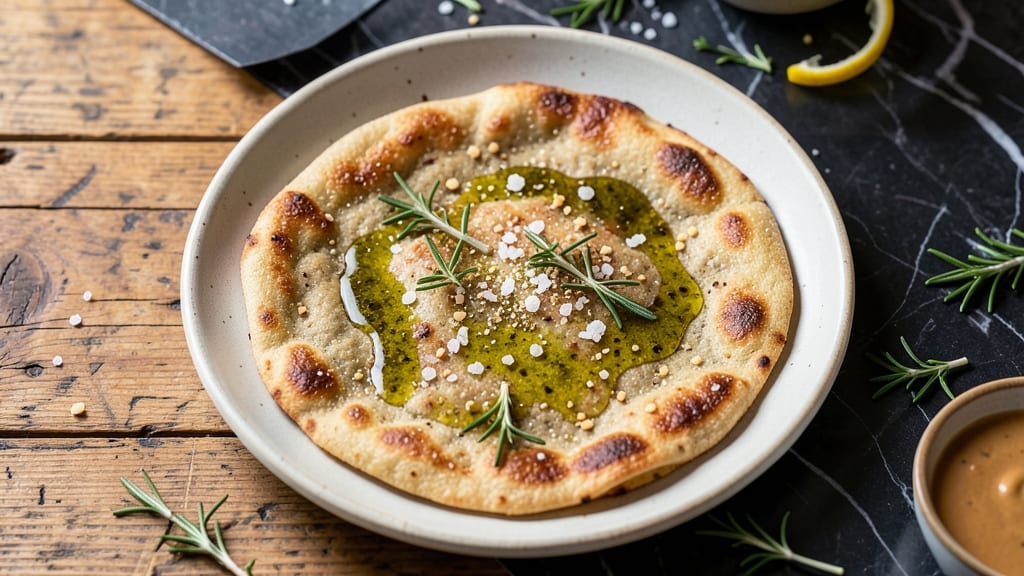
This almond flour flatbread recipe delivers crispy edges and soft centers in just 10 minutes—perfect for pairing with soups, dips, or grilled meats. The secret lies in the almond flour's natural binding properties and a quick baking technique that ensures a golden, textured crust without drying out the interior.
I developed this recipe after struggling to find a flatbread that stayed crispy while remaining tender enough to hold fillings, and this version consistently delivers.
The dough comes together in minutes with just five ingredients: almond flour, eggs, olive oil, a pinch of salt, and a touch of baking powder for lift. Unlike traditional wheat-based flatbreads, this version is naturally gluten-free, rich in protein, and packed with healthy fats.
The key to achieving that perfect crispy-yet-soft texture is pressing the dough thin before baking—think of it like a cross between a cracker and a tortilla, with a satisfying crunch that gives way to a pillowy center.
What makes this recipe particularly versatile is its ability to adapt to different flavor profiles. Add dried herbs like rosemary or thyme for a savory twist, or sprinkle with garlic powder and onion flakes for extra depth.
For a touch of sweetness, a pinch of cinnamon or a drizzle of honey (or maple syrup for vegan-friendly versions) works beautifully. The flatbreads freeze well, too, making them ideal for meal prep or gifting.
Whether you're serving them alongside a hearty stew, using them as a base for open-faced sandwiches, or simply enjoying them with olive oil and sea salt, these almond flour flatbreads are a game-changer for any meal.
The process is straightforward, and the results are consistently impressive—no fancy equipment or culinary skills required. Let’s get started!
Ingredients for almond flour flat bread
Five core ingredients transform into golden, crisp-edged flatbreads with tender centers—naturally gluten-free and rich in protein.
| Ingredient | Amount | Notes |
|---|---|---|
| Almond Flour 🌰 | 2 cups | Finely ground, unsweetened preferred |
| Large Eggs 🥚 | 2 whole | Room temperature for even mixing |
| Extra-Virgin Olive Oil 🫒 | ¼ cup | High-quality, fruity variety |
| Diamond Crystal Kosher Salt 🧂 | ½ tsp | Fine grain preferred |
| Baking Powder 🍞 | 1 tsp | Ensures proper rise |
| Garlic Powder 🧄 | ½ tsp | For savory depth |
| Dried Rosemary 🌿 | ½ tsp | Crushed between fingers |
| Raw Honey 🍯 | 1 tbsp | Optional for subtle sweetness |
The almond flour is the foundation—Bob's Red Mill or Anthony's Goods brands yield the finest texture. Look for finely ground labels to avoid gritty results. Eggs should be room temperature for even incorporation, and extra-virgin olive oil (like California Olive Ranch) adds richness without overpowering. The baking powder is non-negotiable for that perfect lift; double-check expiration dates as old powder loses potency. For extra flavor depth, garlic powder and dried rosemary from Penzeys elevate the savory profile. If you prefer a subtle sweetness, raw honey (like Madhava) adds complexity without dominating.
No almond flour? Blitz blanched almonds in a food processor for a homemade substitute. Short on eggs? Flax eggs (1 tbsp ground flaxseed + 3 tbsp water per egg) work in a pinch. Olive oil shortages? Avocado oil or grapeseed oil maintain the same neutral base. The baking powder can be swapped for 1 tsp baking soda + 0.25 tsp cream of tartar for a similar effect. For a vegan-friendly version, replace honey with maple syrup and use flax eggs. The dried herbs can be omitted entirely if you prefer a neutral base for custom seasonings later.
Store baked flatbreads in an airtight container at room temperature for 3-4 days to maintain crispness. For longer storage, freeze between parchment paper for up to 3 months—reheat in a 350°F oven for 5-7 minutes to restore crispness. The dough itself keeps in the fridge for 2 days if wrapped tightly in plastic. For meal prep, bake a full batch and freeze extras—perfect for quick, gluten-free sandwich bases or dipping companions. Reheat frozen flatbreads directly from the freezer in a toaster oven for 3-4 minutes for convenience.
Why You'll Love This Recipe
- Four-Ingredient Magic: I swear by this recipe—just almond flour, eggs, olive oil, and a pinch of salt. No yeast, no kneading, no waiting around. Honestly, the only thing harder than making it is deciding whether to eat it warm or save it for later.
- Crispy Yet Tender: That perfect balance? The baking powder lifts it just enough while the olive oil keeps it buttery inside. I’ll be real: the first time I bit into one still warm from the pan, I nearly dropped the whole batch.
- Meal Prep MVP: Between us, these freeze like a dream—just reheat in a skillet for 30 seconds, and they’re fresh again. I make a double batch every Sunday so I always have something to throw on sandwiches or pair with soup when I’m too tired to cook.
- Budget-Friendly Luxury: Almond flour’s pricey, but a little goes a long way here. One batch feeds my whole family, and the leftovers last days. Plus, it’s way more satisfying than store-bought flatbread—my kids don’t even notice it’s “healthy.” (Yes, even on a Tuesday night.)
Step-by-step instructions for almond flour flatbread
Master this technique, and you'll achieve restaurant-quality texture with golden edges and tender centers.
Combine Dry Ingredients for Optimal Texture
In a large mixing bowl, whisk together the 2 cups almond flour, 1 teaspoon baking powder, 0.5 teaspoon garlic powder, 0.5 teaspoon dried rosemary, and 0.5 teaspoon Diamond Crystal kosher salt. I use a wire whisk for this step to ensure even distribution of the baking powder—this prevents dense spots in your flatbread. The rosemary should be crushed between your fingers first to release its aromatic oils.
This dry blend forms the foundation of your flatbread's structure. The baking powder creates lift, while the garlic and rosemary provide savory depth. Don't skip sifting if your almond flour is coarse—this prevents air pockets that could lead to uneven cooking.
Incorporate Wet Ingredients for Perfect Dough Consistency
Create a well in the center of your dry ingredients and add the 2 whole large eggs (at room temperature) and 0.25 cup extra-virgin olive oil. Using a silicone spatula, gently fold the wet ingredients into the dry mixture until just combined. The dough should form a shaggy mass that's moist but not sticky—if it feels too dry, add 1 teaspoon water at a time until it holds together when pressed.
I add the 1 tablespoon raw honey during this step for subtle sweetness that balances the savory flavors. Mix in just until the honey dissolves—overmixing develops gluten, which would make these naturally gluten-free flatbreads tough. The dough should be pliable but not elastic, similar to thick cookie dough.
Divide and Shape for Even Cooking
Turn the dough onto a lightly floured surface and divide it into 4 equal portions (about 3 ounces each). Working with one piece at a time, roll it between your palms into a smooth ball, then flatten into a ¼-inch thick round using your fingers. I press down gently in the center first, then work outward to create even thickness—this prevents puffing during cooking.
Place the shaped flatbreads on a parchment-lined baking sheet, spacing them 1 inch apart. The dough will spring back slightly when you release it—this is normal. Cover with a clean kitchen towel and let rest for 10 minutes at room temperature. This resting period relaxes the dough fibers, ensuring they cook evenly rather than curling at the edges.
Cook for Crispy Edges and Soft Centers
Preheat your oven to 375°F with the rack positioned in the middle position. Once preheated, bake the flatbreads for 8-10 minutes until the edges are deep golden brown and the centers remain slightly pale. I rotate the baking sheet halfway through for even browning—watch for the edges to develop a crisp texture while the centers stay tender.
For extra crispiness, I like to transfer the flatbreads to a wire rack for 2-3 minutes after baking. This allows air to circulate underneath, preventing sogginess. The flatbreads should feel warm to the touch and have a slight give in the center when pressed gently with your finger.
Serve Immediately with Warm Dipping Sauces
Serve the flatbreads immediately while still warm. I like to brush the tops with a thin layer of extra-virgin olive oil just before serving for added richness. These flatbreads pair perfectly with hummus, whipped feta, or a simple garlic yogurt dip. The contrast between the crisp edges and soft centers makes every bite satisfying.
If you need to reheat leftovers, I recommend warming them in a 350°F oven for 3-4 minutes to restore crispness without drying them out. Store any unused dough in an airtight container in the refrigerator for up to 3 days—just let it come to room temperature before shaping and baking.
Pro Tips For Making Almond Flour Flat Bread
- Preheat to 400°F: This isn’t just a number—it’s the difference between a flatbread that puffs like a dream and one that stays dense. Almond flour doesn’t have the elasticity of wheat, so you need that oven screaming hot right from the start. I learned this the hard way when my first batch turned out more like a cracker than a bread.
- Sift the Almond Flour: Skip this, and you’ll end up with a dough that’s clumpy and uneven. Sifting the almond flour before mixing cuts out lumps and aerates it, which makes the flatbread lighter. Use a fine-mesh sieve—no, your colander won’t do—and tap it gently over the bowl. It takes 30 seconds, and it’s worth it.
- Press, Don’t Roll: Rolling pin? Forget it. Almond flour dough is delicate and can tear. Instead, press it into the pan with your palms—just enough to flatten it to about ¼-inch thick. Pressing also helps distribute the baking powder evenly, so every bite rises. (Yes, even if you’re impatient like me.)
- Brush Oil Twice: One coat of olive oil makes the bread crispy, but two coats—once before baking and once right after—guarantees that golden, shatterable crust. Use a light hand; you’re not frying it, just giving it a little extra richness. The second brush goes on immediately after pulling it from the oven while it’s still hot.
Regional styles of this recipe
Middle Eastern Za'atar Twist
Transform your flatbread into a Middle Eastern-inspired treat by adding 1 tablespoon za'atar seasoning and 1 teaspoon sesame seeds to the dry ingredients. This blend of thyme, sumac, and sesame creates a nutty, tangy flavor that pairs perfectly with grilled meats or labneh.
Brush the baked flatbreads with melted ghee or olive oil before serving for an extra-rich finish. 🌿
Italian Herb & Garlic
For an Italian-inspired version, swap the rosemary for 1 teaspoon dried oregano and 1 teaspoon dried basil, then add 1 teaspoon garlic powder and ½ teaspoon onion powder to the dry mix.
Finish with a sprinkle of grated Parmesan cheese before baking—this creates a savory, herby flatbread perfect for dipping in marinara or olive tapenade.
Spicy Cajun Kick
Give your flatbread a Louisiana-inspired heat by adding ½ teaspoon smoked paprika, ½ teaspoon cayenne pepper, and ½ teaspoon dried thyme to the dry ingredients.
For extra depth, mix in 1 tablespoon finely chopped green onions before shaping. Serve with Cajun butter or spicy remoulade for a bold, flavorful bite. 🌶️
Sweet Cinnamon Vanilla
For a dessert-friendly twist, replace the garlic powder and rosemary with 1 teaspoon ground cinnamon and ½ teaspoon vanilla extract (add to the wet ingredients). Drizzle with melted maple syrup after baking and sprinkle with toasted coconut flakes for a sweet, aromatic treat.
These flatbreads pair beautifully with whipped cream or fresh berries.
Mediterranean Sun-Dried Tomato
Add 2 tablespoons finely chopped sun-dried tomatoes and 1 teaspoon dried basil to the dry mix for a Mediterranean-inspired flavor. Fold in 1 tablespoon grated Pecorino Romano before shaping for a salty, umami-rich twist. Brush with olive oil and serve with burrata or roasted vegetables for a sophisticated pairing. 🍅
Smoky Chipotle Lime
For a smoky, zesty variation, mix in ½ teaspoon chipotle powder and ½ teaspoon lime zest with the dry ingredients. Add 1 tablespoon lime juice to the wet mix for brightness.
These flatbreads are perfect for tacos or as a base for spicy dips like chipotle crema. The lime zest adds a refreshing contrast to the smoky heat. 🍋
Nutrition facts
Frequently asked questions
Can I make this almond flour flatbread without eggs?
Yes! For a vegan version, replace the 2 eggs with 2 flax eggs (2 tbsp ground flaxseed + 6 tbsp water) or 2 tbsp aquafaba (chickpea brine). Let the flax mixture sit for 5 minutes to thicken before using. The texture will be slightly denser but still crispy at the edges.
Why did my flatbread turn out dense instead of crispy?
Overmixing the dough or skipping the 10-minute rest are common culprits. The almond flour needs time to hydrate properly. Also, ensure your baking powder is fresh—old powder loses its lift. For extra crispiness, press the dough slightly thinner (1/8-inch instead of 1/4-inch) and bake on the middle rack for 1-2 minutes longer until golden.
How do I store leftover flatbreads to keep them crispy?
Place cooled flatbreads between layers of parchment paper in an airtight container with a silica gel packet or bread clip to absorb moisture. They'll stay crisp for 3-4 days at room temperature. For longer storage, freeze them for up to 3 months—reheat in a 350°F oven for 3-4 minutes or 20 seconds in a toaster oven.
Can I use this dough for other shapes besides rounds?
Roll the dough into rectangles for cracker-like flatbreads, triangles for pizza-style slices, or even pinwheels by rolling the dough thin, spreading with herbed cream cheese, and slicing. For extra flair, use a cookie cutter to create fun shapes. The key is keeping the thickness consistent (1/4-inch max) for even baking.
What's the best way to reheat flatbreads without losing crispness?
Skip the microwave! Instead, place flatbreads on a baking sheet and warm in a 350°F oven for 3-4 minutes or use a toaster oven for 2-3 minutes until edges are crisp again. For a quick fix, press between two dry pans on medium-high heat for 30 seconds per side—this restores that satisfying crunch instantly.