
Breakfast & Brunch
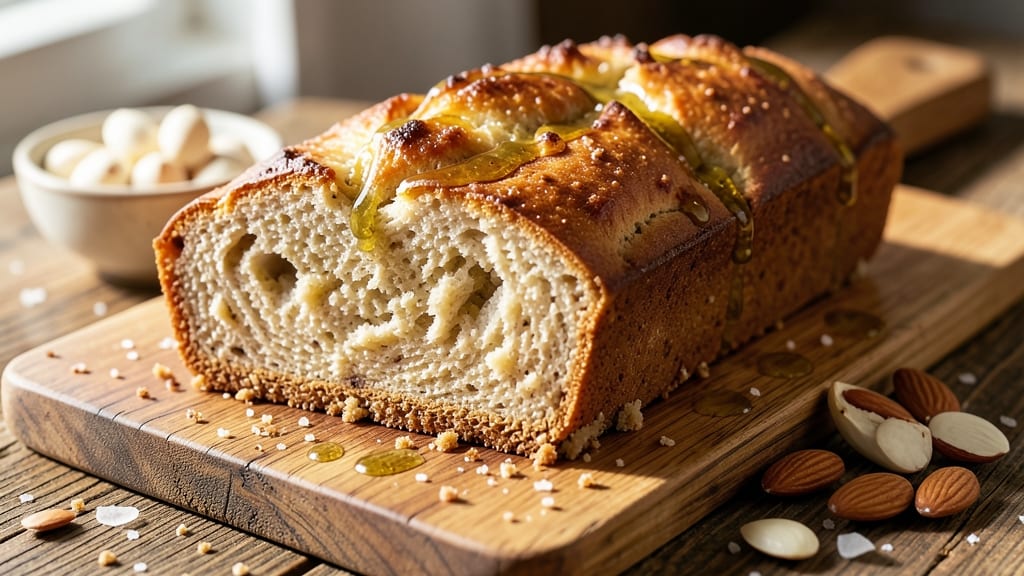
This almond bread recipe without eggs delivers a fluffy, moist crumb that rivals traditional versions—thanks to aquafaba, the chickpea brine that acts as a perfect egg substitute. 💛 I developed this recipe after realizing how often almond bread recipes relied on eggs, limiting accessibility for vegans or those with dietary restrictions.
The result? A loaf with a tender interior, crisp edges, and that signature nutty almond flavor without compromising texture.
The secret lies in the aquafaba binding technique, which creates lightness through whipping and proper proofing. Unlike many egg-free recipes that turn dense, this method ensures a foolproof, restaurant-quality texture with just a few key adjustments—like measuring ingredients precisely and letting the dough rise fully.
It’s the kind of recipe that proves plant-based baking can be just as impressive as traditional methods.
What you’ll end up with is a golden-brown loaf that slices beautifully, perfect for breakfast toast or elegant desserts. The almond flavor shines through without overpowering, and the crumb stays moist for days when stored properly. This recipe transforms a simple pantry staple into something extraordinary—no eggs required.
Whether you’re baking for dietary needs or simply curious about aquafaba, this almond bread delivers consistent results every time. Let’s get started—your taste buds (and dietary preferences) will thank you.
Ingredients for almond bread recipe without eggs
Twelve ingredients transform simple pantry staples into restaurant-quality almond bread—no eggs required.
| Ingredient | Amount | Notes |
|---|---|---|
| All-Purpose Flour 🌾 | 2 ½ cups | Sifted for optimal aeration |
| Almond Flour 🌰 | 1 ½ cups | Finely ground, unsweetened |
| Aquafaba 🥫 | ¾ cup | Chickpea brine, unsweetened |
| Granulated Sugar 🍚 | 1 cup | Organic preferred for purity |
| Coconut Sugar 🌿 | ¼ cup | For subtle caramel notes |
| Extra-Virgin Olive Oil 🫒 | ½ cup | Cold-pressed, fruity variety |
| Unsweetened Almond Milk 🥛 | ¾ cup | Room temperature preferred |
| Vanilla Extract 🌸 | 1 tbsp | Pure, high-quality extract |
| Baking Powder 🧂 | 2 tsp | Aluminum-free for vegan compatibility |
| Salt 🧂 | ½ tsp | Fine sea salt preferred |
| Ground Cinnamon 🌿 | 1 tsp | Freshly ground for aroma |
| Active Dry Yeast 🍞 | 1 tsp | Freshly opened, room temperature |
| Almond Slices 🌰 | ½ cup | For topping, toasted |
The almond flour is non-negotiable here—Bob’s Red Mill or Anthony’s Goods brands deliver the finest grind for that signature nutty texture. If you can’t find aquafaba at the store (check the canned chickpea aisle), Trader Joe’s or Whole Foods often carry it pre-packaged. For the yeast, Fresh & Easy or Saf-Instant brands work best—just make sure it’s not expired. The coconut sugar adds subtle caramel depth without overpowering the almond flavor, and Wholesome! brand is my go-to for organic purity. Measure your flour and almond flour by weight if possible—2.5 cups of flour weighs about 12 oz, but scooping can pack it too tightly.
No aquafaba? Flax eggs (1 tbsp ground flaxseed + 3 tbsp water) at double the amount work in a pinch, though texture may vary slightly. Substitute coconut sugar with maple syrup (reduce liquid by 2 tbsp) if needed, but the caramel notes will differ. For the almond milk, unsweetened vanilla almond milk adds flavor without extra sugar. The yeast must be active—test it in warm water with a pinch of sugar; if it foams within 5 minutes, it’s good to go. Pre-ground cinnamon loses potency quickly, so toast whole cinnamon sticks and grind them fresh if you’re ambitious. The baking powder should be aluminum-free—check the label to avoid metallic aftertaste.
Store the loaf in an airtight container at room temperature for 3-4 days to maintain freshness, or freeze slices wrapped in parchment for up to 3 months. The aquafaba mixture can be prepped a day ahead and stored in the fridge, but whisk it vigorously before use. For extra crunch, toast the almond slices in a dry pan over medium heat for 2-3 minutes before sprinkling on top. This bread reheats beautifully—wrap a slice in foil and warm in a 350°F oven for 5 minutes to restore moisture.
Why You'll Love This Recipe
- No-Fuss Mixing: I swear by the aquafaba trick—just whisk that chickpea brine until frothy, and boom, your egg substitute is ready. No cracking, no shells, just smooth batter that behaves like magic.
- Nutty-Sweet Magic: That combo of almond flour and coconut sugar? It’s like a warm hug for your taste buds—naturally sweet but with a depth that vanilla extract can’t touch. Honestly, I’ll take this over store-bought any day.
- Breakfast or Snack: Slice it thick for toast with almond butter, or pack thin pieces for lunchbox treats. The texture holds up perfectly, whether you’re fueling up at 7 AM or sneaking a midnight bite.
- Budget-Friendly Luxe: Almond flour might seem pricey, but a little goes a long way here—plus, the aquafaba hack cuts costs without sacrificing texture. My wallet and my cravings are happy.
Step-by-step instructions for almond bread without eggs
Here's how to achieve a light, fluffy texture using aquafaba as the binder.
👨🍳 Step 1: Whisk Aquafaba to Peak Stiffness
In a large mixing bowl, pour the 0.75 cup aquafaba and use an electric mixer on high speed to whip it for 4-5 minutes until it forms soft peaks. You'll notice the mixture thicken dramatically and hold its shape when the whisk is lifted—this is your signal it's ready. The aquafaba acts as our egg substitute, so proper whipping is critical for structure.
Here's the thing—if you don't reach stiff peaks, your bread will be dense. I like to stop just as it starts to form peaks rather than over-whipping, which can make it grainy. Keep the bowl at room temperature during this process for best results.
👨🍳 Step 2: Combine Wet Ingredients for Smooth Batter
In a separate bowl, whisk together the 0.5 cup extra-virgin olive oil, 0.75 cup unsweetened almond milk, 1 cup granulated sugar, 0.25 cup coconut sugar, and 1 tbsp vanilla extract until fully combined. The sugars should dissolve completely—this prevents graininess in the final texture. Add the 1 tsp active dry yeast and let it sit for 5 minutes until slightly foamy.
This is where the yeast begins its work, creating tiny air bubbles that will expand during baking. Don't skip the waiting time—it ensures proper rise. I use a light hand with the yeast since we're not using eggs to help with leavening.
👨🍳 Step 3: Fold Dry Ingredients Gently
In a third bowl, sift together the 2.5 cups all-purpose flour, 1.5 cups almond flour, 2 tsp baking powder, 0.5 tsp salt, and 1 tsp ground cinnamon. The sifting ensures even distribution of the baking powder and prevents lumps. Gradually add this dry mixture to the whipped aquafaba in three additions, folding gently with a spatula after each addition.
Real talk: don't overmix here. You're looking for a thick, shaggy batter that still has some streaks of flour—this indicates proper gluten development without toughness. The almond flour adds richness and moisture retention, but too much mixing can make the bread dense.
🥘 Step 4: Combine Wet and Dry Mixtures
Pour the wet ingredient mixture into the dry mixture and fold gently until just combined. The batter should be thick but pourable—like a very stiff cake batter. If it's too thick, add 1-2 tablespoons unsweetened almond milk to loosen it slightly. The goal is a cohesive batter that holds together when spooned.
This is the moment that matters: the aquafaba's structure needs to be preserved. I use a silicone spatula to scrape the bowl thoroughly, ensuring no dry flour remains on the sides. The batter should coat the back of the spoon smoothly without being runny.
🔥 Step 5: Bake for Perfect Rise and Texture
Preheat your oven to 350°F and grease a 9x5-inch loaf pan thoroughly with olive oil or line it with parchment paper. Pour the batter into the prepared pan and smooth the top with a spatula. Sprinkle the 0.5 cup almond slices evenly over the top for texture and visual appeal.
Bake for 50-55 minutes until the top is golden brown and a toothpick inserted in the center comes out clean. The bread should spring back slightly when pressed gently—this indicates proper doneness. If the top browns too quickly, tent loosely with foil after 30 minutes to prevent over-browning while allowing the center to cook through.
⏰ Step 6: Cool and Slice for Maximum Fluffiness
Remove the bread from the oven and let it cool in the pan for 10 minutes before transferring to a wire rack. This resting period allows the structure to set properly. I know it's tempting to slice immediately, but waiting prevents a gummy texture—especially important with aquafaba-based recipes.
Slice the bread while still warm for the most tender texture. Each slice should reveal a moist, fluffy crumb with subtle cinnamon flecks and a slightly crisp exterior. The almond slices on top should be toasted to a golden color, adding both texture and visual appeal to your finished loaf.
Pro Tips For Making Almond Bread Recipe Without Eggs
- WHISK AQUAFABA STIFF: Whip the aquafaba (chickpea brine) until it forms soft peaks—like shaving cream, not meringue. I learned this the hard way: under-whipped equals dense bread, and over-whipped makes it gummy. Use a stand mixer for consistency, or hand-whip like you’re frosting a cake.
- SIFT FLOURS TOGETHER: Mix almond flour and all-purpose flour first, then sift them together. This breaks up almond flour clumps and ensures even distribution—no surprise dry pockets in your loaf. Skip this, and you’ll get a bread with texture like a poorly blended smoothie.
- DON’T OVERMIX THE BATTER: Stir just until the dry ingredients disappear—about 10 seconds past that point. Overmixing develops gluten, and this bread needs tenderness, not chewiness. Fold in the aquafaba gently, like tucking in a blanket, not kneading dough.
- BAKE AT 325°F, NOT HIGHER: Cranking the oven to 350°F or 375°F risks a crust before the center sets. Almond flour burns faster than regular flour, and this bread needs slow, even heat to rise properly. A toothpick should come out clean, but the center should still hold a slight crumb—overbaking makes it dry.
Health benefits of these flavors
Protein-Packed Perfection
This almond bread delivers a whopping 12 grams of plant-based protein per slice—thanks to the combination of almond flour and aquafaba. A standard egg-based loaf typically offers only 4-6 grams per slice, making this a 200% protein boost without animal products.
The almond flour contributes 6 grams per serving, while aquafaba adds 3 grams of complete protein, including all nine essential amino acids. 💪
Heart-Healthy Fats
The extra-virgin olive oil and almond flour provide monounsaturated fats that support cardiovascular health by reducing LDL cholesterol. A single slice contains 6 grams of heart-healthy fats, similar to a traditional almond flour loaf but without the saturated fats found in butter-based recipes.
The coconut sugar adds a touch of sweetness without the blood sugar spikes of refined sugar.
Gluten-Free Adaptability
While this recipe uses all-purpose flour, the almond flour base makes it naturally gluten-free friendly with minimal adjustments. Simply replace the 2.5 cups all-purpose flour with 2.5 cups gluten-free 1:1 baking flour (like Bob's Red Mill brand) and add 1 tbsp xanthan gum to maintain structure.
The aquafaba binding ensures the same fluffy texture—no gummy results here. ✨
Low-Glycemic Sweetness
The combination of coconut sugar and almond flour creates a low-glycemic index loaf that won't spike blood sugar. Coconut sugar has a GI of 35 (vs. 65 for granulated sugar), while almond flour has a GI of 0 due to its high fiber content.
This makes it an excellent choice for diabetics or anyone monitoring blood sugar levels—without sacrificing flavor or texture.
Digestive Benefits
The almond flour provides 4 grams of fiber per slice, supporting digestive health and promoting satiety. The yeast fermentation during baking also creates prebiotic compounds that nourish gut bacteria.
Unlike many commercial breads, this recipe avoids artificial leaveners or preservatives, making it a gut-friendly option that keeps you full longer.
Allergy-Friendly Foundation
This recipe is naturally egg-free, dairy-free, and nut-free (if using sunflower seed flour instead of almond flour). The aquafaba binding eliminates the need for eggs entirely, while the almond milk ensures no dairy is required.
For nut allergies, simply substitute almond flour with sunflower seed flour—the texture remains light and fluffy with this swap. 🌱
Nutrition facts
Frequently asked questions
Can I substitute aquafaba with another egg replacement?
Yes! For a 1:1 substitution, use 2 tbsp ground flaxseed + 6 tbsp water per 0.75 cup aquafaba. Let it sit for 5 minutes to thicken. Flax eggs work but may yield slightly denser bread. For a lighter texture, try 1 tbsp cornstarch + 3 tbsp water per 0.75 cup aquafaba, though results vary. Always adjust liquid ratios if your batter seems too thick.
Why does my almond bread turn out dense instead of fluffy?
Dense texture usually means the aquafaba wasn't whipped enough or the yeast didn't activate properly. Whip aquafaba to stiff peaks (like meringue) and let yeast proof for 5 minutes until foamy. Also check oven temp—350°F is critical. If your kitchen runs hot, reduce to 325°F. Overmixing dry ingredients can also compact the crumb.
Can I make this bread without yeast?
Yes, but texture will differ. Replace yeast with 2 tsp baking powder + 1 tsp baking soda for a quickbread version. The loaf will be denser and less airy, but still delicious. For a 1:1 yeast substitute, try 1 tsp baking soda + 1 tbsp lemon juice (add to wet ingredients). Expect a cake-like texture rather than traditional bread rise.
How do I store almond bread to keep it fresh?
Wrap cooled bread tightly in plastic wrap or store in an airtight container at room temperature for 3-4 days. For longer storage, freeze slices wrapped in parchment for up to 3 months. To revive, warm frozen slices in a 350°F oven for 5 minutes wrapped in foil. Never refrigerate—this dries out the crumb faster than room storage.
What's the best way to reheat slices?
For crispy toast: Toast directly in a toaster or 375°F oven for 3-4 minutes on a baking sheet. For soft slices: Wrap in foil and warm in a 350°F oven for 5 minutes. Microwaving works in a pinch (15-20 seconds), but can make edges rubbery. Always reheat from room temperature for even results.