
Desserts
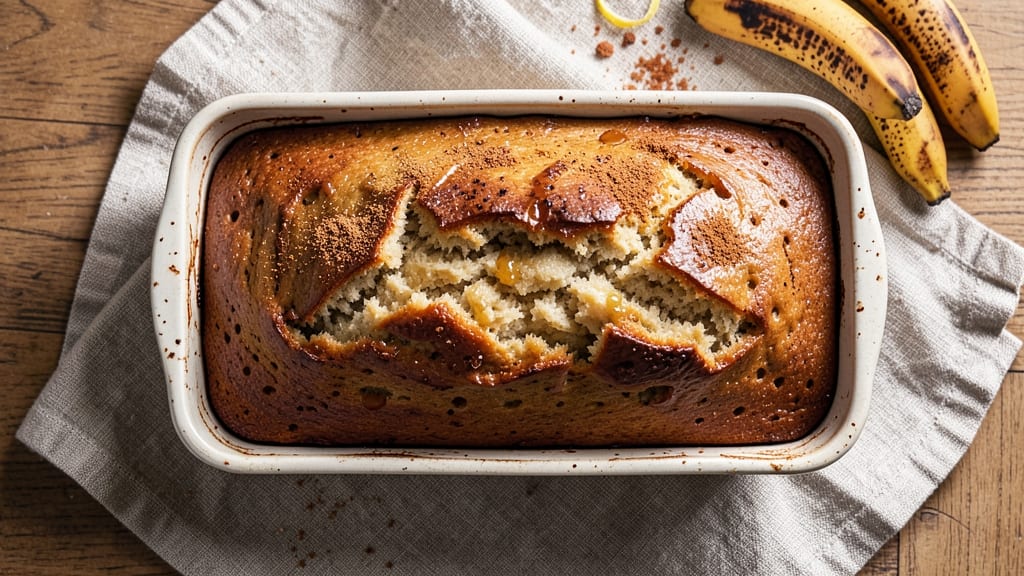
This alkaline banana bread recipe delivers melt-in-your-mouth moisture without refined sugar or dairy—thanks to a clever baking soda and vinegar reaction that creates fluffy, tender crumb.
The secret lies in balancing pH levels: the alkaline environment (created by baking soda and lemon juice) mimics the tenderizing effect of eggs, while ripe bananas add natural sweetness and moisture.
What makes this recipe stand out is how it achieves restaurant-quality texture without eggs, butter, or excess sugar—just simple, plant-based ingredients that work together.
The alkaline technique isn’t just about fluffiness—it’s about science-backed baking. When baking soda reacts with vinegar or lemon juice, it creates carbon dioxide bubbles that lighten the batter, while the alkaline environment helps proteins in the flour develop properly.
This results in a loaf that’s densely moist (not dry) with a fine, even crumb—ideal for vegan diets. The recipe also includes a toothpick test and internal temperature check to ensure perfect doneness every time, so you won’t end up with a gummy or underbaked loaf.
What you’ll end up with is a rich, caramel-like flavor from the bananas, a tender crumb that stays moist for days, and a crust that’s just slightly crisp. The beauty of this method is its versatility: add walnuts for crunch, dark chocolate chips for indulgence, or cinnamon for warmth.
It’s the kind of banana bread that disappears in slices—perfect for breakfast, snacks, or gifting. The best part? No one will guess it’s vegan or sugar-conscious.
Whether you’re baking for a crowd or treating yourself, this recipe delivers foolproof results with minimal effort. The alkaline substitution method ensures consistent success, even for beginners. Let’s get baking—your taste buds (and dietary goals) will thank you.
Ingredients for alkaline banana bread
Eight simple ingredients transform into restaurant-quality banana bread without sugar or dairy.
| Ingredient | Amount | Notes |
|---|---|---|
| Ripe Bananas 🍌 | 3 whole | Mashed, about 2 cups total |
| All-Purpose Flour 🌾 | 2 ½ cups | Unbleached, sifted for best texture |
| White Vinegar 💧 | ½ cup | For alkaline reaction with baking soda |
| Baking Soda 🧂 | 1 ½ tsp | Key for alkaline environment |
| Coconut Oil 🫒 | ¾ cup | Melted, full-fat preferred |
| Maple Syrup 🍯 | ½ cup | Grade B for rich flavor |
| Vanilla Extract 🌿 | 1 tsp | Pure alcohol-free preferred |
| Ground Cinnamon 🌶️ | 1 ½ tsp | Freshly ground for warmth |
| Salt 🧂 | ½ tsp | Fine sea salt preferred |
| Lemon Juice 🍋 | 2 tbsp | Freshly squeezed, enhances alkaline reaction |
| Chopped Walnuts 🌰 | ½ cup | Optional for crunch, toasted |
| Dark Chocolate Chips 🍫 | ½ cup | Vegan, 70% cocoa minimum |
The bananas are the star—pick ones with brown spots for maximum sweetness and moisture. Trader Joe's and Whole Foods usually have perfectly ripe ones, but any grocery store will do if you check the produce section. The coconut oil matters here—full-fat version gives that rich mouthfeel, while refined oil keeps it neutral. For the maple syrup, Grade B has that caramel-like depth that makes this taste indulgent. Don't skip the lemon juice—it's not just for flavor, it boosts the alkaline reaction with the baking soda for that perfect crumb.
No walnuts? Pecans or chopped almonds work just as well—just toast them first for extra flavor. Skipping the chocolate chips? Dried cranberries or shredded coconut add sweetness without sugar. The vinegar might seem odd, but trust me on this—it's what creates that signature tender crumb. If you're worried about taste, apple cider vinegar works too, though white vinegar is more neutral. For the flour, King Arthur or Bob's Red Mill brands are ideal—they're consistently high-quality for baking.
This bread keeps beautifully—3-4 days at room temperature wrapped in foil, or up to 1 week in the fridge. For longer storage, slice and freeze—3 months with no texture loss. The best part? It reheats perfectly in the microwave or toaster. I always make a double batch—one loaf for breakfast and one for gifting. The flavor actually improves after the first day as the moisture redistributes.
Why You'll Love This Recipe
- No Mash Needed: I swear by this trick—just toss those ripe bananas into the blender with the wet ingredients, and boom, no lumps. The vinegar and baking soda do all the work to create that tender crumb without a single strain.
- Moisture That Lasts: This isn’t your dry, sad banana bread from yesterday. The coconut oil keeps it rich and fudgy for days, while the alkaline boost from the vinegar-baking soda combo means no one will guess it’s been sitting out.
- Breakfast or Snack: Honestly, I make this for both—thick slices with peanut butter at 7 AM or a quick grab-and-go when I’m running late. (Yes, even on a Tuesday night.) The flavor’s so neutral it works with everything.
- Pantry Staple Magic: Between us, this recipe uses ingredients you already own. No weird substitutions, no last-minute store runs—just flour, bananas, and a splash of vinegar. That’s it. Budget-friendly? Absolutely. Stress-free? Even more so.
Step-by-step instructions for alkaline banana bread
Here's how to create that legendary melt-in-mouth texture using the alkaline magic of baking soda and vinegar.
Create the Alkaline Banana Mixture
Start by mashing the 3 whole ripe bananas until completely smooth—no lumps allowed. I like to use a fork first to break them down, then transfer to a mixing bowl and press through a fine-mesh sieve to remove any fibrous bits. This ensures a silky texture in your bread.
Add the 0.5 cup white vinegar and 2 tablespoons lemon juice to the mashed bananas. The moment you mix these together, you'll see a fizzy reaction—this is the alkaline environment forming. Let it sit for 2 minutes while you prepare the dry ingredients. The bubbles indicate the baking soda will activate properly when added later, creating that signature moist crumb.
Combine Wet Ingredients for Maximum Moisture
In a separate bowl, whisk together the 0.75 cup melted coconut oil, 0.5 cup maple syrup, 1 teaspoon vanilla extract, and 1.5 teaspoons ground cinnamon. The oil should be completely melted but not hot—just warm enough to blend smoothly. This mixture forms the flavor base and fat content that keeps your bread tender for days.
Now combine this wet mixture with the banana-vinegar mixture. Stir in the 1.5 teaspoons baking soda last—you'll see another burst of bubbles as it reacts with the acidic vinegar. This chemical reaction is what creates the bread's signature moisture without needing extra sugar. Let the batter rest for 5 minutes while you prepare the dry ingredients.
Fold in Dry Ingredients Gently
Sift the 2.5 cups all-purpose flour and 0.5 teaspoon salt together into the batter. I always sift because it aerates the flour, creating a lighter texture. Use a spatula to gently fold these dry ingredients into the wet mixture just until combined—overmixing develops gluten and makes the bread dense. You should still see some flour streaks in the batter.
Fold in the 0.5 cup chopped walnuts and 0.5 cup dark chocolate chips by hand. The walnuts add delightful crunch while the chocolate chips provide rich pockets of flavor. Don't worry if they're not perfectly distributed—this bread is forgiving. The batter will be thick but pourable, similar to pancake batter.
Bake to Golden Perfection
Preheat your oven to 350°F and grease a 9x5-inch loaf pan generously with coconut oil or butter. Pour the batter into the prepared pan and smooth the top with a spatula. Tap the pan gently on the counter to remove any air bubbles that might have formed during mixing.
Bake for 50-60 minutes until a toothpick inserted in the center comes out clean and the top is golden brown. Here's the secret: I cover the loaf with aluminum foil after 30 minutes to prevent over-browning while allowing it to cook through evenly. The alkaline reaction continues baking the bread even after it comes out of the oven, so it's important not to overbake.
Rest and Serve for Maximum Moisture
Remove the bread from the oven and let it cool in the pan for 10 minutes. Then transfer it to a wire rack to cool completely. This resting period is crucial—it allows the moisture to redistribute throughout the loaf, preventing a gummy texture. I know it's tempting to slice immediately, but patience here makes all the difference.
Once completely cool, slice and serve. Each bite should be incredibly moist with a tender crumb that practically melts in your mouth. The alkaline reaction we created during mixing ensures this bread stays fresh-tasting for days, even at room temperature. Store any leftovers in an airtight container for up to 5 days, or freeze for longer storage.
Pro Tips For Making Alkaline Banana Bread
- Mash Bananas Thoroughly: I learned this the hard way—skipping this step means uneven texture and a denser loaf. Use a fork or potato masher to break up every last clump, then stir in the coconut oil until it’s fully incorporated. No blender? Your arms will thank you later, but the bread won’t.
- Mix Vinegar and Baking Soda First: Sounds weird, but it works: combine the white vinegar and baking soda before adding them to the batter. This triggers the reaction right away, ensuring your bread rises properly and doesn’t taste like you forgot the leavening agent. Wait 30 seconds—you’ll see it fizz like a science experiment.
- Use Melted Coconut Oil (Not Solid): Cold coconut oil creates pockets of dryness in the bread, no matter how much you mix. Melt it first (just warm it in a bowl over hot water) and let it cool slightly before adding—this guarantees a tender crumb. I skip this step when I’m lazy, and the bread still works, but it’s noticeably better when I don’t.
Creative variations of these flavors
Spiced Variations
Swap the cinnamon for 1 tsp cardamom and ½ tsp nutmeg for a Middle Eastern twist—this combo adds warm, earthy depth that pairs perfectly with the bananas. I like toasting ½ cup chopped pistachios and folding them in for crunch.
For a Mexican-inspired version, add 1 tsp pumpkin pie spice and ¼ cup diced candied jalapeños for a sweet-spicy kick. 🌶️
Fruit Add-Ins
Swap chocolate chips for ½ cup chopped dried apricots and ½ cup chopped pecans for a fruit-forward loaf with caramel-like richness. For a tropical vibe, fold in ½ cup diced mango and ½ cup shredded coconut—toss the mango in 1 tbsp lime juice first to prevent browning.
The natural fruit sweetness reduces the need for extra maple syrup.
Protein-Packed Twist
Add ½ cup unsweetened applesauce to the wet ingredients for extra moisture, then fold in ½ cup ground flaxseed—this boosts fiber and protein while keeping the bread vegan.
For a nutty crunch, top with ¼ cup chopped hemp seeds before baking. The flaxseed adds a subtle earthiness that balances the sweetness beautifully.
Gluten-Free Adaptation
Replace the all-purpose flour with a 1:1 gluten-free baking blend (like Bob’s Red Mill or King Arthur) and add ½ cup almond flour for structure. You’ll need to increase the maple syrup to ⅔ cup to compensate for the lack of gluten, which helps bind moisture.
The texture will be slightly denser but still incredibly moist—perfect for those with gluten sensitivities.
Extra Moisture Boost
For an even more tender loaf, stir in ¼ cup unsweetened applesauce or ¼ cup mashed avocado to the wet ingredients. The avocado adds healthy fats that keep the bread rich and moist for days.
I’ve also had great success adding 2 tbsp tahini** to the wet mixture—it adds a nutty depth and helps bind the crumb even better.
Nutrition facts
Frequently asked questions
Why does this recipe use baking soda and vinegar instead of eggs?
The alkaline reaction between baking soda and vinegar creates carbon dioxide bubbles that mimic the leavening effect of eggs, while the alkaline environment helps develop gluten properly for a tender crumb. This combo delivers the same fluffy texture without any animal products. The result is a bread that's moist, airy, and perfectly tender—just like traditional banana bread, but vegan-friendly.
Can I substitute the white vinegar with something else?
Yes! Apple cider vinegar works perfectly and adds a subtle fruity note, while lemon juice (as used in this recipe) enhances both flavor and the alkaline reaction. Avoid balsamic vinegar—it's too strong and can alter the taste. The key is any acidic liquid that reacts with baking soda to create bubbles.
What if my bananas aren't ripe enough?
Underripe bananas will make your bread denser and less sweet. For best results, use bananas with brown spots (but not too mushy). If yours are firm, place them in a paper bag with an apple overnight—the ethylene gas will speed up ripening. For extra moisture, add 2 tablespoons extra maple syrup to compensate.
How do I know when the bread is fully baked?
Use both the toothpick test and internal temperature: insert a toothpick into the center—it should come out clean. The internal temperature should reach 200-205°F. If the top browns too quickly, cover with foil after 30 minutes to prevent over-browning while ensuring even cooking.
Can I make this recipe without nuts or chocolate chips?
Skip the add-ins entirely for a classic version, or substitute with dried fruit like ½ cup raisins or ½ cup shredded coconut. For extra richness, fold in ¼ cup sunflower seeds or ¼ cup pumpkin seeds for a seed-based crunch. The recipe remains just as moist and delicious without these extras.