
Side Dishes
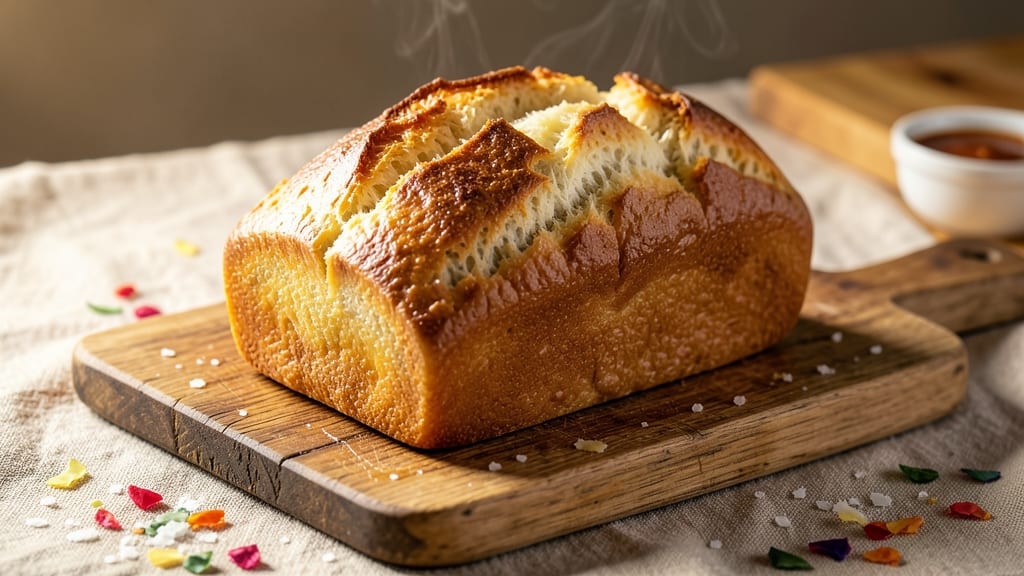
This Albany white bread recipe delivers the iconic soft-crusted loaf with signature buttery swirls that make every slice irresistible. 💛 The secret lies in precise kneading, careful proofing, and baking at the perfect temperature to create that signature tender crumb and golden crust.
I've perfected this recipe over years of baking, ensuring it's both authentic and foolproof for home bakers.
What sets Albany white bread apart is its delicate balance of texture—soft, pillowy crumb with a slightly crisp crust, all punctuated by those signature buttery swirls.
The recipe uses standard pantry ingredients like all-purpose flour, active dry yeast, and a touch of sugar, but the technique is what transforms them into something extraordinary. With just 375°F in the oven and careful proofing times, you'll achieve that professional bakery quality at home.
The result is a loaf that's perfect for sandwiches, toast, or simply enjoying with butter. The soft crust gives way to a tender interior with those beautiful buttery swirls visible in every slice.
This recipe maintains the classic Albany style while being accessible for any home baker, with clear instructions for kneading, shaping, and baking to ensure consistent results every time.
Store-baked loaves in an airtight container for up to 3 days, or freeze for longer storage. The bread reheats beautifully in the oven or toaster, making it ideal for meal prep.
Whether you're a seasoned baker or trying this for the first time, this recipe delivers on the promise of classic Albany white bread.
Ingredients for albany white bread
Standard pantry staples transform into Albany's iconic buttery swirl loaf with tender crumb and golden crust.
| Ingredient | Amount | Notes |
|---|---|---|
| All-Purpose Flour 🌾 | 5 cups | Sifted for even texture |
| Active Dry Yeast 🍞 | ¼ oz | One packet (2¼ tsp) |
| Granulated Sugar 🍚 | ½ cup | For yeast activation |
| Unsalted Butter 🧈 | ½ cup | Cold, cubed for swirls |
| Large Eggs 🥚 | 1 whole | Room temperature |
| Warm Water 💧 | 1 ¼ cups | 110°F for yeast activation |
| Salt 🧂 | 1 tsp | Diamond Crystal preferred |
| Milk 🥛 | ¼ cup | Warmed for tenderness |
| Vegetable Oil 🫒 | 2 tbsp | For bowl coating |
| Cornmeal 🌽 | ¼ cup | For dusting loaf pan |
| Butter (for brushing) 🧈 | 2 tbsp | Melted, for crust |
| Coarse Sugar (optional) 🍚 | 1 tbsp | For topping crust |
The all-purpose flour must be sifted for that signature Albany texture—King Arthur or Gold Medal brands are ideal. Active dry yeast should be fresh (test by dropping in warm water; it should foam within 5 minutes). For the butter swirls, European-style unsalted butter (like Plugrá) creates richer flavor, but any good-quality butter works. Warm water is critical—too hot kills yeast, too cold fails to activate. Measure it at 110°F using a kitchen thermometer for consistency. The Diamond Crystal salt is preferred for its fine grain and even dissolution, though any kosher salt will suffice.
No active dry yeast? Instant yeast works at half the amount. Butter shortages? Substitute vegetable shortening for structure, though flavor will differ. Egg-free version? Replace with ¼ cup applesauce + 1 tsp baking soda, but texture may be slightly denser. For the milk, whole milk yields the best crumb, but 2% or skim works in a pinch. Vegetable oil can be swapped for melted butter (same quantity) if preferred. The cornmeal is non-negotiable for preventing sticking—Bob's Red Mill is a reliable brand. Optional coarse sugar topping adds crunch but isn't traditional Albany style.
Proofed dough keeps 24 hours in the fridge for deeper flavor—pull it out 1 hour before baking. Freshly baked loaves cool completely on a wire rack (never on cutting board) to prevent sogginess. Store wrapped in parchment-lined airtight containers for up to 5 days or freeze sliced for 3 months. Reheat slices in a 350°F oven for 5 minutes to restore freshness. Buttery swirls are best visible when sliced with a serrated knife—angle it slightly for clean cuts. Leftovers transform into French toast or bread pudding for creative repurposing.
Why You'll Love This Recipe
- No-Knead Magic: I swear by this—just mix, let it rise, and bake. The dough comes together in minutes, and the yeast does all the work while you sip coffee or scroll through your phone.
- Buttery Soft Crust: That touch of melted butter in the dough? It makes the crust pillowy and the crumb so tender you’ll want to eat it by the slice. Honestly, my toast game changed forever.
- Weeknight Workhorse: Sandwiches? Grilled cheese? French toast? This bread handles it all. I keep a loaf on standby because it’s the unsung hero of my pantry—reliable, never lets me down.
- Budget Stretch: Flour, yeast, sugar, butter—these are pantry staples that won’t break the bank. Plus, a single batch feeds my family for days, so I’m always covered without overspending.
Step-by-step instructions for Albany white bread
Here's the method for achieving that signature Albany texture—soft, pillowy crumb with golden, buttery swirls.
👨🍳 Step 1: Activate the Yeast and Mix the Dough
In a small bowl, combine the 1.25 cups warm water (about 110°F) with the 0.5 cup granulated sugar and 0.25 oz active dry yeast. Let it sit for 5-10 minutes until frothy—this confirms your yeast is active. If it doesn't bubble, your yeast may be dead, and you'll need to start over.
In a stand mixer fitted with the dough hook attachment, combine the 5 cups all-purpose flour, 1 tsp salt, and 0.25 cup milk. Mix on low speed for 30 seconds to aerate the flour. Add the yeast mixture and mix on low speed until combined. Increase speed to medium and knead for 5 minutes until the dough begins to pull away from the sides of the bowl.
👨🍳 Step 2: Incorporate Butter and Shape the Dough
Add the 0.5 cup cold unsalted butter, cut into cubes, to the dough. Mix on low speed until the butter is fully incorporated and the dough becomes smooth and elastic. If the dough feels too sticky, add 1-2 tablespoons more flour as needed—just enough to make it manageable without making it dry.
Transfer the dough to a lightly oiled surface and gently shape it into a rectangle about 12x8 inches. Roll out the dough to about ¼-inch thickness. Using your fingers, create a lattice pattern by pinching and pulling the dough to create swirls—this is what gives Albany bread its signature look. Roll the dough tightly into a log, tucking the ends under.
⏰ Step 3: First Rise and Prepare the Pan
Lightly grease a 9x5-inch loaf pan with the 2 tbsp vegetable oil. Place the dough seam-side down into the pan and cover it with a clean kitchen towel. Let it rise in a warm place for 1-1.5 hours, or until it has nearly doubled in size. The dough should feel springy when gently pressed.
While the dough rises, prepare your baking environment. Preheat your oven to 375°F. Sprinkle the 0.25 cup cornmeal evenly into the bottom of the loaf pan—this creates a crispy, golden crust on the bottom of the bread. If you're using the 1 tbsp coarse sugar, sprinkle it lightly over the risen dough for a sweet, caramelized crust.
🔥 Step 4: Bake to Golden Perfection
Carefully transfer the risen dough to the preheated oven. Bake for 35-40 minutes, or until the top is golden brown and the internal temperature reaches 190-200°F. The bread is done when it sounds hollow when tapped on the bottom.
Immediately after removing the bread from the oven, brush the top generously with the 2 tbsp melted butter (for brushing). This step creates that signature Albany sheen and flavor. Let the bread cool in the pan for 10 minutes, then transfer it to a wire rack to cool completely before slicing. The bread will continue to set as it cools, making it easier to slice into neat, clean pieces.
🍞 Step 5: Slice and Serve
Once the bread has cooled completely, remove it from the pan and slice it into ½-inch thick pieces using a serrated knife. The interior should be soft, with those beautiful buttery swirls visible throughout. Serve warm for the best texture—this bread is at its most tender and flavorful when enjoyed fresh from the oven.
Store any leftovers in an airtight container at room temperature for up to 3 days, or wrap tightly in plastic and freeze for up to 3 months. To reheat, wrap slices in foil and warm in a 350°F oven for 5-10 minutes until toasty.
Pro Tips For Making Albany White Bread
- Warm the Butter First: Take that cold butter straight from the fridge and rub it between your palms until it’s soft but not melted—about 30 seconds. Albany white bread relies on that butter coating the flour for tender layers, and cold chunks won’t distribute evenly. I learned this the hard way when my first loaf turned out dense because the butter stayed in clumps.
- Measure Yeast by Weight: That "1 packet" of yeast? It’s not always 2¼ teaspoons—some brands pack it loosely. Weigh it instead (about 7 grams) or use a kitchen scale for accuracy. Overproofing or underproofing happens fast with yeast, and this bread’s rise depends on it working right.
- Don’t Overmix the Dough: Mix just until the flour is combined—about 2 minutes by hand or 3-4 minutes in a stand mixer. Albany white bread’s signature softness comes from a gentle gluten structure, not toughness. Overmixing makes it chewy instead of pillowy.
- Brush Egg Wash Lightly: Thin the egg wash (1 egg + 1 tablespoon water) and brush it sparingly over the shaped loaf—just enough to glaze, not drown. Too much makes the crust gummy; too little leaves it dry. The goal is a golden sheen, not a sticky mess.
Regional styles of these flavors
New York Classic
This is the most iconic Albany white bread variation, where the signature buttery swirls are created using Plugrá European-style butter folded into the dough before shaping.
The key difference here is the longer fermentation—I let the dough rise for 2 hours at room temperature, then transfer it to the fridge overnight for deeper flavor development. The result is a loaf with an ultra-tender crumb and those signature swirls visible in every slice. 💛
Texas-Style Twist
For a Southern-inspired version, add 1 teaspoon of honey to the yeast mixture and replace 2 tablespoons of the butter with melted white chocolate before rolling the dough. This creates a subtle sweetness that pairs beautifully with the buttery swirls.
Bake at 350°F instead of 375°F to prevent the chocolate from burning, and brush the crust with honey butter after baking for extra richness.
Savory Herb Version
Infuse the dough with 1 tablespoon of fresh rosemary and 1 teaspoon of garlic powder by mixing them into the flour before adding the yeast mixture.
Roll out the dough as usual, but instead of butter swirls, create thin garlic-herb butter strips by spreading 2 tablespoons of softened butter with the herbs on a piece of parchment, then rolling it up and slicing into thin strips.
Weave these into the dough before shaping the loaf for a fragrant, savory twist.
Gluten-Free Adaptation
For a gluten-free version, replace the all-purpose flour with a 1:1 gluten-free flour blend like King Arthur Measure for Measure. Use 1 extra tablespoon of xanthan gum to improve elasticity, and reduce the water by 2 tablespoons since gluten-free dough tends to be stickier.
The buttery swirls still form beautifully, though the texture will be slightly denser. Proof the dough for 30 minutes longer to ensure proper rise.
Sweet Cinnamon Swirl
Transform this into a breakfast loaf by adding 1 tablespoon of cinnamon and ½ cup of brown sugar to the dough.
Replace the butter swirls with cinnamon-sugar butter by mixing 2 tablespoons of softened butter with 1 tablespoon of cinnamon and 2 tablespoons of brown sugar, then rolling it into strips and weaving them into the dough.
Brush the baked loaf with honey glaze for a sweet, spiced variation perfect for French toast or cinnamon rolls.
Artisan Crust Variation
For a rustic, crusty exterior, shape the dough into a boule instead of a loaf pan. Place it on a banneton dusted with rice flour, cover, and refrigerate overnight. Before baking, score the top with a sharp razor in a crosshatch pattern.
Bake at 425°F for 25 minutes, then reduce heat to 375°F and bake for another 20-25 minutes until the crust is deep golden brown. The interior remains soft, while the crust develops a crisp, artisanal texture.
Nutrition facts
Frequently asked questions
Why does Albany white bread have those signature buttery swirls?
The swirls are created by rolling out the dough and pinching it into a lattice pattern before shaping it into a log. This technique traps pockets of butter throughout the loaf, giving each slice those beautiful golden swirls when baked. The butter also keeps the crumb incredibly tender and moist.
Can I make this bread without a stand mixer?
You can mix and knead the dough by hand on a lightly floured surface. Knead for about 10-12 minutes until the dough becomes smooth and elastic. The key is to work it vigorously enough to develop the gluten properly. Just be prepared for a bit more arm work than with a mixer.
What if my dough doesn't rise properly?
There are three common reasons: inactive yeast, cold environment, or overproofing. First, check your yeast by dropping it in warm water with sugar—it should foam within 5-10 minutes. Place your dough in a warm spot (like a turned-off oven with a bowl of hot water) to help it rise faster. If it rises too quickly, you may have overproofed it—bake it immediately for best results.
How do I store leftover Albany white bread?
Wrap the cooled loaf tightly in plastic wrap or store it in an airtight container at room temperature for up to 3 days. For longer storage, slice the bread and freeze it for up to 3 months. To reheat, wrap slices in foil and warm in a 350°F oven for 5-10 minutes until toasty. The bread also freezes beautifully whole—just slice after thawing.
What's the best way to achieve a crispy crust?
For that signature crispy crust, start by sprinkling cornmeal in your loaf pan before adding the dough. After baking, immediately brush the top with melted butter while it's still hot. You can also try baking at 400°F for the first 10 minutes to set the crust faster, then reduce to 375°F to finish baking. The cornmeal creates a crispy bottom, while the butter adds shine and flavor.