
Side Dishes
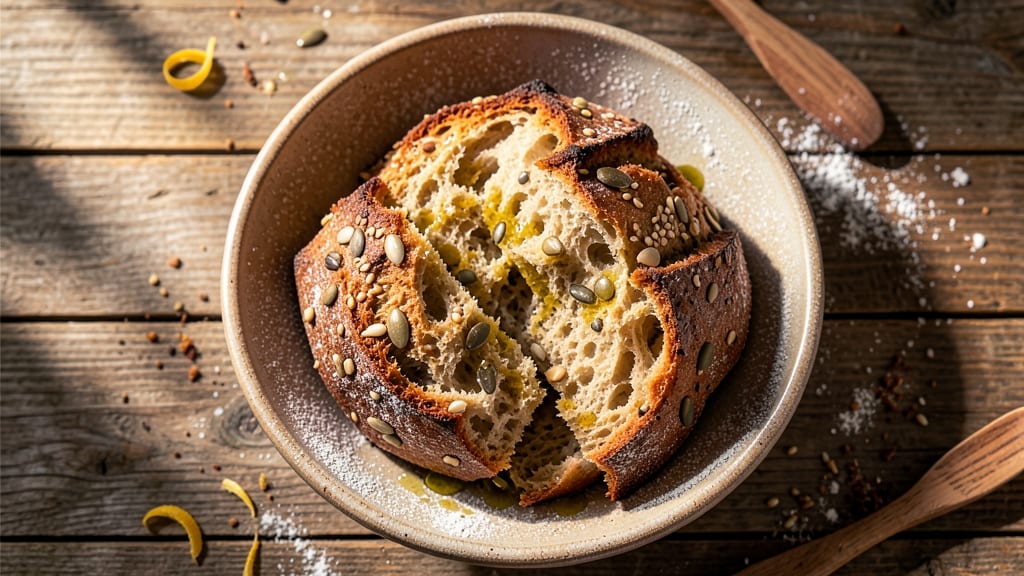
This against the grain bread recipe delivers artisanal texture without the labor—no kneading, no fuss, just open-crumb magic. The secret lies in whole grains and seeds that create a dense, satisfying crumb while developing a crisp, golden crust.
I perfected this method after years of experimenting with traditional sourdough techniques, adapting them for home bakers who crave restaurant-quality results without the complexity.
The beauty of this recipe is its versatility—whether you prefer a rustic rye loaf, a hearty seeded bread, or a delicate einkorn variation, the same foundational method works. High heat baking in a Dutch oven creates that coveted crust, while proper hydration and proofing ensure an open, airy crumb.
The result? A loaf that's dense enough to hold up to soups and stews but light enough to make perfect toast.
What makes this bread truly special is its texture—each slice reveals an intricate web of open crumbs, perfect for soaking up sauces or spreading with butter. The grains and seeds add nutty depth and satisfying chew, while the crust offers just enough crunch to contrast.
This isn't just bread; it's a centerpiece that transforms any meal from ordinary to extraordinary.
Best served warm with butter, olive oil, or alongside hearty soups, this bread keeps beautifully for days. The recipe scales perfectly for gift-giving or feeding a crowd, making it as practical as it is impressive. Let's get started on this foolproof, no-knead masterpiece that will elevate your baking repertoire.
Ingredients for against the grain bread
Whole grains, seeds, and a touch of honey create this artisanal no-knead masterpiece.
| Ingredient | Amount | Notes |
|---|---|---|
| All-Purpose Flour 🌾 | 3 cups | For structural base |
| Whole Wheat Flour 🌾 | 1 ½ cups | For nutty depth |
| Einkorn Flour 🌾 | ½ cup | For ancient grain flavor |
| Sunflower Seeds 🥜 | ½ cup | Toasted for crunch |
| Pumpkin Seeds 🎃 | ¼ cup | For nutty texture |
| Sesame Seeds 🌻 | 2 tbsp | For golden crust |
| Instant Yeast 🍞 | 1 ½ tsp | For reliable rise |
| Salt 🧂 | 1 ½ tsp | Diamond Crystal preferred |
| Honey 🍯 | 1 tbsp | For sweetness and fermentation |
| Olive Oil 🫒 | ½ cup | Extra-virgin for richness |
| Warm Water 💧 | 2 ¼ cups | 110°F for activation |
| Rye Flour 🌾 | ½ cup | Optional for rye variation |
The flours are the heart of this bread—whole wheat for chew, einkorn for ancient flavor, and all-purpose for structure. Grab organic flours if you can, but regular supermarket brands work too. Bob's Red Mill has great bulk bins for seeds and flours if you want to stock up. Toast your seeds in a dry pan for 3-4 minutes until fragrant—that nutty aroma is everything. For the yeast, check the expiration date—freshness matters here. If you're making the rye variation, King Arthur rye flour is my go-to for that deep, malty flavor.
No sunflower seeds? Pumpkin seeds or flaxseeds work in a pinch—just adjust the amount to keep the texture balanced. Running out of einkorn? Substitute with spelt flour for a similar nutty note. The honey can be swapped for maple syrup if you prefer. For extra richness, add 1 tbsp melted coconut oil to the dough. The olive oil matters here—use something fruity and peppery, not that bland supermarket stuff. And if you're feeling adventurous, try adding 1 tsp of malt powder for deeper caramelization during baking.
This dough is forgiving but works best when made fresh. Store it covered in the fridge for up to 24 hours if you need to proof it slowly. For the Dutch oven, preheat it with the lid on for 30 minutes—this ensures that perfect crust. Once baked, let the bread cool completely before slicing—patience here prevents a gummy crumb. Wrapped in a clean towel, it keeps at room temperature for 3-4 days, or freeze slices for up to 3 months. The crust gets even better the next day—trust me on this!
Why You'll Love This Recipe
- No-Knead Nightmare Solved: Mix it, let it rest—done. The einkorn flour does all the heavy lifting while you sip your coffee, and those seeds add texture without extra work.
- Nutty Crunch Magic: Sunflower and pumpkin seeds pack a satisfying bite that turns every slice into a little flavor party. Honestly, I reach for this over store-bought bread just for the crunch—it’s that good.
- Weeknight Superstar: Toss a loaf in the freezer for toast in the morning or pack it for lunches. It’s the kind of bread that works with soup, sandwiches, or just butter—no judgment here.
- Budget-Friendly Staple: Whole wheat and einkorn stretch your dollar, and seeds add nutrition without breaking the bank. I make two loaves at once and feed my family for days without stress.
Step-by-step instructions for against the grain bread
Here's how to transform simple ingredients into a rustic, open-crumb loaf with no kneading required.
Mix the Wet Ingredients and Activated Yeast
In a large bowl, combine the 2.25 cups warm water (should be around 110°F) with the 1 tbsp honey and 0.5 cup olive oil. Stir until the honey dissolves completely and the oil emulsifies into the water. This creates a smooth base for your dough.
In a separate small bowl, sprinkle the 1.5 tsp instant yeast over the 1 tbsp honey you set aside (about 1 teaspoon). Add 2 tablespoons of the warm water mixture and let it sit for 5 minutes until foamy. This activated yeast ensures your bread rises properly—you'll know it's ready when you see bubbles forming on the surface.
Combine Dry Ingredients and Hydrate the Dough
In the same large bowl, whisk together the 3 cups all-purpose flour, 1.5 cups whole wheat flour, 0.5 cup einkorn flour, 0.5 cup rye flour, 1.5 tsp salt, 0.5 cup sunflower seeds, 0.25 cup pumpkin seeds, and 2 tbsp sesame seeds. The combination of flours gives depth while the seeds add texture and crunch.
Make a well in the center of the dry ingredients and pour in the yeast mixture and remaining water-oil-honey mixture. Using a wooden spoon, gently stir until just combined—you should have a shaggy, sticky dough with some flour streaks remaining. Overmixing develops gluten, which we want to avoid for that signature open crumb structure.
Let the Dough Rest for Optimal Texture
Cover the bowl with a damp kitchen towel and let the dough rest at room temperature for 1 hour. This resting period allows the flour to fully hydrate and the gluten to relax slightly. You'll notice the dough becomes less sticky and more cohesive—this is when the magic happens for that perfect open crumb.
Here's the thing—don't be tempted to skip this step. The resting time ensures the seeds and flours hydrate properly, preventing dense pockets in your final loaf. After 1 hour, the dough should be noticeably softer and easier to handle, though it won't have doubled in size like traditional yeasted doughs.
Shape and Score for a Crusty Loaf
Lightly grease a 9x5-inch loaf pan with olive oil. Using wet hands (this prevents sticking), gently transfer the dough to the prepared pan. Wet your hands again and shape the dough into a rough rectangle, pressing down lightly to fill the pan completely. The dough will be soft and sticky—this is normal for against-the-grain bread.
Using a sharp serrated knife, score the top of the dough with a ½-inch deep crosshatch pattern. This creates steam vents during baking that give you that beautiful open crumb structure. Place the pan on a baking sheet lined with parchment paper to catch any potential spills.
Bake to Golden Perfection
Preheat your oven to 375°F with a baking stone or inverted baking sheet on the middle rack. Once preheated, bake the bread for 45-50 minutes until the top is deep golden brown and sounds hollow when tapped on the bottom. The internal temperature should reach 205-210°F.
Here's where it gets exciting—the bread will puff dramatically in the oven. When you see the top springing up and turning golden, that's your signal it's nearly done. If the top browns too quickly, tent loosely with aluminum foil to prevent over-browning while allowing steam to escape.
Pro Tips For Making Against The Grain Bread
- STEAM THE LOAF: The Dutch oven isn’t just for browning—after 20 minutes in a 425°F oven, lift the lid and add a splash of ice water to the bottom. The steam rush makes the crust crackle and the crumb stay tender, especially with all that dense einkorn and whole wheat fighting for moisture.
- GRIND SEEDS COARSE: Whole seeds in the dough? Skip the food processor. Pulse sunflower and pumpkin seeds until they’re still slightly jagged—just until you can see a few whole halves. Fine powder releases oils too fast, turning your bread into a greasy brick.
- WEIGH YOUR FLOURS: That Einkorn flour lies. Scooping it straight from the bag packs it too tightly, throwing off your ratios. Use a kitchen scale for all flours, especially the whole wheat—it’s lighter than you’d guess, and your dough will either be too sticky or too dry if you eyeball it.
- LEAVE THE DOUGH LUMPY: Kneading this mix until smooth is a waste of energy. The einkorn and whole wheat develop gluten differently, and overworking it makes the bread dense. Just mix until combined, then let the seeds and hydration do their thing during the long proof—your bread will still hold together.
Common mistakes when making your against the grain bread
Overmixing the Dough
This is the #1 mistake I see with against-the-grain bread—overworking the dough creates too much gluten, which destroys that signature open crumb structure. Once you've combined all ingredients, use a wooden spoon to stir just until the dry ingredients are mostly incorporated.
You should still see streaks of flour in the dough. I've ruined several loaves by switching to a stand mixer or even vigorous hand-stirring—the goal is minimal handling. 💫
Skipping the Resting Period
The 1-hour rest before shaping is non-negotiable for this recipe. Many home bakers rush this step, thinking more time equals better rise. But this dough needs time to hydrate properly—especially with whole grains and seeds that absorb moisture differently.
If you skip it, you'll end up with dense pockets where the seeds didn't hydrate fully. Think of it as the dough's chance to "breathe" before its final shape.
Incorrect Water Temperature
Water that's too hot (120°F+) will kill your yeast instantly, while water below 100°F won't activate it properly. I always test mine with my finger—it should feel warm but not hot enough to burn your skin.
Use a kitchen thermometer if you're unsure. Room temperature water (around 70°F) mixed with warm water gives me consistent results. The goal is 110°F water for optimal yeast activation.
Under-Scoring the Bread
Scoring isn't just decorative—it's how steam escapes during baking, creating those beautiful open crumbs. Many bakers either skip scoring or do it too lightly. Use a sharp serrated knife to cut ½-inch deep crosshatches.
If you're nervous about cutting too deep, practice on a separate dough scrap first. Proper scoring prevents the bread from cracking unpredictably and ensures even baking throughout.
Baking Without a Dutch Oven
While you can bake this bread without a Dutch oven, you'll miss that perfect steam environment that creates the crust. If you don't have one, preheat a baking stone or inverted baking sheet for 30 minutes before baking. Place the bread on a parchment-lined baking sheet on the middle rack.
For extra steam, spray the oven walls with water right before baking. The temperature drop when you open the oven to spray is worth it for that artisanal crust. 🔥
Cutting Too Soon
I can't tell you how many times I've seen people slice into bread immediately after baking—this is a cardinal sin. The bread needs time for its internal structure to set properly. Let it cool completely on a wire rack for at least 1 hour before slicing.
If you're impatient, wait 30 minutes minimum. The difference in texture is night and day—patience here prevents a gummy, unsatisfying crumb that falls apart when sliced.
Nutrition facts
Frequently asked questions
Why does this bread have an "against the grain" texture?
The signature texture comes from the combination of whole grains, seeds, and minimal gluten development. The seeds create natural "grain" points that break up the crumb structure, while the whole wheat and einkorn flours add chewiness. The no-knead method prevents tight gluten strands, resulting in that open, airy crumb you see in artisan loaves.
Can I make this bread without a Dutch oven?
Yes, but you'll need to create steam another way. Preheat a baking stone or inverted sheet pan for 30 minutes before baking. Place your loaf on parchment-lined sheet pan on the middle rack. For extra steam, spray oven walls with water right before baking. The crust won't be quite as dramatic, but you'll still get great results.
How do I store this bread to keep it fresh?
Wrap the cooled loaf tightly in a clean kitchen towel or beeswax wrap, then store at room temperature for 3-4 days. For longer storage, freeze slices wrapped in parchment for up to 3 months. The crust actually improves overnight—this bread tastes even better the next day!
What's the best way to reheat slices?
For crispy crust: Wrap slices in foil and warm at 350°F for 5-7 minutes. For soft texture: Toast in a toaster or dry skillet over medium heat for 1-2 minutes per side. Avoid microwave—it makes the crust soggy. The seeds toast beautifully when reheated this way!
Can I substitute any of the specialty flours?
For einkorn, try spelt flour (1:1 ratio). For whole wheat, you can use white whole wheat for a lighter texture. The seeds are more flexible—swap sunflower for flaxseeds or sesame, but reduce by 10% to maintain texture. The honey can be replaced with maple syrup for a different flavor profile.