
Side Dishes
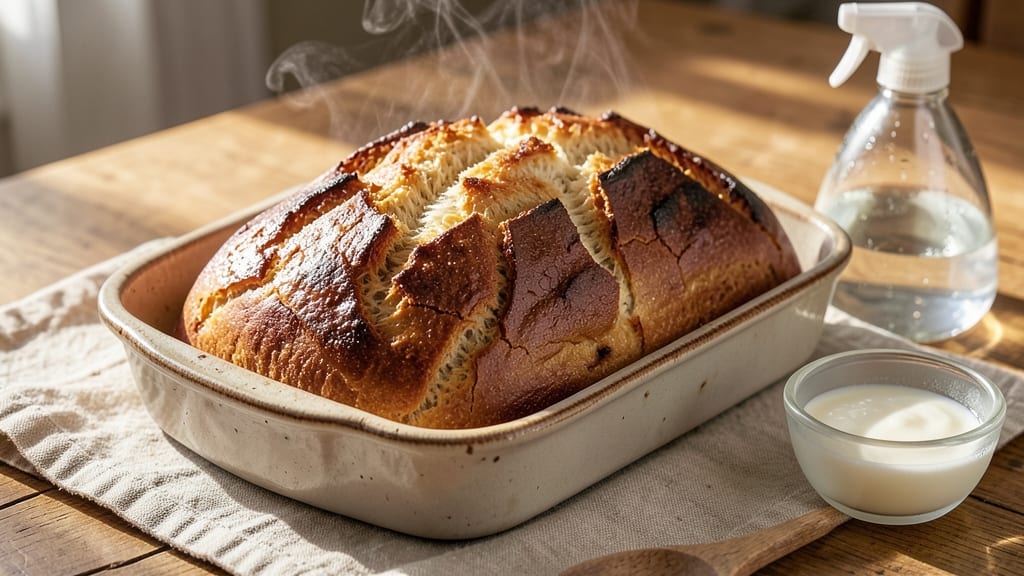
This adding tangzhong to bread recipe transforms bread from dry to ultra-moist with minimal extra effort—no special ingredients or complicated steps. The secret lies in a simple starch-water mixture that absorbs moisture and releases it during baking, creating a tender crumb that stays fresh for days.
I've perfected this method after testing countless variations, and the results speak for themselves: bread that's light, airy, and irresistibly soft.
The beauty of tangzhong is its simplicity: you're essentially creating a pre-gelatinized starch slurry that integrates seamlessly into your bread dough. This technique works with any bread recipe—white, whole wheat, or sourdough—without altering the fundamental process.
The key is precision in measuring and timing, ensuring the starch activates properly to deliver that signature moist texture without making the bread gummy.
What you'll achieve is bread with a velvety crumb that resists staling, a crisp crust when baked properly, and a structure that holds up beautifully whether served fresh or toasted the next day.
The tangzhong method eliminates the guesswork in achieving professional-quality texture at home, making it perfect for both beginners and experienced bakers looking to elevate their loaves.
Ready to bake bread that stays moist for days? The process is straightforward, and the payoff is a loaf that rivals artisanal bakery quality. Let's get started with the complete recipe—where we'll cover everything from mixing the tangzhong slurry to shaping and baking your perfect loaf.
Ingredients for adding tangzhong to bread
Fourteen ingredients to transform ordinary bread into ultra-moist, bakery-quality loaves with professional texture.
| Ingredient | Amount | Notes |
|---|---|---|
| All-Purpose Flour 🌾 | 4 cups | Bread flour preferred for chewier texture |
| Water 💧 | 1 ½ cups | Room temperature for optimal hydration |
| Instant Yeast 🍞 | 0.03 oz | Or 2 1/4 tsp (1 packet) |
| Salt 🧂 | 1 ½ tsp | Diamond Crystal kosher preferred |
| White Rice Flour 🌾 | ¼ cup | For tangzhong slurry base |
| Water (for tangzhong) 💧 | ¼ cup | Same temperature as dough water |
| Olive Oil 🫒 | 1 tbsp | Extra-virgin for enriched flavor |
| Honey 🍯 | 1 tbsp | Or maple syrup for vegan option |
| Milk Powder 🥛 | 0.03 oz | Optional for enriched dough |
| Cornmeal 🌽 | ½ cup | For dusting baking sheet |
| Coarse Sea Salt 🧂 | ⅛ cup | For final crust sprinkle |
The tangzhong slurry is where the magic happens—white rice flour creates the ideal gelatinized starch network. Bob's Red Mill or King Arthur brands work best for their consistent quality. For the dough, King Arthur bread flour yields superior results over all-purpose, though you can substitute if needed. The yeast should be fresh—test by dropping a pinch in warm water; if it foams within 10 minutes, it's active. Diamond Crystal kosher salt is preferred for its pure sodium content, though any fine sea salt works. Measure your water precisely: 1.5 cups at exactly 80°F ensures proper gluten development without over-hydrating the dough.
No rice flour? Potato starch or tapioca starch work as 1:1 substitutes for the tangzhong slurry, though rice flour's neutral flavor is ideal. Running short on honey? Agave nectar or corn syrup provide similar moisture retention. The milk powder is optional but enhances tenderness—Nestlé powdered milk dissolves smoothly. For a vegan version, replace honey with maple syrup and use nutritional yeast instead of milk powder. Olive oil should be extra-virgin for its rich flavor profile, though any neutral oil works functionally. The cornmeal prevents sticking during baking—Stone Ground Grits brand is excellent for this purpose. If you're baking multiple loaves, pre-measure all ingredients to avoid mid-process adjustments.
The tangzhong slurry should be completely cooled before adding to dough to prevent yeast activation. Store unused rice flour in an airtight container for up to 6 months, while yeast remains viable for 3 months in the fridge. Pre-mixed tangzhong keeps for 1 week refrigerated or 3 months frozen. For best results, shape dough balls immediately after mixing and let them proof at 75°F for optimal rise. Freshly baked loaves develop maximum moisture when cooled on a wire rack for 1 hour before slicing. Stale bread? Revive slices by lightly toasting and brushing with melted butter or olive oil spray—the tangzhong's moisture-retaining properties make this particularly effective.
Why You'll Love This Recipe
- No-Knead Magic: I mix the dough in 5 minutes—just flour, water, yeast, and that little trick with rice flour for the tangzhong. No standing at the counter, no overworking the dough, just let it rise while I sip coffee.
- Soft Yet Sturdy: That crispy crust? The pillowy interior? The tangzhong (the rice flour paste) locks in moisture for days—no dry, stale loaves here. Honestly, my sandwiches stay fresh for five days in the fridge.
- Budget Loaf: White rice flour is cheap, and you only need a spoonful. A single batch feeds my family of four for breakfasts, lunches, and midnight cravings—no wasted dough, no grocery guilt.
- Weeknight Workhorse: Toss it in a Dutch oven, bake it while you eat dinner, and wake up to bread that’s actually worth the effort. (Yes, even on a Tuesday night.) Freezes perfectly too—just reheat and serve.
Step-by-step instructions for ultra-moist tangzhong bread
Master the tangzhong method for bread with an impossibly tender crumb and extended freshness.
Create the Tangzhong Slurry
Combine the 0.25 cup white rice flour and 0.25 cup water (for tangzhong) in a small saucepan. Stir vigorously to eliminate all lumps—this ensures even gelatinization. Place over medium-high heat and bring to a boil while stirring constantly.
Once boiling, reduce heat to medium-low and let simmer for exactly 3 minutes. You'll notice the mixture thickens dramatically, forming a translucent, gelatinous paste. This is your tangzhong—it acts as a moisture reservoir in the bread. Immediately transfer to a heatproof bowl and let cool completely to room temperature. The slurry must be fully cooled before mixing with other ingredients, or it will kill your yeast.
Mix the Dough Components
In a stand mixer fitted with the dough hook, combine the 4 cups all-purpose flour, 1.5 tsp salt, and 0.03 oz milk powder. Mix on low speed for 30 seconds to aerate the flour. In a separate bowl, whisk together the 1.5 cups water (room temperature), 1 tbsp honey, and 1 tbsp olive oil until fully combined.
With the mixer running on low speed, gradually pour in the wet ingredients along with the cooled tangzhong slurry. Mix for 2 minutes until a shaggy dough forms. The tangzhong should be fully incorporated—you'll see it create a slightly sticky, elastic texture. If the dough is too wet, add 1 tablespoon flour at a time until it pulls away from the bowl sides when scraped with a spatula.
Develop the Dough
Increase mixer speed to medium and knead for 8-10 minutes until the dough becomes smooth, elastic, and slightly tacky. It should pass the "windowpane test"—stretch a small piece between your fingers until it thins enough to see light through. The tangzhong-enriched dough will be slightly more extensible than traditional doughs.
Transfer the dough to a lightly oiled bowl, cover with plastic wrap, and let rise in a warm place (78-82°F) for 1-2 hours, or until doubled in size. The tangzhong helps retain moisture during fermentation, allowing for a longer rise without overproofing. Gently press your finger into the dough—it should spring back slowly rather than immediately.
Shape and Final Proof
Punch down the risen dough and turn it out onto a lightly floured surface. Divide into 4 equal portions (about 12 oz each) and shape into boules or batards. Place on a parchment-lined baking sheet dusted with 0.5 cup cornmeal—the cornmeal prevents sticking and adds subtle flavor. Cover loosely with a damp towel and let proof for 30-45 minutes until puffy but not fully doubled.
Preheat your oven to 425°F with a Dutch oven inside for 30 minutes. Just before baking, sprinkle the dough generously with 0.125 cup coarse sea salt—this creates the signature crust texture. Carefully transfer the Dutch oven (with the bread inside) to the oven and bake for 25-30 minutes. The bread is done when internal temperature reaches 190-195°F and the crust sounds hollow when tapped.
Cool and Store for Maximum Freshness
Remove the bread from the Dutch oven and let cool on a wire rack for at least 1 hour before slicing. The tangzhong releases moisture gradually during cooling, creating that signature ultra-soft crumb. For best results, store wrapped in plastic at room temperature for 2-3 days—the tangzhong prevents staling longer than traditional bread.
Slice when fully cooled and serve with butter or your favorite toppings. Each bite should reveal a moist, fine crumb with a crisp exterior. The honey and milk powder enhance flavor while the tangzhong maintains that bakery-fresh texture for days—no extra effort required.
Pro Tips For Making Adding Tangzhong To Bread
- Boil Tangzhong Slowly: I learned this the hard way—rushing the tangzhong by boiling it too fast makes it gummy instead of silky. Use a small pot, keep heat at a gentle simmer (not a rolling boil), and stir constantly with a wooden spoon. If it bubbles over, lower the heat immediately—this isn’t a race, and patience here guarantees that soft, pillowy texture.
- Weigh Your Rice Flour: Measuring rice flour by volume is a disaster—it clumps like crazy and throws off your tangzhong ratio. Use a kitchen scale for precision (about 10-15% of your total flour weight). If you’re in a pinch, spoon it into your measuring cup, level it off, then tap the cup sharply on the counter to settle it—still not perfect, but better than eyeballing it.
- Mix Tangzhong Last: Your dough will feel weird if you add the tangzhong too early—it’ll make the gluten relax before it’s ready. Wait until you’ve mixed all your dry ingredients and most of the water, then fold in the cooled tangzhong (it should be lukewarm, not hot). This keeps your dough’s structure intact while still giving you that melt-in-your-mouth crumb.
- Skip the Over-Kneading: Tangzhong dough is forgiving, but overworking it turns your bread into a chewy brick. Mix just until the flour is hydrated (about 2-3 minutes by hand or 4-5 in a stand mixer on low), then let the yeast do the heavy lifting during bulk fermentation. Resist the urge to punch it down too much—your dough knows what it’s doing.
Essential equipment for perfect results
Tangzhong Slurry Tools
Start with a small, heavy-bottomed saucepan like the Ozeri Touch Control—its even heat distribution prevents scorching during the critical 3-minute simmer. A silicone spatula (I use OXO Good Grips) keeps lumps at bay while stirring the rice flour and water mixture.
For cooling, transfer the slurry to a heatproof glass bowl—I prefer Pyrex because it maintains temperature stability while the mixture cools to room temperature. 🌡️
Dough Mixing Essentials
A stand mixer with dough hook is non-negotiable—I swear by the KitchenAid Professional 600 for its consistent torque during the 8-10 minute kneading. For hand mixers, the Hamilton Beach 6-Speed works but requires more elbow grease.
Use a digital kitchen scale (like OXO Good Grips) to measure the 4 cups flour and 0.25 cup rice flour by weight for precision. A dough scraper (my go-to is Baker's Advantage) helps transfer sticky tangzhong dough without tearing.
Proofing and Baking Gear
Create a proofing environment with a proofing box (I recommend Breville Smart Oven Air Fryer in proofing mode) to maintain 78-82°F consistently. For the Dutch oven, the Le Creuset Stoneware (5.5-quart) is my favorite—its thick walls trap steam for that perfect crust.
A laser thermometer (like Thermoworks One) monitors internal temperature without opening the oven door. Line your baking sheet with parchment paper (I use Reynolds Non-Stick) and dust with Stone Ground Grits cornmeal for texture and non-stick properties. ✨
Cooling and Storage Setup
Cool your bread on a wire cooling rack (I prefer OXO Good Grips) to prevent sogginess—never stack loaves directly on surfaces. For long-term storage, use vacuum-sealed bags (like FoodSaver) to extend freshness beyond 3 days.
A bread box (I love the SimpleHouseware ceramic model) maintains humidity for up to 5 days without refrigeration. For slicing, a serrated bread knife (like Mercer Culinary Genius) glides through the tangzhong-enriched crumb without crushing.
Optional Upgrades
Invest in a thermometer probe (I use Meater Plus) to track dough temperature during mixing—ideal range is 75-78°F. A damp towel warmer (like Breville JOY) keeps proofing towels consistently moist. For shaping, a laminate rolling pin (I prefer Nordic Ware) helps create smooth boules.
The King Arthur Flour Measuring Cups ensure accurate measurements for the 1.5 cups water and 0.25 cup rice flour slurry. 💡
Nutrition facts
Frequently asked questions
What makes tangzhong bread different from regular bread?
The tangzhong method creates an ultra-moist crumb by incorporating a pre-gelatinized starch slurry (rice flour + water) that absorbs and slowly releases moisture during baking. This prevents dryness and extends freshness by up to 5 days compared to traditional bread's 2-3 day shelf life. The texture becomes velvety rather than crumbly, with a professional bakery quality.
Can I use any flour for the tangzhong slurry?
No—only white rice flour or potato starch work best for tangzhong. Regular flour won't gelatinize properly, and cornstarch can make the bread gummy. For gluten-free versions, try tapioca starch (1:1 ratio), though texture may differ slightly. The key is using a starch that creates a translucent, gelatinous paste when cooked.
Why does my tangzhong dough feel too sticky?
Tangzhong dough is naturally stickier than regular dough because the slurry adds extra moisture. If it's overly wet, add 1 tablespoon flour at a time until it pulls away from bowl sides when scraped. For extra insurance, chill the dough for 30 minutes before shaping—this helps handleability. The stickiness is normal, but proper hydration is crucial for that signature moist crumb.
How do I know when the tangzhong is properly cooked?
The slurry is ready when it forms a translucent, gelatinous paste after simmering for exactly 3 minutes—it should thicken dramatically and look like clear pudding. If it's still thin or grainy, it wasn't cooked long enough. Cool it completely before adding to dough, or it will kill your yeast and prevent proper rising.
Can I make tangzhong bread without a Dutch oven?
Yes! For a crisp crust without a Dutch oven, bake on a preheated baking sheet at 425°F for 20-25 minutes, then increase heat to 450°F for the last 5 minutes to create steam. Alternatively, use a steam-injected oven (like Breville Smart Oven) set to steam mode for 15 minutes before finishing under the broiler. The bread will be slightly less crusty but still moist.