
Side Dishes
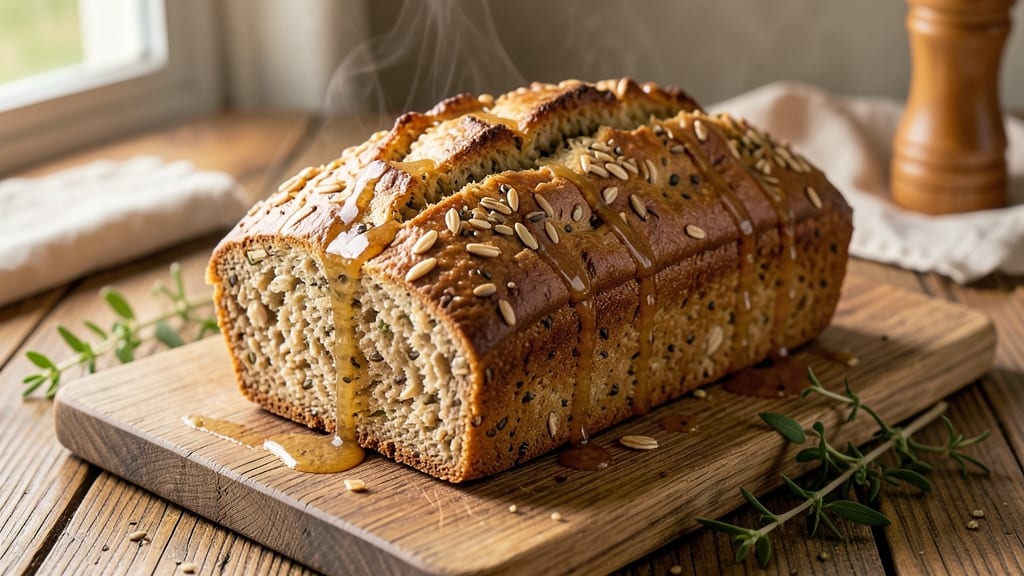
This 9-grain honey oat bread delivers the perfect balance of hearty whole-grain texture and subtle golden sweetness from honey. 🌾 The combination of nine different grains creates a complex, nutty flavor profile that stays moist for days, while the honey adds just enough natural sweetness to make every slice irresistible.
Perfect for breakfast toast or sandwiches, this bread is designed to elevate your daily meals with restaurant-quality texture and depth.
The secret to its success lies in the careful balance of hydration and grain varieties—each type contributes unique texture and flavor. The honey not only sweetens but also acts as a natural preservative, keeping the bread fresh longer than traditional loaves.
I’ve refined this recipe over years of baking to ensure it’s foolproof, with a crust that’s crisp enough to satisfy but soft enough to tear by hand.
What sets this bread apart is its versatility—use it for open-faced sandwiches, toast with jam and butter, or even as a base for French toast. The grains provide a satisfying crunch, while the honey-infused crust adds a delicate caramelized note. Once you try this, store-bought bread will never compare again.
Ready in about 2 hours (including proofing), this bread requires minimal effort but delivers maximum flavor. The recipe uses simple ingredients with precise measurements to ensure consistent results every time. Let’s get started on baking your next favorite loaf!
Ingredients for 9 grain honey oat bread
Nine distinct grains meet golden honey for a loaf that's both hearty and delicately sweetened.
| Ingredient | Amount | Notes |
|---|---|---|
| All-Purpose Flour 🌾 | 3 cups | High-protein preferred for structure |
| Oat Flakes 🌾 | 1 cup | Steel-cut or rolled, not instant |
| Wild Rice Blend 🌾 | ½ cup | Uncooked, for nutty depth |
| Spelt Flour 🌾 | ½ cup | Lightly ground for texture |
| Buckwheat Flour 🌾 | ¼ cup | Earthy flavor, sifted |
| Flaxseed Meal 🌾 | ¼ cup | Ground fresh for binding |
| Chia Seeds 🌾 | 2 tbsp | Whole, for moisture retention |
| Sunflower Seeds 🌾 | ¼ cup | Lightly toasted for crunch |
| Sesame Seeds 🌾 | 1 tbsp | Toasted for nutty aroma |
| Raw Honey 🍯 | ½ cup | Local, unfiltered for flavor |
| Active Dry Yeast 🍞 | 2 ¼ tsp | Freshly packaged, not expired |
| Granulated Sugar 🍚 | ¼ cup | Light brown preferred |
| Unsalted Butter 🧈 | ½ cup | Cold, cubed for dough |
| Whole Milk 🥛 | 1 cup | Room temperature for activation |
| Sea Salt 🧂 | 1 ½ tsp | Fine grain, Diamond Crystal preferred |
The grain selection is non-negotiable here—each contributes unique texture and flavor. Bob’s Red Mill carries all these in bulk, making it my go-to for consistent quality. For the honey, local raw varieties (like clover or wildflower) provide the best depth of flavor, while store-bought brands like Madhoney work in a pinch. The flaxseed meal should be freshly ground—pre-ground loses its binding power quickly. Toasting the seeds (sunflower, sesame) in a dry pan for 2-3 minutes enhances their nutty notes, but don’t burn them or they’ll turn bitter. Spelt and buckwheat flours can be tricky to find; check the whole foods section of most grocery stores or order online if needed.
No wild rice blend? Substitute with brown rice flour at half the amount, though the texture will be slightly less complex. Running short on buckwheat? Rye flour works similarly, but reduce by 20% to account for its denser structure. Honey shortages? Maple syrup or agave can replace at a 1:1 ratio, though the flavor profile shifts slightly. The yeast is critical—always check the expiration date, as old yeast won’t activate properly. For a lighter loaf, increase the milk to 1.25 cups and reduce flour by 0.25 cups. The butter must be cold; if it melts, chill the dough for 20 minutes before shaping. Prefer a sweeter crust? Brush with an extra tablespoon of honey before baking.
This loaf stays fresh for 5-6 days when wrapped tightly in parchment and stored at room temperature. For longer storage, freeze individual slices wrapped in plastic—up to 3 months without losing texture. The honey’s natural preservative properties extend shelf life compared to traditional bread. To revive stale slices, wrap them in a damp towel and microwave for 10-15 seconds. The crust crisps best when fully cooled; resist the urge to slice immediately after baking. For sandwiches, the middle slices offer the perfect balance of crunch and softness, while the outer crusts make ideal toast for French toast or avocado mash.
Why You'll Love This Recipe
- No-Fuss Mix-In: I swear by the wild rice and buckwheat—just toss them in dry with the oat flakes while the honey warms up. No soaking, no special prep, and the texture? Chewy but light, like a hug from your grandma’s kitchen.
- Honey-Glazed Magic: That slow-simmered honey isn’t just sweet—it caramelizes into a sticky, golden crust that cracks open like a perfect toast. Spread it with butter, jam, or eat it straight; my kids still fight over the last slice.
- Meal Prep MVP: Slice it fresh, freeze the loaves, and toast straight from frozen. The spelt flour keeps it from drying out, so it’s my go-to for breakfast sandwiches all week. (Yes, even on a Tuesday night.)
- Pantry Stretch: Honestly, this uses up odd bits of flour and grains I’d otherwise waste. The oats and buckwheat bulk it up, so one loaf costs less than half what store-bought would—and tastes like a whole-grain victory.
Step-by-step instructions for 9-Grain honey oat bread
Here's how to craft a loaf with complex textures and deep flavor—layer by layer.
👨🍳 Step 1: Activate the Yeast and Prepare the Wet Ingredients
In a small bowl, combine the 1 cup whole milk (warmed to 105-110°F) with the 2.25 teaspoons active dry yeast and 0.25 cup granulated sugar. Let it sit for 5-10 minutes until frothy—you should see bubbles forming on the surface and a yeasty aroma. This confirms the yeast is alive and ready to work.
In a separate bowl, whisk together the 0.5 cup raw honey, 0.5 cup unsalted butter (cubed and softened), and 1.5 teaspoons sea salt. The honey should dissolve completely into the butter, creating a smooth, golden base. This mixture will add moisture and sweetness while balancing the earthy grains.
👨🍳 Step 2: Toast and Combine the Dry Ingredients
In a large mixing bowl, combine the 3 cups all-purpose flour, 1 cup oat flakes, 0.5 cup wild rice blend, 0.5 cup spelt flour, 0.25 cup buckwheat flour, 0.25 cup flaxseed meal, 2 tablespoons chia seeds, 0.25 cup sunflower seeds, and 1 tablespoon sesame seeds. Toast the seeds in a dry skillet over medium heat for 2-3 minutes until fragrant and lightly golden—this enhances their nutty flavors and prevents bitterness in the final bread.
Add the yeast-milk mixture and honey-butter blend to the dry ingredients. Using a wooden spoon or dough whisk, stir until a shaggy dough forms. The texture should be sticky but manageable—this is normal given the high moisture content from the honey and milk. Let the dough rest for 10 minutes while you prepare your workspace.
🍳 Step 3: Knead and Develop the Dough
Transfer the dough to a lightly floured surface and knead for 8-10 minutes until smooth and elastic. You'll need to add 1-2 tablespoons more all-purpose flour during kneading to prevent sticking—this helps create a proper gluten structure for a good rise. The dough should pass the "windowpane test": stretch a small piece until it's thin enough to see light through without tearing.
Place the dough in a lightly greased bowl, cover with a damp towel, and let it rise in a warm place (75-80°F) for 1.5-2 hours or until doubled in size. You'll know it's ready when the dough springs back slowly when poked with a finger—this indicates proper fermentation and air incorporation.
🔥 Step 4: Shape and Proof the Loaf
Punch down the risen dough to release air, then shape it into a 9x5-inch loaf pan. For a rustic finish, you can also shape it into a free-form boule or batard—just place it on a parchment-lined baking sheet. Cover again and let it proof for another 30-45 minutes until it's just slightly puffy above the pan's rim.
Preheat your oven to 375°F with a Dutch oven inside for 20 minutes—this creates steam for a crispy crust. Transfer the loaf to the hot Dutch oven (or baking sheet) and bake for 35-40 minutes until the top is deep golden brown and sounds hollow when tapped. If the top browns too quickly, tent with foil to prevent over-browning.
⏰ Step 5: Cool and Slice for Maximum Texture
Remove the bread from the oven and transfer it to a wire rack. Let it cool for at least 1 hour before slicing—this allows the crumb to set and prevents a gummy texture. The internal temperature should drop below 140°F for clean slices.
Slice the loaf with a serrated knife for clean cuts that showcase the multi-textured crumb: tender honey-infused pockets, chewy oat flakes, and crispy seed clusters. Store wrapped at room temperature for 2-3 days or freeze for up to 3 months—the flavors deepen as it stales slightly, making it even more delicious for toast.
Pro Tips For Making 9 Grain Honey Oat Bread
- Toast Your Grains: Wild rice and oat flakes need a quick dry toast in a skillet before mixing—just 3-4 minutes over medium heat until fragrant. I learned this the hard way when my first batch tasted bland; toasting deepens their nutty flavor and prevents gumminess in the final loaf.
- Weigh Your Flours: Buckwheat and spelt flour are heavier than all-purpose—don’t eyeball it. Use a kitchen scale for accuracy, especially when balancing the 9-grain mix. I used to guess, and my bread turned out either too dense or crumbly.
- Knead Less, Rest More: This grain-heavy dough is finicky—over-kneading turns it tough. Mix until just combined, then let it rise twice (first 1 hour, second 2 hours) at room temp. The extra rest makes the texture tender, not chewy.
- Steam the First 20 Minutes: Place a metal tray on the oven rack below your bread pan and pour hot water into it before baking. The steam keeps the crust from drying out too fast, especially with all those hydrating grains. I skipped this once and ended up with a sad, cracked top.
Perfect pairings for this recipe
Butter and Jam Classics
This bread shines with classic pairings like cultured butter and berry jam. I love spreading Plugrá European-style butter on warm slices—its rich, slightly tangy flavor complements the bread's honey sweetness perfectly.
For jam, Strawberry Preserves from Bon Appétit or blackberry jam with a hint of spice create a balanced contrast. 🍓
Breakfast Powerhouses
Elevate your morning with scrambled eggs and avocado mash on toasted slices. The bread's hearty texture holds up beautifully to runny yolks, while the honey adds a subtle sweetness.
For extra protein, top with smoked salmon and cream cheese—the grains provide a satisfying crunch against the creamy fish. A sprinkle of everything bagel seasoning adds depth.
Savory Sandwich Staples
Use this bread as a base for grilled cheese with sharp aged cheddar and apple slices. The honey's sweetness balances the tangy cheese, while the grains add texture. For lunch, try turkey, brie, and cranberry—the bread's sturdy structure keeps everything in place.
I also love PB&J with crunchy peanut butter and strawberry jam for a nostalgic twist.
Sweet Toppings
Drizzle warm slices with local raw honey and sprinkle with toasted pecans for a dessert-like treat. The bread's texture holds up to whipped cream and fresh berries, making it perfect for brunch.
For a savory-sweet combo, spread with ricotta cheese, drizzle with honey, and top with figs—the grains add a satisfying bite against the creamy filling.
Beverage Pairings
Pair this bread with chai tea or spiced coffee to enhance its honey notes. A lightly sweetened iced matcha with vanilla creates a refreshing contrast. For alcohol lovers, dry Riesling or sparkling apple cider complement the bread's complex flavors.
The effervescence cleanses your palate between bites, making each slice taste fresh.
Global Twists
Try a Mediterranean spread with hummus, olives, and feta cheese—the grains add a satisfying crunch. For a French-inspired version, top with duck confit and cornichons for a sweet-savory balance. The bread's versatility makes it perfect for experimenting with global flavors while keeping the honey-oat foundation intact. 🌍
Nutrition facts
Frequently asked questions
Can I substitute any of the grains in this recipe?
Yes, but with some adjustments. For the wild rice blend, use brown rice flour (½ the amount) though the texture will be slightly less complex. Buckwheat can be replaced with rye flour (reduce by 20%). If you're missing spelt, whole wheat flour works but may make the bread denser. Always toast seeds (sunflower, sesame) for 2-3 minutes to enhance flavor and prevent bitterness.
Why does my dough feel too sticky?
This is normal with honey and multiple grains, but you can adjust it. The dough should be tacky but manageable—add 1-2 tablespoons all-purpose flour during kneading if needed. For extra moisture control, chill the dough for 20 minutes before shaping. If it's still too sticky after kneading, your kitchen might be too warm—try proofing in a cooler spot (70°F or below).
How do I know when the bread is fully baked?
Look for three key signs: deep golden brown crust, hollow sound when tapped on the bottom, and internal temperature of 190-200°F. Insert an instant-read thermometer into the center—if it reads below 190°F, bake for another 5-10 minutes. The bread will continue cooking as it cools, so don't overbake or it may dry out.
Can I make this bread without a Dutch oven?
For a crispy crust without a Dutch oven, bake in a 9x5-inch loaf pan and cover tightly with foil during the first 25 minutes, then uncover for the final 10-15 minutes. Brush the top with water every 5 minutes to create steam. For a free-form loaf, bake on a parchment-lined sheet pan and tent with foil until set, then uncover for browning.
How long will this bread stay fresh?
Wrapped tightly in parchment at room temperature, this bread stays fresh for 5-6 days. The honey acts as a natural preservative, extending shelf life beyond standard bread. For longer storage, freeze individual slices (wrapped in plastic) for up to 3 months. To revive stale slices, wrap in a damp towel and microwave for 10-15 seconds—the texture will be perfect for toast.