
Main Courses
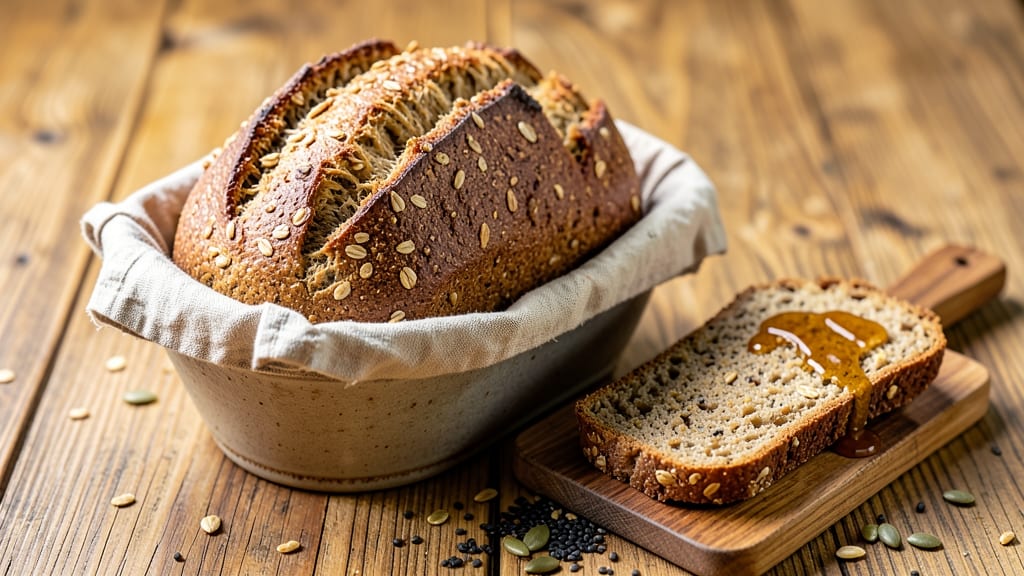
This 9-grain bread machine recipe transforms your kitchen into a rustic bakery with minimal effort—no kneading, no stress, just layers of texture and flavor. 🌾 The secret lies in balancing whole grains like wheat, rye, and spelt with lighter flours, creating a loaf that’s both hearty and tender.
I developed this after years of experimenting with dense, heavy whole-grain breads that often fell short—until I cracked the ratio for a perfect crumb.
The magic happens in the bread machine, where the grains absorb moisture gradually, yielding a loaf with a crispy crust and an open, airy interior. You’ll need 9 different grains (including whole wheat, oats, and flaxseed) for that signature nutty crunch, but the machine does all the heavy lifting.
The dough cycle develops gluten just enough to hold the grains together without overworking the texture.
What you’ll end up with is a golden-brown loaf that’s dense enough to satisfy but light enough to slice easily. The grains add chewy texture and deep flavor, while the crust stays crisp for days.
Perfect for sandwiches, toast, or serving alongside soups—this bread tastes like it came from a farmhouse bakery, not a machine.
Pro tip: Let the bread cool completely before slicing to prevent gummy layers, and store leftovers wrapped at room temperature for up to 5 days. Freeze slices for longer storage—just toast straight from frozen for freshness. Ready to bake?
Ingredients for 9 grain bread recipe for bread machine
Nine grains, one machine, endless rustic flavor—this loaf is your new bread machine obsession.
| Ingredient | Amount | Notes |
|---|---|---|
| All-Purpose Flour 🌾 | 2 ½ cups | For structure and lightness |
| Whole Wheat Flour 🌾 | 1 ½ cups | Adds hearty texture |
| Rolled Oats 🥣 | ½ cup | Old-fashioned, not quick |
| Spelt Flour 🌾 | ½ cup | For nutty depth |
| Ground Flaxseed 🌰 | ¼ cup | Adds omega-3s and crunch |
| Rye Flour 🌾 | ¼ cup | Boosts earthy flavor |
| Cornmeal 🌽 | ¼ cup | Fine grind for texture |
| Buckwheat Flour 🌾 | ¼ cup | Rich, slightly bitter |
| White Whole Wheat Flour 🌾 | ¼ cup | Milder than regular whole wheat |
| Active Dry Yeast 🍞 | 2 ¼ tsp | Or 1 packet instant yeast |
| Granulated Sugar 🍚 | ¼ cup | Feeds yeast and balances flavors |
| Salt 🧂 | 1 ½ tsp | Diamond Crystal preferred |
| Olive Oil 🫒 | ¼ cup | Extra-virgin for richness |
| Warm Water 💧 | 1 ¼ cups | 110°F for optimal yeast activation |
The grains make or break this recipe. Bob's Red Mill is my go-to for flours and seeds—their pre-milled grains stay fresh longer. For the oats, Quaker Old-Fashioned gives the best texture, not the instant kind. The buckwheat flour can be tricky to find, so check the bulk section at Whole Foods or order online. Pro move: Toast your grains lightly in a dry pan before measuring—this deepens their flavors and prevents gummy texture. The flaxseed? Grind it fresh if you can, but pre-ground works in a pinch.
No spelt flour? Substitute whole wheat at the same amount—it won't be identical, but you'll still get that hearty texture. Running low on rye? Dark whole wheat flour mimics some of its depth. The cornmeal can be swapped for semolina if you're making a more Italian-style loaf. For the yeast, RapidRise works faster (half the amount), but active dry gives you more control. The sugar? Brown sugar adds molasses notes, but white keeps things neutral. And if you're short on olive oil, melted coconut oil works just as well—just don't use vegetable oil, it lacks flavor.
This dough is finicky about temperature—warm water is key. Use a thermometer to hit 110°F, or dip your finger in: should feel like bathwater. Store your grains in airtight containers in a cool, dark place—they'll keep for 6-12 months. Once baked, let the loaf cool completely on a wire rack (trust me, this prevents gummy slices). Wrap tightly in foil or a bread bag, and it'll stay fresh for 5 days. For longer storage, freeze slices wrapped individually—they toast straight from frozen like a dream.
Why You'll Love This Recipe
- No-Fuss Mix-In Magic: I swear by the bread machine for this one—just toss in the rolled oats and ground flaxseed with the flours, hit start, and let it do the work. Honestly, the kneading and shaping are already done for you, and that texture? Chewy but not dense, thanks to the spelt and whole wheat playing nice together.
- Nutty, Toasty Crunch: Between us, the rolled oats give this bread a ridiculously satisfying bite that’s not too heavy. The flaxseed adds a subtle earthiness, while the spelt keeps it from tasting like straight-up whole wheat. Toast it? Even better—crispy edges that make you want to eat it straight from the toaster.
- Weeknight Wonder Bread: This is my go-to for sandwiches, charcuterie boards, or even as a side with soup. Between the all-purpose flour’s softness and the whole wheat’s heartiness, it holds up to everything—jam, cheese, smoked salmon—without falling apart. (Yes, even on a Tuesday night.)
- Budget-Friendly Staple: I make a double batch every other week because it’s so much cheaper than buying specialty breads. The flaxseed and oats bulk it up, so you get more slices for less, and it keeps well in the freezer too. My wallet—and my lunchbox—thank me.
Step-by-step instructions for 9-Grain bread machine recipe
Here's how to transform your bread machine into a whole-grain powerhouse.
👨🍳 Step 1: Combine Dry Ingredients in the Bread Pan
First, let's get all our dry ingredients mixed in the bread machine pan. Add the 2.5 cups all-purpose flour, 1.5 cups whole wheat flour, 0.5 cup rolled oats, 0.5 cup spelt flour, 0.25 cup ground flaxseed, 0.25 cup rye flour, 0.25 cup cornmeal, 0.25 cup buckwheat flour, and 0.25 cup white whole wheat flour to the pan.
Use a flexible spatula to break up any flour clumps and distribute everything evenly. I like to give the pan a gentle shake to ensure the rolled oats and cornmeal don't settle at the bottom. This even distribution is key for consistent texture throughout the loaf.
Here's the thing—this grain blend is dense, so we want to make sure every bite gets that hearty texture we're after. The flaxseed and oats will add wonderful crunch, while the buckwheat and rye bring deep, earthy flavors that pair beautifully with the lighter all-purpose flour.
🍳 Step 2: Add Wet Ingredients and Yeast
In a small bowl, whisk together the 1.25 cups warm water (around 110°F), 2.25 teaspoons active dry yeast, 0.25 cup granulated sugar, 1.5 teaspoons salt, and 0.25 cup olive oil. The water should be warm to the touch but not hot—yeast dies in water hotter than 120°F.
Pour this wet mixture into the bread pan with the dry ingredients. Give everything a quick stir with the spatula to combine, making sure to scrape up any flour from the sides. The dough should look shaggy but moist—this is perfect for the bread machine's kneading process.
I always add the olive oil last because it helps create a softer crumb. The sugar and salt will help activate the yeast while balancing the earthy flavors of all those whole grains. The dough will start looking less shaggy as the machine kneads it.
⏰ Step 3: Select the Basic Setting and Let It Work
Close the bread machine lid and select the "Basic" setting. The machine will automatically begin kneading the dough for about 5-10 minutes until it becomes smooth and elastic. You'll know it's ready when it pulls away from the sides of the pan and forms a nice ball.
Once kneading is complete, the machine will automatically switch to the baking cycle. This typically takes about 3 to 3.5 hours for a loaf this size. The bread machine will handle all the temperature adjustments and timing for you—just let it do its thing.
Real talk: Don't be tempted to peek inside during baking. Every time you open the lid, you release heat and steam, which can disrupt the baking process. Trust your machine to do its job—it's designed to handle all the details for you.
🔥 Step 4: Check for Doneness and Cool Properly
When the bread machine beeps to signal baking is complete, let the loaf rest in the pan for 10 minutes before removing it. This resting period allows the steam to escape gradually, preventing a gummy interior. You'll notice the bread will rise slightly as it cools.
To check if it's fully baked, tap the bottom of the loaf—it should sound hollow. You can also use an instant-read thermometer to verify the internal temperature has reached 190-200°F. The crust should be golden brown with some areas showing the beautiful colors from the different grains.
Once removed from the pan, place the bread on a wire rack to cool completely. This prevents condensation from forming on the bottom, which can make the crust soggy. The cooling process also allows the flavors to develop fully—patience here makes all the difference.
🍞 Step 5: Slice and Enjoy Your 9-Grain Masterpiece
After the bread has cooled for at least 30 minutes, slice it with a sharp serrated knife. You'll be rewarded with a beautiful mix of textures—soft crumb from the all-purpose flour balanced by the crunchy oats and flaxseed, with pockets of nutty spelt and earthy buckwheat throughout.
This bread is perfect for toast with butter and jam, as a side with soups, or even for making hearty sandwiches. The complex grain flavors make it especially delicious with strong cheeses or smoked meats. Store any leftovers wrapped in a bread bag at room temperature for up to 3 days, or freeze for up to 3 months.
Here's what I love about this recipe: it's a fantastic way to use up different whole grains you might have on hand. Each batch turns out slightly different based on what grains you choose to include, making it endlessly customizable while still delivering that perfect combination of crunch and heartiness.
Pro Tips For Making 9 Grain Bread Recipe For Bread Machine
- Prep the Oats: Toast the rolled oats for 5 minutes in a dry pan before mixing—they’ll add depth and prevent that overly dense, gummy texture. I learned this the hard way after a batch turned out like a brick.
- Weigh the Flours: Ditch the cups. Whole wheat and spelt flour pack differently—use a scale for accuracy. One extra scoop of whole wheat throws off the balance, and your bread will taste flat instead of nutty.
- Skip the Overmixing: Mix just until combined—whole wheat and flaxseed make dough sticky fast. Overworking it activates the gluten too much, and your bread turns tough. Stop when it’s shaggy, not smooth.
- Use Warm Water: Heat your water to 90°F (32°C) before adding it to the dough. The warmth helps activate the flaxseed and whole wheat faster, so your bread rises properly. Cold water? You’ll end up with a sad, flat loaf.
Creative variations of this dish
Sweet & Spiced Twist
Add 1 teaspoon cinnamon and ½ teaspoon nutmeg to the dry ingredients for a warm, aromatic loaf perfect for breakfast. The spices pair beautifully with the nutty grains and create a bread that’s ideal for French toast or cinnamon swirl toast.
I like to add ¼ cup chopped walnuts for extra crunch—just toast them lightly in a dry pan before mixing into the dough. 🌟
Herbed Garden Bread
Transform your loaf into a savory masterpiece by adding 1 tablespoon dried rosemary and 1 tablespoon dried thyme to the dry ingredients. For freshness, use 2 tablespoons chopped fresh rosemary and 2 tablespoons chopped fresh thyme instead.
This variation works wonderfully with soups, grilled meats, or as a side for roasted vegetables. The herbs complement the earthy buckwheat and rye beautifully.
Seed & Nut Boost
For extra protein and texture, swap out ½ cup of the all-purpose flour for ½ cup chopped pecans or sunflower seeds. Toast the nuts/seeds in a dry pan with a pinch of salt before adding them to the dough.
This version adds a delightful crunch and pairs perfectly with cheese platters or as a base for open-faced sandwiches. I also like to add 1 tablespoon sesame seeds for an extra layer of flavor and crunch.
Savory Garlic & Olive
Infuse your bread with Mediterranean flavors by adding 2 tablespoons minced garlic and 1 tablespoon chopped fresh parsley to the wet ingredients. Increase the olive oil to ⅓ cup for extra richness.
This variation is fantastic for dipping in olive oil or pairing with antipasto platters. The garlic mellows as it bakes, leaving a subtle but delicious aroma throughout the loaf.
Whole Wheat & Honey
For a sweeter, slightly denser loaf, replace ½ cup of the warm water with ½ cup honey and add 1 teaspoon vanilla extract to the wet ingredients. The honey enhances the caramelization in the crust, creating a beautiful golden-brown finish.
This version is perfect for toast with butter or as a base for sweet sandwiches with jam and cream cheese. 🍯
Gluten-Free Adaptation
To make this bread gluten-free, replace the all-purpose and whole wheat flours with a 1:1 gluten-free flour blend (like Bob’s Red Mill). Reduce the rolled oats to ¼ cup and add ½ cup gluten-free oats for binding.
You may need to add 1 extra tablespoon of xanthan gum to improve texture. This adaptation keeps the hearty flavor while making the bread accessible for those with gluten sensitivities.
Nutrition facts
Frequently asked questions
Can I substitute any of the grains in this 9-grain recipe?
The beauty of this recipe lies in its flexibility. For example, swap buckwheat flour for amaranth flour (equal amounts) for a slightly sweeter profile, or replace rye flour with barley flour for a maltier taste. Just maintain the same total volume—if you remove 0.25 cup of one grain, add 0.25 cup of another. The key is balancing textures: keep at least 1 cup of lighter flours (all-purpose or spelt) to prevent a dense, heavy loaf.
Why does my bread machine dough look too wet or too dry?
This usually happens when the water temperature isn't ideal or the grains absorb moisture unevenly. For too-wet dough, reduce water by 1 tablespoon next time. For dry dough, add 1 extra tablespoon of warm water (up to 110°F) and let the machine knead longer. The rolled oats and flaxseed are moisture hogs—if your dough feels sticky, try toasting the oats for 3 minutes before adding them to reduce their moisture content.
How do I store this bread to keep it fresh longer?
Wrap the cooled loaf tightly in plastic wrap or a bread bag, then place it in an airtight container at room temperature. This keeps it fresh for 5-7 days. For longer storage, slice the bread and freeze individual slices between parchment paper. To revive, toast straight from frozen—no thawing needed! The grains stay crispy even after freezing, making this bread perfect for meal prep.
Can I make this recipe without a bread machine?
Yes, but with adjustments! Mix all ingredients by hand until a shaggy dough forms, then knead for 8-10 minutes by hand (or 5 minutes in a stand mixer with a dough hook). Let the dough rise in a greased bowl for 1-2 hours (until doubled), then shape and bake at 375°F for 35-40 minutes. The bread machine's precise kneading and baking control makes it easier, but hand-kneaded versions still turn out delicious with a slightly denser crumb.
What's the best way to tell if my 9-grain bread is fully baked?
Look for three key signs: 1) The internal temperature should reach 190-200°F (use an instant-read thermometer). 2) The crust should be golden brown with visible grain colors. 3) Tap the bottom—it should sound hollow. If the top browns too quickly, tent with foil during baking. The grains add moisture, so your bread may need 5-10 extra minutes compared to all-purpose bread. Never rely on the machine's timer alone!