
Side Dishes
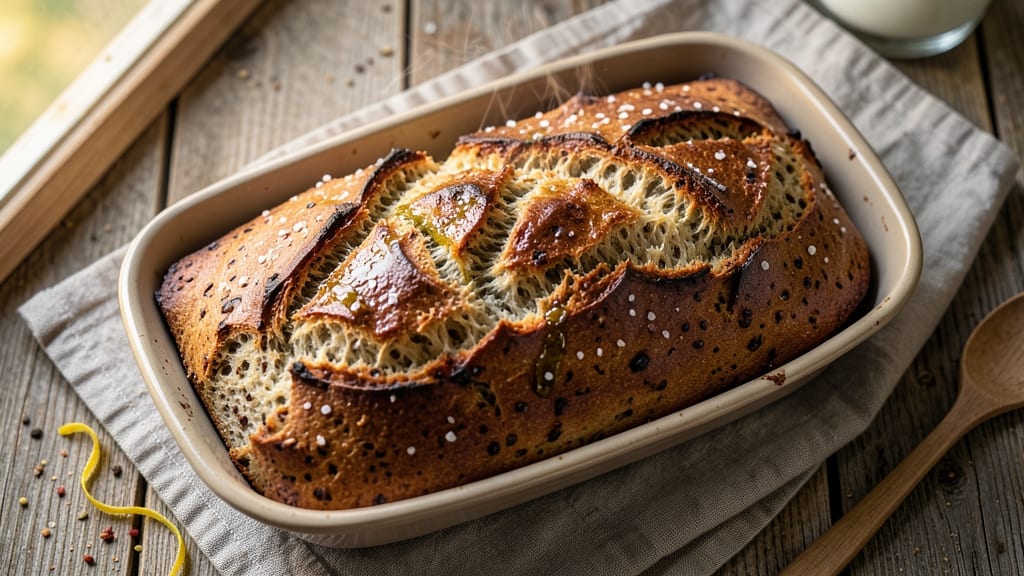
This 50/50 whole wheat sourdough bread recipe delivers the perfect balance of hearty whole grains and tender white flour for a loaf with a crispy crust and open, nutty crumb. The secret lies in a slow fermentation that develops deep flavor while keeping the texture digestible—no dense, heavy loaf here.
I've perfected this ratio over years of baking, ensuring the whole wheat doesn't overpower while still adding nutritional benefits and subtle earthiness.
What sets this recipe apart is the two-stage fermentation—first activating your starter properly, then letting the dough develop flavor over 12-16 hours. This extended time isn't just about flavor; it's what creates that signature open crumb structure that makes every slice satisfying.
The dough is manageable yet sturdy enough to hold its shape during proofing, and the crust develops that coveted crackly exterior when baked at high heat.
By the time you pull that golden-brown loaf from the oven, you'll have a loaf with crispy edges, an airy interior, and just the right amount of chew—none of that gummy whole wheat texture.
The nutty flavor from the whole wheat pairs beautifully with the mild sweetness of the white flour, creating a complex taste that's both comforting and sophisticated. This is bread that feels special enough for company but simple enough for weeknight dinners.
The best part? This recipe builds on your existing sourdough skills without requiring advanced techniques. With just five key ingredients and a little patience, you'll achieve professional-quality results that taste like they came from an artisanal bakery. Let's get started on creating your perfect loaf.
Ingredients for 50 50 whole wheat sourdough bread
Five simple ingredients transform into a loaf with crispy crust and nutty crumb magic.
| Ingredient | Amount | Notes |
|---|---|---|
| Active Sourdough Starter 🍞 | ½ cup | 100% hydration, bubbly and active |
| Bread Flour 🌾 | 2 ½ cups | High protein for structure |
| Whole Wheat Flour 🌾 | 2 ½ cups | King Arthur or Bob's Red Mill |
| Water 💧 | 3 ½ cups | Lukewarm, filtered preferred |
| Kosher Salt 🧂 | 1 ½ tsp | Diamond Crystal preferred |
| Olive Oil 🫒 | 1 tbsp | Extra-virgin for richness |
| Honey 🍯 | 1 tbsp | Local raw preferred |
| Cornmeal 🌽 | ½ cup | For dusting baking sheet |
| Ice Water ❄️ | ¼ cup | For final shaping |
The flours are everything here—King Arthur whole wheat and bread flour strike the perfect balance. Whole wheat can be dry, so I always measure by weight if possible (though cups work fine). Bob's Red Mill is my go-to for whole wheat—it's finely ground enough to avoid that gummy texture. The bread flour gives you that tender crumb, while the whole wheat adds the nutty depth. Pro tip: toast your whole wheat flour for 10 minutes before mixing—this neutralizes some of the raw flavor and prevents that 'beany' taste. Store-bought starters work, but I always recommend feeding yours 24 hours before using for maximum activity.
No bread flour? All-purpose plus 1 tbsp vital wheat gluten gets you close. Whole wheat flour substitutes? Spelt or rye work, but adjust hydration—you might need an extra tablespoon of water. Diamond Crystal kosher salt dissolves perfectly, but any fine sea salt works. The honey can be swapped for maple syrup or agave, though honey's acidity helps with browning. For the olive oil, avocado oil works too—just don't use anything with a strong flavor like walnut oil. And if your starter's not ready? Instant yeast at 1 tsp can save the day, though it won't give you that true sourdough flavor.
This dough needs patience—cover and let it ferment 12-16 hours at room temp. I always do mine overnight in the fridge for even better flavor development. The cornmeal layer on your baking sheet is non-negotiable—it prevents sticking and gives that gorgeous crust. For the ice water: just a handful of ice cubes crushed works perfectly. Once baked, let it cool completely before slicing—at least 2 hours—or you'll end up with a gummy interior. These loaves freeze beautifully—slice and toast straight from frozen for perfect results every time.
Why You'll Love This Recipe
- No-Knead Magic: I mix it, let it rise, and forget about it—no energy spent. The whole wheat and bread flour combo gives it a sturdy structure that holds up even when I overlook it for a few extra hours (yes, I’ve done that).
- Nutty Crunch Perfection: That 50/50 flour split? The whole wheat adds a subtle earthiness while the bread flour keeps it light. Toast it, and you get a caramelized crust that’s dangerously good with butter—or just eaten straight from the pan.
- Meal Prep MVP: I bake a loaf on Sundays, and it lasts all week. Perfect for sandwiches, toast, or even French toast. Honestly, the leftovers get eaten faster than the fresh bread—my kids won’t let it sit.
- Budget-Friendly Staple: Just five ingredients, and I’m not exaggerating when I say it’s cheaper than store-bought. The sourdough starter is my secret weapon—once it’s active, it’s free labor for flavor, and the whole wheat bulk it up without breaking the bank.
Step-by-step instructions for 50 50 whole wheat sourdough bread
This method balances structure and flavor for a loaf with a crisp crust and open crumb.
Mix Dough with Sourdough Starter
In a large mixing bowl, combine the 0.5 cup active sourdough starter with 3.5 cups lukewarm water. Let it sit for 5 minutes while you measure the flours. This activates the starter and begins fermentation.
Add the 2.5 cups bread flour and 2.5 cups whole wheat flour to the bowl. The whole wheat flour will make this dough denser, so don't be surprised if it feels heavier than all-purpose flour dough. Stir with a wooden spoon until no dry bits remain—you should have a shaggy, sticky mass.
Add the 1 tbsp olive oil and 1 tbsp honey, then mix again. The honey adds subtle sweetness and helps with browning. Finally, sprinkle in the 1.5 tsp kosher salt and stir until fully incorporated. The dough should be wet but not soupy—if it's too sticky, add 1 tablespoon of bread flour at a time until it pulls away from the bowl slightly.
Knead and Develop Gluten
Turn the dough onto a lightly floured surface and knead for 8-10 minutes by hand. The whole wheat flour makes this dough tougher to knead, so focus on stretching and folding rather than punching. You're looking for smooth, elastic dough that springs back when poked.
If the dough feels too sticky, wet your hands slightly and keep kneading. The goal is to develop enough gluten to trap gas during fermentation, which creates that beautiful open crumb. When you're done, the dough should be silky and slightly tacky but not wet.
Shape the dough into a loose ball, place it back in the bowl, and cover with a damp towel. Let it rest at room temperature for 30 minutes. This resting period relaxes the gluten, making it easier to shape later.
Bulk Ferment for Optimal Rise
After the rest, perform a series of stretch and folds every 30 minutes for 2 hours. Wet your hands and grab one side of the dough, stretch it upward, fold it over, and repeat on all four sides. This builds strength and encourages even fermentation.
During this time, the dough should rise 50-75% and develop bubbles on the surface. The whole wheat flour will make the rise slower than all-purpose flour, so be patient. The ideal temperature for fermentation is 75-78°F—if your kitchen is cooler, extend the bulk ferment by 30-60 minutes.
After the final stretch and fold, let the dough rest 20 minutes before shaping. This final rest ensures the gluten relaxes for a clean shape and even oven spring.
Shape and Proof the Loaf
Turn the dough onto a lightly floured surface and shape it into a tight round boule. To do this, grab one side of the dough, stretch it toward you, and tuck it under itself, rotating as you go. The goal is to create surface tension for oven spring.
Place the shaped dough seam-side up in a floured banneton or bowl lined with a floured kitchen towel. Cover loosely and let it proof at room temperature for 4-6 hours, or until it's 50-75% larger and jiggly when gently shaken. The whole wheat flour will make the dough proof slower, so don't rush this step.
For a tighter crumb, you can also do a cold proof in the fridge overnight. This slows fermentation and enhances flavor, but it's optional for this recipe.
Score and Bake for Crusty Perfection
Preheat your oven to 450°F with a Dutch oven inside for 45 minutes. The Dutch oven traps steam, creating that iconic crusty exterior and open crumb. While the oven heats, turn the dough onto a floured surface and score the top with a sharp razor or lame in a crosshatch pattern.
Carefully transfer the dough to the hot Dutch oven, cover, and bake for 20 minutes. Then remove the lid and bake for an additional 20-25 minutes until the loaf is deep golden brown and sounds hollow when tapped on the bottom. The internal temperature should reach 205-210°F.
Let the bread cool on a wire rack for at least 1 hour before slicing. The whole wheat flour will make the crumb denser, so resist the urge to cut into it too soon—this ensures clean slices and prevents gumminess.
Pro Tips For Making 50 50 Whole Wheat Sourdough Bread
- WEIGH THE FLOURS: Whole wheat absorbs water like a sponge—don’t eyeball it. Use a kitchen scale for both flours (bread and whole wheat) to hit the exact 50/50 ratio. I learned this the hard way when my first batch turned out dense because I underestimated the whole wheat’s thirst.
- DAMPEN THE WHEAT: Whole wheat flour needs extra hydration—about 10-15% more water than bread flour. Mix the whole wheat with water first, let it sit for 10 minutes, then combine with the rest. This prevents a gummy dough and ensures even fermentation.
- STRETCH AND FOLD LATE: Skip the initial stretch-and-folds—whole wheat dough is tougher and tears easily. Wait until the bulk fermentation is well underway (when the dough has doubled and looks puffy but still dense) before doing 2-3 gentle folds. Patience here keeps the crumb open.
- USE A DUTCH OVEN FOR CRUST: Whole wheat burns faster than white flour. Preheat your Dutch oven with a baking stone inside for 30 minutes, then bake covered at 450°F (230°C) for 20 minutes. The extra heat transfer gives you a crisp crust without over-browning the interior.
Regional styles of this dish
Italian Rustic Style
In Italy, this 50/50 blend becomes a panettone-inspired loaf when shaped into a tall cylinder. After bulk fermentation, shape the dough into a cone by pulling the edges upward and tucking them under. Place it in a floured banneton and proof until nearly doubled.
For scoring, use a sharp serrated knife to create a herringbone pattern—this lets steam escape while adding decorative flair. Bake in a cast-iron skillet instead of a Dutch oven for a slightly crispier, rustic crust. 🌟
German Dense Twist
German bakers prefer a denser crumb for their whole wheat sourdoughs, so adjust by adding 1 extra tablespoon of whole wheat flour and reducing water by 1 tablespoon. Shape into a round boule but score with a deep cross (about ¼-inch deep) to encourage dramatic oven spring.
Bake at 425°F instead of 450°F for 30 minutes covered, then 20 minutes uncovered—this creates a thicker, chewier crust. Serve with dark rye mustard or butter and honey for a traditional pairing. 🥖
French Baguette Adaptation
For a baguette-style version, stretch the dough into a long oval (about 12x6 inches) and place it on a parchment-lined baking sheet. Score with 3-4 diagonal slashes (about ½-inch deep) for classic French flair.
Bake in a preheated steamer or Dutch oven at 475°F for 15 minutes covered, then 10 minutes uncovered. The high heat creates a crunchy, shatter-prone crust perfect for dipping in olive oil and sea salt. 🥖✨
American Artisan Crust
American bakers often add a sugar crust for extra browning. After scoring, sprinkle the dough with 1 tablespoon coarse sugar (like turbinado) before baking. This creates a caramelized, crackly exterior while keeping the interior tender. Use a combination Dutch oven and baking stone for even heat distribution.
For a seed topping, mix 1 tablespoon sesame seeds and 1 tablespoon poppy seeds before baking—this adds texture and a nutty contrast to the whole wheat. 🌾
Mexican Sweet Corn Twist
Swap ½ cup of the whole wheat flour for ½ cup fine cornmeal (like Maseca) to create a slightly sweet, corn-infused loaf. Add 1 teaspoon ground cinnamon and ½ teaspoon vanilla extract to the dough for warmth.
Shape into a round boule and score with a sunburst pattern (short lines radiating from the center). Bake as directed, then brush the crust with honey mixed with cinnamon after baking for a Mexican sweet bread vibe. Perfect with chocolate or coffee! 🌶️
Nutrition facts
Frequently asked questions
Why use a 50/50 whole wheat to white flour ratio instead of 100% whole wheat?
This ratio balances nutrition and texture—whole wheat adds fiber and nutrients while white flour creates a lighter, more digestible crumb. Pure whole wheat bread often turns dense or gummy because the bran absorbs more water and lacks gluten structure. The 50/50 blend gives you the benefits of whole grains without sacrificing that satisfying open crumb.
How do I know when my sourdough starter is ready for this recipe?
Your starter should be bubbly, doubled in size, and have a light, airy texture when fed with equal parts flour and water. For this recipe, feed it 12-24 hours before mixing to ensure peak activity. If it smells sour or looks sluggish, give it an extra feeding cycle. A healthy starter will float in water—drop a spoonful in a glass of water to test!
Can I make this bread without a Dutch oven? What's the best alternative?
Yes! Use a cast-iron skillet or heavy oven-safe pot with a lid instead. Place a baking sheet on the lower rack and pour 1 cup boiling water into it before baking to create steam. For extra crustiness, try a baking stone on the upper rack with steam on the lower rack. The bread will still develop flavor, though the crust may be slightly less crisp.
My dough didn't rise much—what went wrong?
Whole wheat dough rises slower than all-purpose, but check these common issues: cold kitchen (try 75-78°F), inactive starter (feed it more), or over-kneading (which weakens gluten). Extend bulk fermentation by 2-4 hours if needed. For extra rise, try a warm proofing spot like near the oven (not inside) or use a proofing box with a lightbulb.
How should I store this bread to keep it fresh longest?
Cool completely, then wrap in beeswax wrap or a cotton towel inside a paper bag to prevent sogginess. Store at room temp for 3-4 days or freeze sliced bread for up to 3 months**. For toasting, freeze slices directly—this creates a crispier crust than room-temperature toasting. The whole wheat stays fresher longer than all-white bread!