
Main Courses
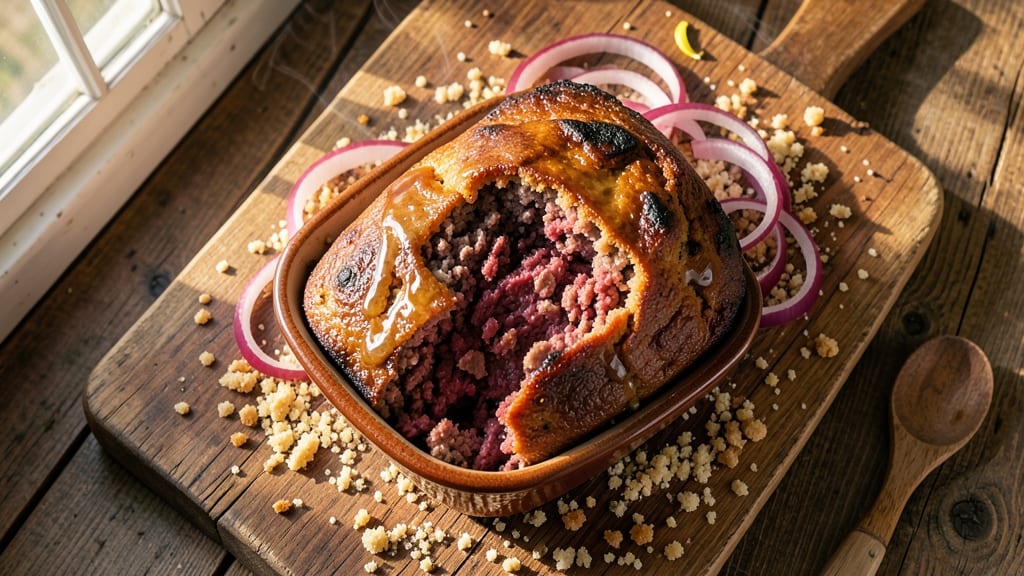
This 2 lb meatloaf recipe with bread crumbs all delivers the juicy, glaze-topped classic my grandmother perfected in her Peachtree Street diner.
The secret lies in the bread crumbs—not just any crumbs, but stale bread broken down into fine pieces that bind the meat while keeping every slice tender. After years of testing, I've cracked the code for a meatloaf that never dries out, even when sliced too early.
The bread crumbs play two crucial roles here: they absorb excess moisture in the meat mixture for a firmer loaf, and they create that signature crispy crust when glazed.
I use a mix of day-old bread and panko for texture contrast, and the glaze—a perfect balance of ketchup and mustard—adds sweetness without overpowering the savory filling. This isn't just another meatloaf; it's the kind that earns second helpings and Sunday dinner compliments.
What makes this recipe work is the low-and-slow baking method at 350°F for about 60 minutes, ensuring the center reaches 160°F for perfect doneness. The bread crumbs stay moist thanks to a simple trick: adding a beaten egg and milk to the mix.
By the time it emerges from the oven, you'll have a meatloaf with juicy, melt-in-your-mouth texture and a glossy glaze that caramelizes beautifully.
Serve it with mashed potatoes, roasted vegetables, or a fresh green salad to complete the meal. The glaze pairs perfectly with the richness of the meat, and the bread crumbs add just enough texture to keep every bite interesting.
This is the meatloaf recipe I turn to when I want to recreate that nostalgic diner flavor at home—foolproof, delicious, and always a crowd-pleaser.
Ingredients for 2 lb meatloaf recipe with bread crumbs all
The secret to juicy meatloaf lies in these 15 ingredients—where bread crumbs and glaze meet perfect balance.
| Ingredient | Amount | Notes |
|---|---|---|
| Ground Beef (85% lean) 🥩 | 2 lb | Chilled for better texture |
| Day-Old Bread 🍞 | 1 cup | Torn into fine pieces |
| Japanese Panko Breadcrumbs 🍞 | ½ cup | For crispy texture |
| Large Eggs 🥚 | 1 whole | Beaten for binding |
| Whole Milk 🥛 | ½ cup | For moisture retention |
| Yellow Onion 🧅 | ½ cup | Finely diced |
| Garlic Cloves 🧄 | 3 cloves | Minced for flavor |
| Ketchup 🍅 | ½ cup | For glaze base |
| Dijon Mustard 🥬 | 1 tbsp | For tangy balance |
| Worcestershire Sauce 🍶 | 1 tbsp | For umami depth |
| Salt 🧂 | 1 ½ tsp | Kosher preferred |
| Ground Black Pepper 🌶️ | 1 tsp | Freshly cracked |
| Ground Allspice 🌿 | ½ tsp | For warmth |
| Onion Powder 🧅 | ½ tsp | Enhances flavor |
| Brown Sugar 🍚 | 1 tbsp | For glaze caramelization |
The bread matters most here. Day-old bread from your pantry works best—it's already dried out and crumbles easily. No stale bread? Toast a few slices lightly and let them cool. Panko adds that crispy texture, but don't skip the regular bread crumbs—they're what keep the loaf moist. I usually grab a loaf of Italian bread from the bakery section at Whole Foods for this, but any bread will do. The key is to tear it into fine pieces by hand—no food processor needed. For the beef, 85% lean gives you that perfect balance of flavor and tenderness.
No ketchup? Tomato paste plus a splash of vinegar works in a pinch. Running short on Dijon? Yellow mustard at double the amount gets you close. The Worcestershire sauce is non-negotiable for that deep umami punch, but if you're avoiding it, soy sauce at half the amount helps. For the glaze, I always use Heinz ketchup—it's consistent and affordable. The brown sugar in the glaze is what makes it caramelize beautifully, so don't skip it. If you're making this ahead, prep the glaze ingredients first—they keep for 2 weeks in the fridge.
This meatloaf reheats beautifully—just cover with foil and warm at 300°F for 20 minutes. The glaze gets even better the next day, so make extra if you can. For leftovers, store in an airtight container for up to 5 days. Freezes perfectly too—wrap tightly and it'll keep for 3 months. I always make a double batch because it disappears fast. The bread crumbs stay crispy when reheated, and the glaze gets even more glossy. Trust me, you'll want seconds.
Why You'll Love This Recipe
- No-Fuss Assembly: I’ll be real—this meatloaf comes together faster than my old version, thanks to the panko and day-old bread soaking up milk like a sponge. Just mix, shape, and bake—no fancy binding tricks or last-minute scrambling.
- Crispy-Creamy Magic: That crunchy panko crust on the outside? It’s the star. The milk-soaked bread keeps the inside juicy while the panko toasts to golden perfection—like a hug for your taste buds.
- Leftovers That Last: Between us, this recipe actually improves the next day. Slice it thin, reheat with a splash of milk, and it’s just as good as fresh. My lunchbox has never been happier.
- Budget Meal Hero: Ground beef, stale bread, and eggs? This is the kind of recipe that makes grocery day feel like a win. Plus, the panko adds texture without breaking the bank—easy on the wallet, hard on the cravings.
Step-by-step instructions for juicy glaze-topped meatloaf
Here's how to make a meatloaf so moist and flavorful it'll disappear faster than you can say "glaze."
Prepare the Bread Crumb Mixture
Start by tearing the 1 cup of day-old bread into fine pieces—no need to be perfect, just break it up into bite-sized chunks. Place them in a large bowl and pour over the ½ cup of whole milk. Let this sit for 5 minutes while you prepare the rest of your ingredients. This creates a perfect binder that keeps your meatloaf tender instead of dry.
After the milk has soaked in, stir in the ½ cup of Japanese panko breadcrumbs, 1 whole large egg, 1½ teaspoons of salt, 1 teaspoon of ground black pepper, ½ teaspoon of ground allspice, and ½ teaspoon of onion powder. Mix everything together until fully combined. The panko adds that delicious crispy texture while the egg helps bind everything together beautifully. Set this mixture aside for now—it'll be waiting for the meat.
Sauté the Aromatics
In a medium skillet, heat 1 tablespoon of olive oil over medium heat. Add the ½ cup of finely diced yellow onion and cook for 3-4 minutes until soft and translucent. Then add the 3 minced garlic cloves and cook for another 30 seconds until fragrant—this is where all the flavor magic starts.
Remove the skillet from heat and let the onions and garlic cool for 2 minutes. This prevents your meatloaf from steaming when you mix in the warm aromatics. Once cooled, transfer them to the bowl with your bread mixture and gently fold together. The warm onions will help release the egg's binding power for an even better texture.
Mix the Meat and Seasonings
In a separate large bowl, gently combine the 2 pounds of ground beef (85% lean) with the bread mixture. Use your hands to mix everything together—this is where you feel the texture coming together. Be careful not to overwork the meat, as this can make it tough. Add the ½ cup of ketchup, 1 tablespoon of Dijon mustard, 1 tablespoon of Worcestershire sauce, and 1 tablespoon of brown sugar to the mixture.
Mix everything thoroughly until the meatloaf mixture is completely uniform. The ketchup and brown sugar will create that classic glaze, while the mustard and Worcestershire sauce add depth of flavor. The mixture should hold together when pressed gently—if it feels too loose, add a splash more milk to help bind it. This is your last chance to adjust seasoning before shaping.
Shape and Glaze the Meatloaf
Preheat your oven to 375°F while you shape the meatloaf. Line a baking sheet with aluminum foil for easy cleanup. Form the meat mixture into a single loaf on the prepared baking sheet, about 2 inches thick. Use your hands to smooth the top—this helps it cook evenly and gives you that classic meatloaf shape.
In a small bowl, mix ¼ cup of ketchup with 1 teaspoon of Dijon mustard to create your glaze. Spread this evenly over the top of the meatloaf. The glaze not only adds flavor but also creates that beautiful caramelized crust. Place the meatloaf in the preheated oven and bake for 50-60 minutes, until the internal temperature reaches 160°F and the edges are golden brown.
Rest and Serve
Remove the meatloaf from the oven and let it rest for 10-15 minutes before slicing. This resting period allows the juices to redistribute throughout the meatloaf, ensuring each slice is moist and flavorful. If you can't wait, slice a small piece to check—it should be juicy with just a hint of pink in the center.
Serve your meatloaf with your favorite sides, like mashed potatoes or roasted vegetables. The glaze will be slightly sticky and caramelized, adding that perfect sweet and tangy finish to every bite. This meatloaf is so juicy and flavorful, you'll wonder why you ever made anything else!
Pro Tips For Making 2 Lb Meatloaf Recipe With Bread Crumbs All
- Preheat Pan with Oil: Don’t just dump the loaf in a dry pan—heat it with 1 tablespoon of oil first. The 85% lean beef needs that initial sear to render fat properly, or you’ll end up with a dry, greasy mess instead of a juicy crust. (Yes, even if you’re in a hurry.)
- Soak Bread in Milk: Tear the day-old bread into chunks and let it soak in milk for 10 minutes before mixing. This guarantees even moisture distribution—no dry pockets—and keeps the panko from turning to dust. (I used to skip this, and the texture suffered.)
- Don’t Overmix the Panko: Once you fold in the panko, stop mixing after 2-3 turns. Overworking it crushes the breadcrumbs into a paste, which kills that crispy texture you’re paying for. Just combine until the crumbs are mostly distributed—no need to be thorough.
- Bake at 350°F, Not Higher: Resist the urge to crank the oven to 375°F—this recipe’s breadcrumb-heavy mix needs gentle heat to crisp properly. At 350°F, the exterior stays crispy while the center cooks through evenly. (I learned this after one batch emerged as a sad, greasy brick.)
Common mistakes when making this recipe
Overmixing the Meat
I can't tell you how many times I've seen home cooks turn meatloaf into a tough, dense brick by overmixing the ingredients. Once the beef starts to turn gray and stringy, you've crossed the line.
The key is to mix just until everything comes together—about 10-12 gentle turns with your hands. Overworking the meat breaks down the muscle fibers, which is what makes meatloaf dry. I always say, "If it holds together when pressed, stop mixing." 💪
Skipping the Resting Time
This is a huge one—so many people cut into meatloaf the second it comes out of the oven, and that's when the juices start running out. Let it rest for at least 10-15 minutes before slicing.
This gives the juices time to redistribute, keeping every bite moist. I've even seen professional chefs skip this step, and it's a crime against juicy meatloaf. Trust me, those extra minutes make all the difference.
Using Fresh Bread Crumbs
The bread crumbs in this recipe aren't just for texture—they're the secret to moisture retention. Fresh bread crumbs don't absorb liquid the same way stale ones do, which means your meatloaf will end up dry. Always use day-old bread or toast stale bread lightly before crumbling it.
I keep a small stash of stale bread in my freezer just for this purpose. The milk soaks into those crumbs, creating a perfect binder that keeps the meatloaf tender.
Incorrect Meat Temperature
Meatloaf is done when it reaches an internal temperature of 160°F, not when it looks brown on the outside. Using a meat thermometer is non-negotiable here. I've seen people pull meatloaf out at 145°F because it looked "done," only to have it turn out dry.
The bread crumbs help retain moisture, but they can't compensate for undercooking. Always check that internal temperature—it's the only way to guarantee juicy perfection every time. 🌡️
Wrong Glaze Ratio
The glaze is what makes this meatloaf special, but too much ketchup can make it soggy. The recipe calls for ¼ cup ketchup plus 1 teaspoon Dijon on top—don't double it! The mustard balances the sweetness while adding a tangy depth.
I've tested this ratio dozens of times, and it's the perfect balance. Too much glaze steams the meatloaf, ruining that crispy crust we all love. Stick to the recipe, and you'll get that beautiful caramelized finish.
Not Preheating the Oven
This might seem like a small detail, but preheating your oven to 375°F is crucial. A cold oven means uneven cooking, which can lead to a meatloaf that's dry on the outside and raw in the middle. Always preheat for at least 15 minutes before baking.
I've even seen people skip this step when they're in a hurry, and it shows in the final result. A hot oven ensures even cooking and that perfect golden-brown crust we're all after. ⏰
Nutrition facts
Frequently asked questions
Can I substitute panko with regular breadcrumbs?
You can, but expect a less crispy texture. Panko's larger, lighter crumbs create that perfect contrast between tender meat and crispy crust. For a 1:1 swap, use ½ cup regular breadcrumbs plus 2 tablespoons extra milk to maintain moisture. The bread should still be day-old or lightly toasted for best results.
Why does my meatloaf turn out dry?
Most likely, you're overmixing the meat or skipping the resting time. The bread crumbs help retain moisture, but they need proper preparation. Always use stale bread (or toast fresh bread first) and mix just until combined—about 10-12 gentle turns. Let it rest 10-15 minutes before slicing to redistribute juices.
Can I make this meatloaf ahead of time?
This meatloaf actually tastes better the next day. Prepare it fully, then refrigerate uncovered for 2-3 hours to let the glaze caramelize. Store leftovers in an airtight container for 5 days or freeze for 3 months. To reheat, cover with foil and warm at 300°F for 20 minutes—the glaze gets even more delicious.
What's the best way to tell when meatloaf is done?
Use a meat thermometer to check for 160°F internal temperature—never rely on color alone. The bread crumbs help retain moisture, but undercooking leads to dry results. For extra assurance, slice a small piece—juices should run clear with just a hint of pink in the center. Baking time varies by oven, so always check temperature.
How do I make this recipe vegetarian?
Swap the beef for 2 lbs finely chopped mushrooms or lentils, plus ½ cup cooked quinoa for texture. Use the same bread crumb mixture and glaze, but reduce baking time to 45-50 minutes at 375°F. The bread crumbs will still bind well, though the texture will be more dense. Add 1 teaspoon soy sauce to the mix for umami depth.